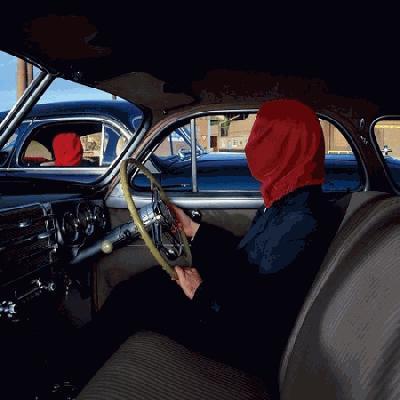
Review Summary: Frances the Mute stands tall as a monolithic opus on a pedestal of puzzling and captivating noise.
The most important thing that people should know about art is that it doesn't always make sense. If you've ever seen a David Lynch film, you probably know what I mean. As humans, we apply rationale in order to systematically perceive what we either see, hear, smell, taste, or touch. Sometimes a subconscious fascination stems from the initial bemusement or the mental frustration that a piece of artwork did not unfold logically. In that regard,
Frances the Mute is a monstrosity as well as a befuddling masterwork. Due to its clusters of crazed instrumentation and sprawling segments of auditory turmoil, The Mars Volta's second album has remained a polarizing album. However, I'm not here to act pretentious and assert that those who dislike this album simply don't understand it; I'm just here to explain why I love it so much.
First of all, the album runs the gamut from progressive rock to other styles like psychedelic and ambient music. Although it's easy to throw these labels onto
Frances the Mute, the album prides itself on a singular listening experience that is often very demanding and certainly enduring. It's also appropriate to tag the music as controlled chaos because in the midst of all the commotion that The Mars Volta incite, there is precision and depth. The buildups and the crescendos always light the way, even if their directions are onerous and puzzling. Omar Rodriguez-Lopez's compulsive guitar shredding rarely sounds premeditated, but since the band plays close to the chest, the instrumental surges act as surprises that the band drops along the way. Whether these movements are rehearsed or spontaneous is never clear, but beneath the countless layers of electronics, guitars, bass, trumpets, and drums is a mysterious sense of purpose. Only the band seems to know where the sounds are going.
Despite the sonic frenzy that enriches the group's impetus throughout this 77 minute colossus, the attention to rhythm and groove rewards the patient listeners who bypass the album's monolithic ambient passages and interludes. The opener "Cygnus....Vismund Cygnus" begins with a quiet but prickly riff that bookends the album before succumbing to a maelstrom of crowded sounds. Between the song's blood-pumping progressions, however, the band occasionally pulls its punches without sacrificing any impulse. The track ends with a disorderly torrent of electronic echoes that keep the flow highly kinetic and disorienting. With only 5 bona fide tracks, The Mars Volta pack as many overwhelming noises and textures as physically possible into pieces that seethe with paranoia, anxiety, and restlessness. Hearing the salvo of indecipherable sounds from track to track, it's easy to mistake vitality for insanity. After all, even Cedric Bixler-Zavala's vocals sound maniacal when he utilizes the music's rapid shifts to erect his own high-pitched cries, like on the intense "L'Via L'Viaquez".
Furthermore, The Mars Volta's ambition only underscores the massive scale of
Frances the Mute. This is easily the band at their most self-indulgent and uncompromising, producing unfathomable heaps of complex conceptions. Tracks like the 32-minute "Cassandra Gemini" all establish their own territory while exploring numerous dynamics and moods at once. The band even exhibits their appreciation for jazz and Latino styles. "L'Via L'Viaquez" undergoes its own path of shapeshifting, vacillating between towering progressive rock segments sung in Spanish and segues that boast their Hispanic influence. Small components like the hurried piano continuously nudge the song off the rails, and The Mars Volta clearly demonstrate that together they work better on rough terrain.
This album is undoubtedly a formidable opus. Each segment seems to inspire a divergent way of listening and thinking. The nightmarish soundscape that introduces "Miranda That Ghost Just Isn't Holy Anymore" liquefies into a momentary stream of consciousness where Cedric's vocals sit atop a spectral assortment of guitars and strings. Despite all the pandemonium, the band seems devoted to telling a story, even though that story is nearly impossible to deconstruct. Then again, it is not meant to be a coherent concept; The Mars Volta thrive on the abstract qualities of both the lyrics and the music itself. For instance, the pains of addiction pervade "The Widow", as themes of desperation thrust themselves upward. Overall, the album's tenacious execution is draining yet utterly riveting.
Frances the Mute seems to be an album you either love or hate, and while I can understand why some people might find this album unpalatable and ostentatious, I perceive the album to be a mind-blowing display of ambition. From the cacophony of innumerable guitars and horns to the spewing of arcane electronic noises, this album takes form within a cascade of obscurity. Bulky and spacious, the band's follow-up to
De-Loused In the Comatorium takes their interpretations of progressive music further and further into unmapped regions. The task of wrapping one's head around this album is the perpetual draw that it holds. Even I don't fully understand this album, and to a certain extent, I hope I never do.
Favorite Tracks:
Cygnus....Vismund Cygnus
Cassandra Gemini