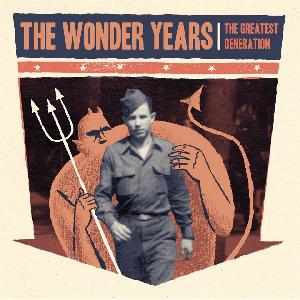
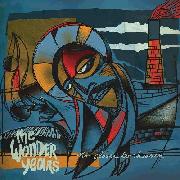
Review Summary: The kind of album where "I know how it feels to be at war with the world that never loved me" isn't cheesy.
The best punk-pop is personal, and The Wonder Years' last three albums show that they grasp this fact better than most.
The Upsides was, for the most part, an album about the descent into jadedness and depression -- a relatively personal affair, but it was only a hint of things to come.
Suburbia I've Given You All And Now I'm Nothing was about the attempts to defy depression through force of will, zeroing the focus in on Dan "Soupy" Campbell's hometown. And now with
The Greatest Generation, Soupy has tales to tell about the battle he started in
Suburbia, and he's older, wiser, more jaded and yet more vulnerable and confident. It seems as though, on this album, listeners finally get to hear the real Soupy, even if we thought we already knew him.
Take "There, There," which begins with relative restraint (compared to the blistering opening statement of "Came Out Swinging," for instance), but erupts fully when Soupy yells "I'm sorry I don't laugh at the right times," showing off a vocal range he'd rarely displayed before. There are plenty of moments when Campbell almost tears the forefront away from his bandmates, such as the desperate pleas in the bridge of "Passing Through a Screen Door" and the bitter cry of "I bet I'd be a f
ucking coward" in "The Devil In My Bloodstream," and they're all remarkably compelling.
And yet, this is the most musically diverse TWY album by a long shot. The average tempo is a good bit slower than
Suburbia's, but with sonic experiments like the piano-driven "The Devil In My Bloodstream" (with beautiful guest vocals from Laura Stevenson) and the acoustic "Madelyn" keep the album fresh, letting more aggressive, straightforward tracks like "The Bastards, The Vultures, The Wolves" and "An American Religion (FSF)" hit that much harder. And though many have mentioned it before, the boldness of the 7:35 closer "I Just Want to Sell Out My Funeral" deserves recognition, even though its peak is not the oh-so-clever bridge that ties select lyrics together, but the defiant final statement of "We all want to be great men and there's nothing romantic about it / I just want to know that I did all I could with what I was given" -- a perfect summary not only of this album, but arguably the band's entire discography.
One wonders, then, is this better than
Suburbia? At times, yes -- that album did not have a moment as emotional as "Funeral"'s ending or "Bloodstream"'s bridge. But in the quest for artistic maturity, a few tracks fall a little bit flat. "We Could Die Like This" and "Cul-de-Sac" are rather average, and "Chaser"'s repetitive chorus is a bit of a buzzkill. Ultimately, as great of a follow-up as this is to
Suburbia, it's hard to avoid that album's long shadow. At times, the more straightforward punk-pop tracks feel like distractions until the next big emotional piece hits. Not to say that these are unpleasant distractions: "Teenage Parents," for example, is far from innovative but it's flawlessly executed. But it's a little harder to accept well-executed typicality when well-executed innovation is only a track or two away.
These gripes, though, are minor in the grand scheme of things. The typical strengths of The Wonder Years are still here: the choruses still soar, the riffs are catchy, the drumming outstanding, the production solid (if just a smidge too polished). The true weight of the album is hard to convey without simply quoting each song line by line -- it's an intensely emotional affair, and even after multiple listens it's hard not to feel a little shaken. Soupy is one of the best storytellers punk-pop has to offer, and this album is no exception.