Review Summary: "Write it over and over again: the same chords, the same end."
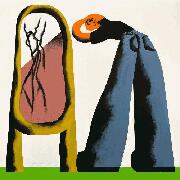
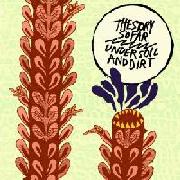
Under Soil and Dirt was an excellent album from start to finish. While I was a little late to The Story So Far party, I was immediately impressed by the urgency and emotion in Parker Cannon's vocals and the tight songwriting. My only complaints were a relative lack of variety and an only-half-joking complaint that the band actually needed to stick to typical song structures more often, only because songs like "Daughter" had massive choruses that were dropped as soon as they appeared, and I wanted more -- perhaps the first time I've ever wanted this of a punk-pop band. I hoped
What You Don't See would correct these minor foibles and yield the masterpiece the band seemed fated to write.
Well, they got it half right.
TSSF certainly fixed the structure "problem" -- everything seems pretty structured and straightforward, letting some fantastic choruses shine. "Stifled"'s kinetic chorus, for example is an earworm with a great deal of energy, and the band gives it just enough time to grow on the listener. The even catchier "Things I Can't Change" wastes relatively little time building up to its massive, anthemic chorus, and it doesn't disappoint -- it's a little on the repetitive side, but the wall of sound behind Cannon's impressive vocals makes for a certain winner.
In all honesty, each song individually is impressive (with the exception of the rather halfhearted "Right Here," a very unfortunate choice for a lead single). The Story So Far stick to a simple formula, but it's one that works: short, straightforward punk-pop with big choruses and uniquely strained vocals. But the band adheres too closely to this formula, and after repeated listens songs start to blur together. Most of the second half of the album is a wash: "Bad Luck" has a blistering chorus but ends on a momentum-killing chug-fest, "All Wrong" lacks any sort of immediacy despite some impressive drumming, and the closer "Framework" fails to offer anything unique -- and, like
Under Soil and Dirt's "Closure," it offers no sense of resolution.
What You Don't See, ultimately, doesn't feel like an album, but a hodgepodge of disconnected songs. The lyrics avoid the juvenility that plagues punk-pop, but they're also frustratingly impersonal. Vaguely angry breakup songs just don't cut it. What makes this more frustrating (and what ultimately keeps this album from a lower score) is that so many other pieces of the puzzle are there. There's no denying that the band has talent -- Cannon's voice is remarkable, and Ryan Torf's drum grooves keep the energy high. The production is vastly improved; everything sounds crystal clear. And a good number of those big choruses work: "Playing the Victim"'s call-and-response-esque refrain and unison attacks works wonders.
If it's any consolation, TSSF might have my Song of the Year race locked up already. "The Glass" is an emotionally supercharged, dizzying gem with a blistering pace, a catchy chorus that doesn't sacrifice any urgency, and a chilling bridge where Cannon's cries of "Now you're gone" push his considerable range to its limit. And yet it's all wrapped up in under 3 minutes, leaving the listener reeling. But unfortunately the rest of the album can't capture the same magic. The hubbub that arose when the acoustic "Clairvoyant" was released only shows the band's desperate need for variety; when you write two albums of now-irritatingly similar songs, even the trite decision to unplug the guitars can work wonders. Imagine what genuinely better songwriting could do!
Ultimately, my reaction to
What You Don't See is not revulsion, but disappointment. The potential for an album that will truly floor me is there, but right now, I'm still listening to "The Glass" on loop and waiting for The Story So Far to realize it.