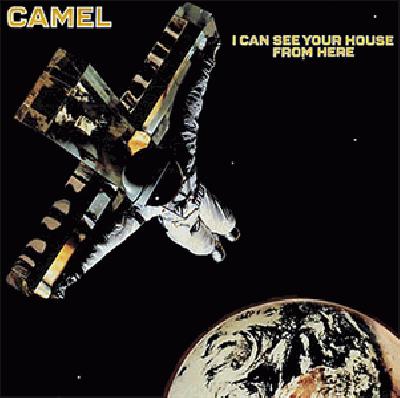
Review Summary: There can be no doubt, luck has dealt me out.
Following the events of Breathless, Camel was left an addled band due to the departure of Richard Sinclair and original keyboardist Peter Bardens, and this was primarily thanks to the new direction Camel decided they ought to go in should they want to turn a profit or keep a fanbase, but it’s clear from Breathless that Camel was not quite ready to make the big turn quite yet, unlike Genesis did under Phil Collins’s eye and Yes and many other prog rock groups did. But first, new members were needed: the keyboardist Jan Schelhaas known for being in Canterbury Scene bands such as Caravan, and bassist Colin Bass, but this time around a second keyboardist was recruited, Kit Watkins. From thence, they were able to secure the attention of Rupert Hine, a well-known producer who had a good decade of production in the 1970’s, who quoted that he actively enjoyed playing with the band.
As with many of Camel’s future albums, the individual tracks are largely hit-or-miss. I Can See Your House From Here is perhaps the most neutral album in the 1970’s; it lacks the theatricality and style of the first four albums, the melodic charm of Rain Dances and the subtle appeal of Breathless – there are clearly good songs and obvious standouts, some really good ones, even, but it’s mostly surface-level, an album that clearly exists to “move forward” from Breathless.
All of that said, it possesses a quite impressive list of songs. There is plenty of evidence to suggest some progressive elements, such as the lovely instrumental Eye of the Storm featuring pretty delicate exchanges between instruments, especially in regards to the woodwinds: Colin Bass and Schelhaas actually do pretty damn well with the new material, as shown in the other instrumental “Who We Are” that culminates in a seven-minute excitement and frenzy of beautiful keyboards, orchestral arrangements, acoustic strumming, and Latimer’s vocals. Truth be told, the tracks with vocals are surprisingly decent, with “Your Love Is Stranger Than Mine” being one of the most incredibly catchy tracks on the whole damn thing and the dreamy, subtle ballad “Hymn to Her”. Album closer “Ice” is especially good, a show-offy, bombastic track that fully shows the dexterity of each member.
And then there’s the absolutely awful songs, such as “Remote Romance”, a nuclear wasteland of a song full of electronica and pre-80’s tropes that underscore Camel’s desperate attempt to make a hit single. The minimal substance that pervades through the album shows up especially here, but it’s not the only case. "Neon Magic" is a comic track that dies as thoroughly as pretty much any song in the history of progressive rock - which is a true shame, considering that I Can See Your House From Here seems stuck between having a well-defined personality and being stuck in the pre-80's cliches that plagued many progressive rock bands. When it is good, it ascends to great heights, but it gets bad so quickly that it's disheartening.