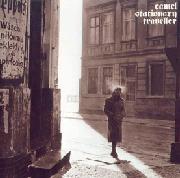
Review Summary: It will take you wherever you wish.
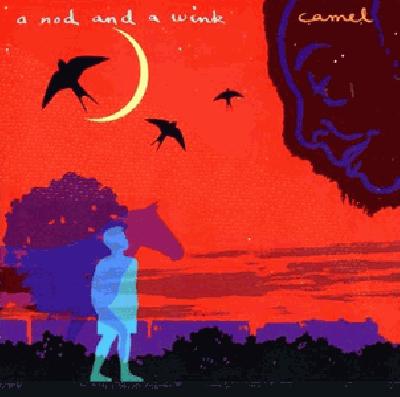
Camel: A Nod And A Wink
This month, Camel had announced that they would perform ‘Snow Goose’, Camel’s third, fantasy-laden album that settled on a Paul Gallico novel as a basis for its story, in its entirety at the Royal Albert Hall: there have also been tentative plans for an amusing and highly ironic ‘Retirement Sucks’ tour for the last two-thirds of 2013. While some may think Camel is getting back together at last, after more than a decade, A Nod And A Wink truly marked the end of the Camel era when it came out in 2002. At the time, there was absolutely nothing left to do for one of the pioneers of progressive rock – at the same time when founder Peter Bardens died in Malibu of cancer, guitarist Andrew Latimer had been suffering from a ruthless case of myelofibrosis, or a disorder of the bone marrow: after this, Camel had found it very tough to continue, for Guy LeBlanc left promptly after the tour was finished. The remnants of Camel faded into relative secrecy, and there hasn’t been a single Camel album in ten years.
A crying shame, for A Nod And A Wink is easily Camel’s best record since Harbour of Tears, an album that bounced back from the experimental and addled spot the band found itself in during the 1980’s. Camel’s last album is sort of sentimental and reflective, featuring symbols of parallels and illusions and memory. Placed ideally at the front, the opening title track is a perfect example of everything else that is to come. In this track, Camel puts a dense atmosphere above everything else: it is about a parent cooing their child into a dream-filled sleep, featuring some of Latimer’s lightest and best flute work and his counterpoint of acoustic guitar that leads almost seamlessly into a minor key rhythm, eventually flinging itself entirely into a full-stop instrumental.
It is pragmatic, normal Camel, which is Camel at its best: the album presents itself in a straightforward way and sticks to this tone for most of its entirety. ‘A Boy’s Life’ is bittersweet with the way that its detailed soundscape of guitar and keys lead into an almost unnerving, spirited passage is a pleasure the album dishes out constantly: the track wants you to reminisce with it. The album isn’t all very wistful or reflective, some comic relief coming a bit later in the form of the nine-minute, organ-thick ‘Fox Hill’; its chief sin, however, is that it sounds uncannily like Genesis during the Peter Gabriel era, complete with the British accent that Latimer adopts: while the track is good, it feels forced.
A Nod And A Wink’s greatest flaw, in fact, is its triviality: there is really no use for the Dire Straits-esque, bluesy ‘Simple Pleasures’, as it sort of kills the mood following the opening title track in a way that’s almost jarring. ‘Squigely Fair’ is perhaps better than the previous two, though. The greatness presented on the first, best track on the album comes back with its its emotional, ten-minute closer, ‘For Today’, featuring a quiet and subdued piano, easily one of Camel’s best and a flourishing guitar solo: as a song written about 9/11, it is suitably somber, and it changes flawlessly from sulking to soaring that one wonders if it even took any effort.
As a whole, A Nod and a Wink is a great album in every respect, not nearly as good as the first four or five albums but certainly better most albums in their late 70’s and early 80’s period. The biggest problem the album has is so simple it is almost unfair: the tracks are generally not strong enough, the notable exceptions being the opening and closing tracks. How anybody perceives A Nod And A Wink depends on your personal feelings – whether you be progressive rock buffs, critics, middlebrow folk, the opinion will differ, especially if one is a massive fan of Camel – but it is undeniable: it is a very warm last album full of great compositions.