Review Summary: "...and henceforth life will continue to blossom, only to eventually face the hands of death..."
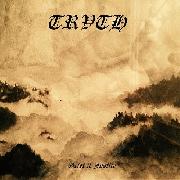
In recent times, "revival" has become a household term in the music world, whether it be the revival of a certain genre or perhaps the revival of a specific scene. Take a band like Avenged Sevenfold, for example; their more recent work (beginning with City of Evil) has been an attempt to rekindle the spirit and musicianship of 80s metal bands such as Iron Maiden and Metallica. Whether they've succeeded or not is clearly subjective, but the point is that a good chunk of today's music industry has decided not to move forward, but rather go back to classic sounds for influence. A little project named Trvth (Michael Smith), however, has crafted a sophomore effort that does something very unique: it captures the spirit of a classic genre (70's progressive rock in this case) and yet manages to be a forward-thinking effort all its own.
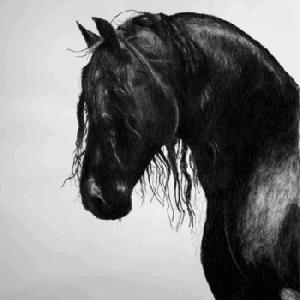
Whereas Smith's first record Alpha was rooted primarily in old-fashioned progressive music a la King Crimson, Black Horse Plague adds many new tricks to keep the listener engaged throughout. Smith's instrumental prowess is as staggering as ever, but the way he uses these instruments is where things get interesting. There's more emphasis on the metal-oriented side of things now, with reflective sections of mellow clean guitar work to offset these aggressive assaults. Take opener "The Dent in the Pan," for example; many portions of the song feel as if they could have appeared on an Agalloch or Enslaved album, with a dense progressive (as well as very doomy) black metal sound. However, near the beginning of the piece, there's a wonderful spoken-word section that creates a sense of atmosphere and drama around the clean guitar work it accompanies. That, perhaps, is what makes the record so great; the experimentation works much better this time around than with Alpha. The arrangements sound less forced, and Smith is able to craft some great melodies and riffs around the solid foundation these songs are built upon. Along with a high degree dynamic variety and heavier moments, another successful experiment is the increased use of minimalism. "Assessment Denunciation and Eradication," a nineteen-minute instrumental, is almost entirely based on intricate clean guitar patterns and building an atmospheric backdrop for the listener to be engulfed in. For the most part, this works perfectly; while there are occasional issues with the instruments completely syncing up with each other, the guitar work is mesmerizing and really puts you the song's world admirably. Hell, "Prospect" even has an all-out black metal frenzy, complete with blastbeats and demonic screeches! What's especially notable about this particular section is that the production gets a bit murkier and there's more of a hellish flavor to the melodic lead guitar work. It's just another form of experimentation that blossomed into something fantastic, and I applaud Smith for taking so many risks here.
The production is the other thing I have to mention; what's refreshing about this record is how stripped down (despite quite a few dense moments instrumentally) and natural everything sounds. Nothing sounds artificial or recycled; it sounds as if you were right in the studio as Smith was recording the album. The final piece of praise (but perhaps one of the largest) goes to the lyrics... holy hell, these are some deep lyrics! Michael Smith sings about philosophy, life, death, reflection of oneself and the world, wisdom, and other such topics. The way these lyrics are organized make them very easy to understand, yet exceptionally thought provoking. My personal favorite comes from the beginning of "Red Sky in the Morning": "Open your perception/Realms exist/what you see with your eyes is only the beginning/what you don't see is the end/there is another lineage." That's just a small example of the great lyricism displayed here.
Unfortunately, there is one flaw: the vocals are still hit-and-miss for a good portion of the record. To this guy's credit, he has a lot of variety in his singing, including things such as spoken word, black metal screeching, clean vocals, etc. The biggest problem comes in with his clean singing, more specifically his long drawn-out vocal lines. They have a tendency to get off-key or off-pitch; "What's Left But My Promise" is the biggest example of this, being the song where the clean vocals are used the most. Luckily, this isn't a massive hindrance, considering the instrumental prowess and the growling sections. It's just unfortunate that the vocal inconsistencies had to bring a potentially perfect album down to a 4.5/5. With that said, Black Horse Plague is an amazing release that captures both classic sounds and new experiments admirably. Michael Smith took a great project and raised the stakes to craft a near-masterpiece. It'll be very interesting to see where Smith's project will go from here, but for now, we've got an amazing piece of work that could very well be regarded as a progressive rock cornerstone in the future; I guess only time will tell.