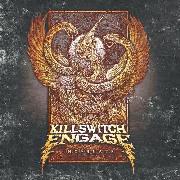
Review Summary: For a band who've proven to be more than just another metalcore face, KSE's latest doesn't make much of a case for it.
Killswitch Engage is pretty much the Kirk/Picard argument of metalcore: while some prefer the original vocalist, others find more value in the next generation of singers. It’s kind of funny since the vocalists both remain good friends, with the rest of the band playing in the background. After both Leach’s first departure and the appearance/disappearance of Howard Jones, Killswitch Engage’s vocalist position was up for grabs. It wasn’t until Leach returned that the fans could catch their breath. It was a remarkable reunion for all of Killswitch Engage.
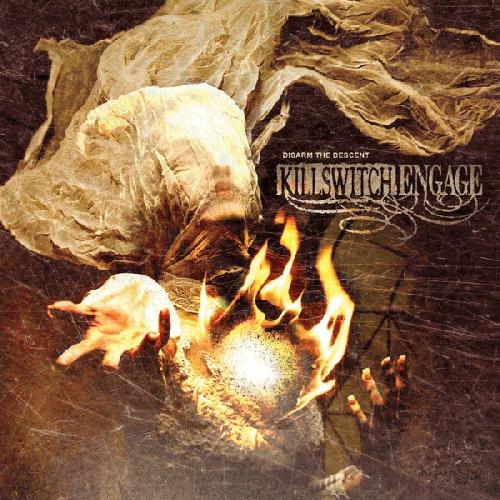
Disarm the Descent is the metalcore band’s first new album since 2009 and the first featuring original vocalist Jesse Leach since 2002. It’s a pretty big deal for the band and its group of avid headbanging fans, but Killswitch Engage don’t make enough effort here to honor either Leach or the fans who’ve built their circle pits. The album doesn’t live up to their prestigious reputation.
Something that made the band’s most recent albums so potent, especially the stellar
As Daylight Dies LP, was the mighty bellow of former vocalist Howard Jones, who left the band in early 2012. Jones could scream and sing remarkably well, but there was always a melody that snuck in between the furious drum fills of Justin Foley and Adam Dutkiewicz’s guitar solos. It distinguished the band from its many peers, while still keeping the headbangers happy. With the return of Jesse Leach, Killswitch Engage’s sound definitely has made a paradigm shift (or some might call it a past recall). The melody, while still present, isn’t the focus anymore. Leach is a screamer first and foremost, which makes for a strong complement to Adam Dutkiewicz’s skill on the lead guitar. You can clearly see why the band is considered one of the prominent groups in the world of American metalcore. There are some crazy metal tracks on
Disarm the Descent. “Beyond the Flames” is pure intensity, while the verses throughout “All That We Have” draw inspiration from the thrash world. It’s obvious that Leach feels at home in anthemic metal tracks like these, which is comforting to hear in practice.
But the rest of the band plays like they’re on auto-pilot. While the entire album feels tighter and much more intense than the band’s underwhelming 2009 self-titled album, the compositions feel extremely pedestrian. The band has a formula that is disturbingly over-implemented in
Disarm the Descent, where Leach’s screaming makes up a majority of the verses with a cleanly sung chorus picking up the slack. It’s a fine system that works, but when the remainder of the actual music is so derivative and typical of the metalcore genre, it becomes very clear that the band is still trying to unearth many of the significant elements that made Leach’s run in the early KSE days so exciting.
Songs like “Always”, “Time Will Not Remain” and the first single “In Due Time” are surprising exceptions to this pattern, where Leach is able to balance the screaming and melodic vocals during the bridges exceptionally. Another solid example of the band trying to step outside the metalcore template is “A Tribute to the Fallen” whose melody appears at the perfect climax before fading out evanescently in the end, harkening back to the more ephemeral moments of
The End of Heartache. However, the band’s formula runs itself dry very quickly. The experimentation and melodic resonance isn’t present in a majority of the album, leaving behind an underwhelming mix of repetitious metalcore songs that don’t have nearly enough effort put into them.
It would be untrue to say that Howard Jones was the crucial component for the band’s success from 2004 onward. The band also practiced some amazing songwriting, such as the pounding “Fixation on the Darkness”, the dramatic “The End of Heartache” and the emotive “The Arms of Sorrow.” In fact, Jesse Leach’s involvement with the band back in the days of
Alive or Just Breathing made that album stand out in the discography of Killswitch Engage. He has unquestionable intensity in his voice, some of which can rival even the mightiest of modern metal mavens. While his melodic skills are a nice chaser after the potable drink of his screams, Jesse Leach’s contributions now never bring the album up to the caliber seen in
The End of Heartache or
As Daylight Dies. But even when comparing
Disarm the Descent to Leach’s older recordings with the band, the album is just so straightforward in its compositions that no track stands out in the right ways.
Considering how much hype the band was receiving by reuniting with its original singer, you’d think that the musical compositions would welcome him with something much more than this. It’s great to see Leach back at the frontlines of Killswitch Engage, but the rest of the band seems to be propping themselves up against him too much.
Disarm the Descent serves more to re-introduce the fans to the band’s original vocal style instead of making any confident strides forward for the band. If you’ve been desperate for another KSE album with Leach, this might catch your ear, but if you’ve been familiar with the band’s complete discography regardless of who is singing, you’ll find this LP to be a bore from a band who can clearly become much, much more than that.