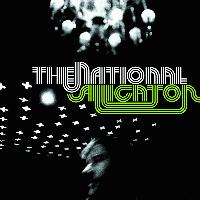
Review Summary: We're the heirs to the glimmering world.
It’s hard to categorize Alligator with respect to The National discography. Beyond progression of band members’ personal lives, and experience and wisdom gained with age, the music itself reflects a myriad of conflicting feelings entirely. What it possesses in similarity to prior and future efforts, it also lacks in terms of cohesiveness. Alligator has the songs that have made this band the heralded indie rock ensemble that it has become, yet this simple combination simultaneously finds an odd way of blending together in a way that just makes sense. I can’t explain it any other way. Call it a lack of implementation of thought to writing, Alligator resonates so perfectly in my post-teenage life, in such a way that it hits hard once the mood and feelings kick in. Consider it the very essence of a grower in terms of not only an individual album, but also as a record in context to a band’s collection of work.
Alligator’s greatness lies within the circumstance of the formulation of the album. The band was in a period of financial uncertainty both with this, as well as for “Sad Songs for Dirty Lovers”, which preceded, and “Boxer”, which followed. They toured for a year and a half to support Alligator, and put much effort into creating something that would hopefully yield greater opportunity in creating and performing music in the future. This is not an album of any specific theme or point in my opinion. Each song in itself is telling the story of somebody living life, and the joy and pain that goes along with that everyday timeline of day-to-day events. The band is very versatile amidst an external appearance of elegance and sophistication. Some songs can be sung with great force and anger, and others in more sullen tones. The method of explaining moods and songs does not necessarily need to be told via track-by-track descriptions, but songs followed one after another jump to all sorts of different aspects of life as Alligator advances.
The National thrive at opening lyrical excerpt up for interpretation, and all the while maintaining an essence of humor and familiarity with the narrative stories being told. It may not even be the goal of the writing process, but audience relatability plays large part to what separates The National from typical indie rock musicians to great ones. In the song Karen, familiar lyric passages of charm and regret reign true in the wittiest of fashions:
“Karen, put me in a chair, *** me and make me a drink
I've lost direction, and I'm past my peak
I'm telling you this isn't me
No, this isn't me
Karen, believe me, you just haven't seen my good side yet”
Stories and images painted in the mind reveal this as a less mature version of Boxer or High Violet, yet the song remains the same, so to speak. Even in this clutter of emotions radiating from lead singer Matt Berninger, the uncertain attitude ultimately subsides in the albums conclusion. He won’t *** us over, he’s Mr. November!
Alligator is less organized and much more brash than other efforts by The National, but the ideas expressed are quite similar. It’s much like how as any human being grows wiser with experience, so does the ability to cope with the trials and tribulations that come with challenges of life and love. This is a record that touches the nature of Matt Berninger’s state of mind at this particular point in his life, and for what we gather from it, his mind is not right, as he screams in “Abel”. The combination of different emotions gives Alligator a very human feel. This is a down to earth implementation of what Berninger, as well as many others feel in terms of self-loathing behavior, and the overarching humor in regret that comes with it looking back on past decisions. You can’t help but empathize with the story depicted in each song, and then find ties to your own life through it.
Much like opinions and beliefs change with time, so do interpretations and applications of lyrics found on the album. To truly see Alligator as a classic record is to find personal adaptations to certain phrases or words sung. Songs about women and past and present love interest to Berninger could be interpreted towards a different area of life to the listener. Songs of apparent anger and frustration through fragmented expression could be seen as a love story to others. Whatever the case may be, the music so easily becomes about the individual. You will change, but Alligator always has power in its personal meaning, even if that individual significance takes different forms as life goes on.