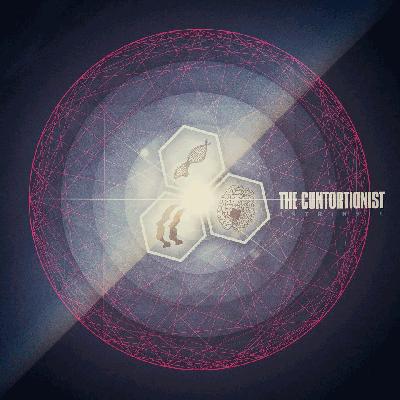
Review Summary: A fully-fledged, flowing, and astute record which proves that ‘Exoplanet’ was no fluke.
Looking below the surface is something which comes naturally to most people who listen to progressive music, but The Contortionist are one of those bands who are anchored so far down in todays ocean of sound that you have to really spend some time scouring the sea floor for any clues as to how they come up with their oddball riffs and grooves, huge, expansive melodies and beautifully catchy clean guitar work, all rounded off with interesting and profound lyrical themes and beautifully crafted dynamics. Their 2010 debut, ‘Exoplanet’, took me some listens to find my feet with, but, after some further encouragement to persevere with it, became one of my favourite records of that year. Little time was wasted before jumping straight back into writing for their next full-length. Time passed. The band began to drift into obscurity, and I feared that such good work early on would prove to be their epitaph. However, their new record ‘Intrinsic’ has reconfirmed their image as an esoteric group of musicians who have inspiration to burn, drawing on the parts of Exoplanet which worked well whilst taking a new direction conceptually.
Before delving into the new, we must first acquaint ourselves with what has gone before in ‘Exoplanet’, if we are to fully understand the evolution of The Contortionist as a musical unit. One of the things which I really felt gripped by on their debut album was the bands totally seamless ability to combine simple majesty reminiscent of that emanated by Greek gods with some of the most complex heaviness to spawn in the United States: indeed, the only band I find comparable in this merging of what are assumed to be polar opposites are fellow US mayhem pioneers Ever Forthright. Another thing which really interested me about this album was the bands obvious awareness of dynamics and their skill of crafting a brilliant package from lots of little snippets of brilliance: one of the best examples of this is Flourish, with its huge, crushing guitar lines which really invite a mass throwdown in the pit, and immense attention to detail with the inter-chug high pitched swipes on guitar. Suddenly, a searing brilliance, like the sun breaking through the clouds, strikes the song with overpowering force: the development and progression of the three note guitar hook, gaining dynamic momentum and consuming the listener like a ball of beautiful light is a sign of exceptional compositional technique and very hard work. Clearly, the bands composition on this album was driven by work with guitars: Jonathan’s keyboard merely supports the music, and his vocals are relatively conservative, if extremely solid, in their presence. Now that he is a distinguished member of the band as a unit (he had not been wit them long before Exoplanet was recorded), will their attitude to composition shift to accommodate him as a leading role? Another pre-release point of interest was whether the band would pursue the more melodic side of their sound such as their work on the three-part final song ‘Exoplanet’, stick with the mind-bending grooves of their heavier moments, or try and repeat the magical combination which made Exoplanet such a talked-about success.
The first track of the album, Holomovement, sets a beautiful scene for the journey to come, and is probably the track with the largest commercial appeal on the album in that it is very melodic, has a moderate tempo that is unchanging throughout, and has a bit of everything whilst retaining a very unique character. The opening motif of two couplets of rising and falling notes, each separated in pitch by a major second, is a recurring theme in the song and allows the listener to be eased into the music, rather than being swept along by an awe-inspiring current as was the case with Exoplanet. The opening builds up gradually, rising and falling gently enough to lull you into lucidity. It’s as though you have stepped out of a cave into sunlight for the first time: the exit is slightly timid, but as you get used to it and allow the warmth of the rays to envelope you, a harmony between you and the universe develops. Jonathans soothing vocals make a nice change from the powerful and, at times, distracting cleans of singers like Dan Tompkins and Spencer Sotelo: they are perfectly weighted and interweave, almost without trying, with the serene landscape created by Robby Baca’s exceptional melodic vision. It is also evident that his keyboard lines have taken a more central role, supplying countermelody and antiphony with the guitars rather than just hanging notes out to dry in the backdrop of the main focus of the song. The song has no real climax, which is unusual. However, this does not take away from the song – too much of a build-up at any one time would cause a disturbance in the overall flow of the track. However, there are what you might call “defining moments”, which add great variety without distracting from the song too much: these are the bits of the song which are most memorable, and which add gravitas to the overall sound. One of these is the small build-up and drop from about 5:45 to 6:05: the dynamic change is perfect, and the fact that they have varied material that you have already heard in this way makes it all the more effective.
My personal standout duo of songs, ‘Sequential Vision’ and ‘Geocentric Confusion’, are concoctions of brooding deathcore and excellent melodic fusion playing that epitomise the sound of the record as a whole. The former showcases how much more central vocals have become as a compositional tool for The Contortionist. The use of vocoder has become a lot more adventurous on this record, and at the start of this song it is deployed brilliantly: the melody comes through cleanly, but with an interesting edge to it, like that of an image projected by a television which is tuned slightly out of phase – it has that strange crackly feeling you get from very distant signals, so you feel a very long way away from everything, separated from normality and hanging by a thread in empty space. We again hear the development of central themes throughout each song, and the swift and frequent changes of tempo don’t feel at all forced, but instantly appeal to the ears. The electronics in these songs add a lot of depth and finesse to the overall sound, and are very diverse: some merely skim the surface of the music with light, spaced out chords, whilst others add quite weighty ambience: these sections remind me a lot of the work of Brian Eno. Then there are parts which are the total opposite, like atonal harpoons which drag the listener from their comfort zone. These are what make the music interesting: the sudden injection of energy, like the flick of a switch, reminds me of bands like The Dillinger Escape Plan and Between the Buried and Me (though not quite as forceful and with a different purpose), showing the multitude of reference points that The Contortionist have drawn for this album. The walls of sound that leap into the texture quite literally from nothing will knock you from your chair, as if you were riding a bike downhill and your front wheel got stuck in a rut. Predictability is something that I cannot abide in music, and thankfully The Contortionist are far from an average collective of musicians!
However, brilliant music and compositional verve is merely a platform supporting something extra for The Contortionist: the subject matter dealt with by their lyrics is definitely not of the norm, even for the select niche of the music world in which they dwell. ‘Intrinsic’ is an inward turning double-helix of human analysis, which questions our willingness to push our mental capacities to further limits, be it emotionally, philosophically or as a whole species. Some songs take the form of an anecdote, attempting to teach us about the futility of a single life compared to the infinite others which come to pass at constant points in space-time (“there’s a universe inside us all”). Causality is a good example of this: a man tells of his self-inflicted ability to enter a parallel world of his own creation, in which he detaches himself from the physical restrictions of his futile being.
The flip side of the coin is presented in ‘Sequential Vision’: this track portrays man’s mental and cognitive abilities as far inferior to the parts of which he is composed. Lines like “The system is the pilot, I am always behind” conjure up thoughts of a lack of understanding of the internal forces which power our existence, which is holding back our further evolution and progress as a species. ‘Geocentric Confusion’ confronts societies conservatism towards and lack of insight into what is most central to our lives: ourselves! It pits the existence of a “designer” against the biological chance proposed by natural selection, and challenges the former as an expression of a lack of emotional control and, indeed, a perversion of the true concept of progress by being “Foolish enough to proclaim certainty of the answers”. The feel I get from the lyrics of the first half of the album is that the band are in awe at the infinity of what we don’t know about ourselves, never mind the place where we happen to have evolved, and have come to the consensus that currently we just don’t know what creates the unique mental realms in which our minds dwell.
However, the latter part of the album, starting with ‘Dreaming Schematics’, does attempt to offer some foresight as to what may be achieved in the future to develop our introspective leanings and philosophy. These songs discuss the possibility of strengthened synaptic networks, improved neural systems and superior reactions and impulses as a result. The very calm atmosphere created by the music, and the effective use of delay and other effects on the clean vocals, create a very psychedelic and etherealistic mood, almost as though this is a vision into some other plane of enlightenment: the feeling is very personal, and draws you into the Dreamstate along with it.
As I consider this album to be a concept record, the message the band is trying to preach must be immediately obvious and apparent. The musical devices convey the atmosphere of the record without problems, and the clean vocals achieve similar results. However, one area which failed in this respect was the growled vocals. Some words were delivered in a very strange way, with no clear rhythmic emphasis which fitted the natural pattern of the lyrics – growled vocals have no real melodic propulsion, so a strong grounding in rhythm is vital. At times, this was lacking from the music: for example, during ‘Causality’, the growled vocals feel very stop-start, and have not been as well thought-through as might have been warranted. Another thing which at times deserts the growls is emotion: the alleviating melody produced by Jonathans cleans really resonates with the listener and opens cognitive pathways for the words to travel down, creating a much more visceral image, whereas at times the growls feel unwarranted and merely offer a dry void of feeling which could have been filled had a better vocal technique been deployed. This does not destroy the record by any means (the growls may even enhance it for others), but I consider them to be an unwarranted timbre in an otherwise resplendent pool of musical colours.
So, in conclusion, was it worth the wait? Definitely. ‘Intrinsic’ is a fully-fledged, flowing, and astute record which proves that ‘Exoplanet’ was no fluke. The concept fits the music perfectly, which creates a very intense and broad experience for the listener. However, this is not instantaneously obvious: quite a lot of playing time will be needed before the merits I have earlier discussed seep through into your internal universe. And there are still things to improve on for next time, which could turn what is already great into something spectacular. But, then again, maybe I’m just in the wrong universe. Time to enter the realms of lucidity…