Review Summary: There is not much to say in the summary other than: this is a genius prog-metal masterpiece and the album that would make way for BlackWater Park. It could be Opeth's best.
"I like Still Life, because, you know, it's very good. It's very very very very good. I like still life because it's so interesting musically, there are loads of transitions that can blow a mind surely." Is what a mortal soul could too easily say, and some silly reviewers forget they are writing a review, and just leave it at THAT!
There are loads of frequencies in those guitars, lots of expression. There is the growling, the sadness, the mystery, the folding of the music. Every layer waiting for a release. It goes back and forth, it waits to build up, it chugs away in hardship, it longs for peace; it fills the air with strange noises. Like every grain of dust could have a note; something raw lies in this album. A strange situation is this album. It was recorded in odd circumstances, quickly, conceptually, artistically.
It is a stranger among better settled albums which rest among their buddies in other record labels. Still life remains still with one label. Still life has a rawer, flatter sound, with more metal and blues dynamics than could ever be imagined, reinforced by imaginative overdrafts; those moments in time where everything is laid to rest. It happens in Still Life.
Anyone who won't tolerate the intro to The Moor, may not like the rest of the album.
Yes, a simple statement. A modern art reflecting old sentiments. That is Still Life. Filled with emotions and ideas, reflective sounds and feelings; it has its nonsense that fits in so perfectly, sometimes so simple and even what could be frowned upon as modern messery. Musicians messed around to achieve such ideas, Mikael saw them, in visions, in dreams... or maybe just sitting in the studio.. well you know not everyone has to dream to dream. See what I mean?
Still Life has its ties to the older Opeth; the guitar harmonies like Mikael and Lindgren are still together in their prime, and of course the harsh-soft, harsh-soft pattern which was never lost in Opeth's music. It's used very effectively in Still Life to dramatically enhance the songs. Still Life songs can be quite like ballads sometimes, and that harsh-softness is very interestingly used.
Understandably, it is debatable how much of the original Opeth (of their first two albums) was lost by the time Still Life came around, but the guitar harmonies and harsh-soft progressions are no doubt present and effective.
Some new features are the newest shattering nuances of Lopez and the fascinating bass of Mendez that does what bass doesn't normally do; it fills odd spaces and begs to be identified when it isn't overly present. The bass behaves strangely in unseen places. It's strange, it's creepy crawly, it's tired sounding - a struggle, but perfectly fitting and in time.
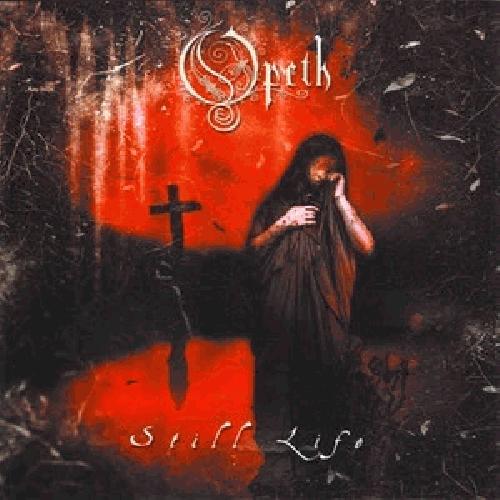
Even the album art stands out among Opeth's work. The Moor is a great song live too.
It's really good, Mikaels voice really comes out in his work here. The rhythms in the music come out more as well and the bass sounds different. Unique, inspiring. The music is slightly more deathly in many places too. This would be the album to make way for BlackWater Park. When you get bored of the perfection of BWP, look at Still Life- it's a grower.
Still Life, perhaps feels very empathic, the sort of music where you put yourself in someone else’s shoes. It feels full of pride and struggle at the same time. The compositions push and pull at you, are uplifting and downfalling. When Humans struggle, they express higher ideas for their pride. Maybe it can be heard here.
Highlights:
None. All are just as good.
Overall, 5/5. 10/10. 100/100.