Review Summary: Exegesis (n.): a critical explanation or interpretation of a text or portion of a text
Philip K. Dick was an American writer whose work was mostly in the science fiction genre. He drew upon life experiences in addressing the nature of themes such as drug abuse, paranoia, schizophrenia, and transcendental exerperiences.
Perhaps his most famous effort was VALIS (an acronym for Vast Active Living Intelligence System), a Gnostic vision of one aspect of God. In this novel, the narrator (whose name is a clever psudonym of the author's real name), details his theory that there is some kind of intelligent machine in orbit around the planet that is aiding its inhabitants in their life quests. This idea was furthered in Dick's Exegesis (plainly titled 'The Exegesis of Philip K. Dick'), in which VALIS is described as an artificial satillite network originating from the star Sirius. According to Dick, the Earth satellite used "pink laser beams" to transfer information and project holograms on Earth and to facilitate communication between an extraterrestial species and humanity. One of the final pieces of VALIS was the unpublished Gnostic exegesis 'Tractates Cryptica Scritura', whose overwhelming concept was that of the Black Iron Prison, which is the idea of an all-pervasisve system of social control. A quote from the novel reads as follows:
"So if you superimposed the past (ancient Rome) over the present (California in the twentieth century) and superimposed the far future world of The Android Cried Me a River over that, you got the Empire, as the supra- or trans-temporal constant. Everyone who had ever lived was literally surrounded by the iron walls of the prison; they were all inside it and none of them knew it."
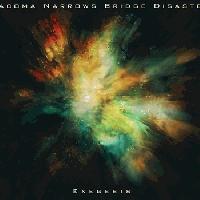
Now, if you are still reading, I will tell you why (if it is not overwhelmingly apparent) this is important to understand. From the cover of Exegesis (an image of a glowing nebula in deep space), to tracks such as "Valis" and "Black Iron Prison", to the album title itself, it is very clear that Philip K. Dick is a beloved character to the members of Tacoma Narrows Bridge Disaster (TNBD) and his work saturates the very core of their music.
Albeit named for a horrendous tragedy in American history, the band and their 2012 release is far from catastrophic. However, this name is perfect for the sound of their two releases, which the band has self-described as "epic soundtracks for terrible events". Balancing sounds of ardour and melancholy, TNBD creates an album that is as intense and heavy as it is moody and somber. The backbone of the record are the long instrumental passages sewn together by Tom Granica's driving bass and the dual guitar work of Drew Vernon and Adam Paul. The latter is a key element of TNBD, as their riffs lead the soaring and crashing of the record's tone, while also subltly accenting the rest of the band by entwining them with passages of both chugging and melodic riffs. With the help of Alex Rainbow's drumming, TNBD creates a "wall of sound" that builds, much like an ocean wave does, and crashes loudly into the shore of the listener's ears before slowly drifiting back away with soft and elegant passages.
The work of vocalist/keyboardist Dylan Foulcher is minimal in comparison to the rest of the members, as not all songs utilize his vocals, yet he is an integral part of the record. His deep, clear voice is well-suited to the mood of the music, refraining from harsher tones for the most part. After repeated listens, most listeners will come to love the simplistic cry of "...and the walls will come down" in Black Iron Prison, which often permeates their heads with visions of notable demolitions of our world's vast history. However, as the song is a reference to the aforementioned Gnostic concept, the meaning of this line should probably bring images of the destruction of the universe and time, itself, to mind, which is a truly chilling thought, indeed.
Although this album is truly an outstanding one, it draws criticism for two reasons. The first is, as many metal enthusiasts will understand, that TNBD sound too similar to their influences (i.e. Isis, Tool, Pelican, etc.). The second of these negative aspects is that the album is coursed with the same dark and somber sounds while seemingly never giving the listener "the light at the end of the tunnel". It is my belief, however, that TNBD have shown with Exegesis that they have the pieces to overcome this adversity and could put together many more solid releases in the future. Although they will probably never acheive renowned popularity due to the largely instrumental nature of their music, Tacoma Narrows Bridge Disaster is a truly talented and technially proficient group whose music is as awe-inspiring as the event from which they draw their name.