Review Summary: Often an overlooked album due to the band's latter success "Morningrise" offers a look into the eclectic mind of Akerfeldt and acts as a coherent argument to those who say a band who change largely over time will alienate their loyal fan bases.
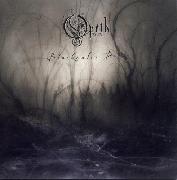
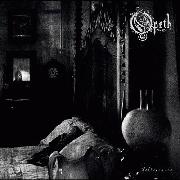
When someone mentions Opeth, their works from the past decade are the ones that come to mind. Blackwater Park, the "breakthrough" as well as efforts such as Ghost Reveries and Heritage. Though all great albums, they have successfully cast a shadow over the foundations they were built on, and make people blind to the vast range of musical styles Opeth have utilized over their 20 year career. Akerfeldt, the band's main man has often stated he believes Opeth's albums work in pairs, meaning a particular style or sound is incorporated over the course of two albums and then influences and ideas change meaning subsequent releases vary largely. Just look at the difference, or rather listen to the difference in sound between Morningrise and My Arms Your Hearse. It is then for the appreciation of this bands diversity if nothing else that I feel the compulsion to shed some light on Morningrise (and indirectly Orchid also as they are similar albums, I just happen to marginally prefer Morningrise).
So, with regards to the music when I first heard this album it was quite unlike anything I had heard before. The generic argument against this from pseudo music intellectuals is always "Opeth weren't the first band to use distorted and acoustic guitars". Of course I am not disputing this, multiple bands especially from the progressive rock era of the 70's were dynamic enough to use both, but it is the way in which Opeth use the guitars both electric and acoustic that I find so interesting and appealing as a fan of experimental/progressive music. The changes between distorted riffs and acoustic ones can sometimes seem quite abrupt, but predictability is certainly not a profound feature of Opeth.
As a guitarist, listening in particular to the overlapping acoustic guitar lines is a breath of fresh air, as Mikael and Peter often play totally different melodies that seem to compliment the other, taking the idea of twin lead guitars to a new level, perhaps not in terms of technicality, but certainly in terms of originality and creativity. The majority of songs on Morningrise are through-composed, and rarely if ever do they conform to a regular song structure, meaning each song is packed with ideas, which in one sense lowers the chances of a listener enjoying every part, but then also heightens the chances of a more dubious listener at least enjoying a few parts.
It is well known that the production of Opeth's first two efforts is very raw to say the least, but it does not detract from the listening experience, in much the same way that Kill Em All and Iron Maiden would not have the same feel if they were heavily compressed, over-produced recordings. When speaking of the individual tracks, Advent and Black Rose Immortal are two highlights for me, with both songs featuring some of the bands most beautifully dark and ambient parts, as well as some crushingly heavily, dissonant and atypically death metal sections.
Though Akerfeldt's clean vocals would improve on future recordings (both due to production and practice) his voice fits the music well in this release and sounds remarkably pure despite the quality of recording (one particular highlight being the vocal solo in Black Rose Immortal).
So, despite each song following a similar formula, the album is consistent in quality, and any repetition can be forgiven due to the fact each album is so characteristic and distinguishable (at least in pairs as previously mentioned) from other efforts. A wonderful look into the eclectic mind of Akerfeldt and a clear example of how much a band can change over time without seriously alienating loyal fans.