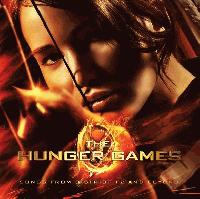
Review Summary: A soundtrack that rises above the status of being nothing more than an assembly of songs, by featuring a wide variety of differing genres, styles, and moods that compliment the different and distinct atmospheres of the film.
Soundtrack albums have earned a troublesome reputation of sorts. With movies of all kinds featuring songs that where hits at the current time of the film, or songs that are timelessly popular (and both equally for promotional intentions above artistic ones), original soundtracks have suffered from being collections of songs thrown together on a disc without any thought of consistency or fluency taken into consideration for the listener’s sake.
Most soundtracks end up either being something similar to a top radio hits compilation of the half of that year, an outlet disc for bands to release a single new song in between albums and get in on the movies’ promotional popularity, or in most horror movie soundtrack cases, a disc of nu metal favorites that could have been a mix-tape sloppily assembled and stitched together by a 14 year old boy. In any of these forms, the listening experience in general sounds like a bunch of songs thrown on a disc with no care for any kind of an element to stream through the disc and give a point to listening to the album all the way through.
Though most soundtracks feature artist’s new songs that are “inspired by the movie”, this term typically turns out to have been used very loosely, and the themes are there but not prevalent enough to be convincing, not helping the discs status as just a marketable singles CD, with a track listing complied of songs that have no respectable reason to be together outside of popularity’s sake.
Thankfully, The Hunger Games original soundtrack Songs from District 12 and Beyond, completely avoids all of these pitfalls. The job of the films score is to have music composed to specifically describe the scenes and places of the movie, and to capture the intended atmosphere and feel of the movie overall. T-Bone Burnett, the soundtracks producer, does an excellent job of selecting and bringing together songs that properly bring characters, environments, and emotions of the movie to life in incarnations of sound. This effectively conjures up a soundtrack that in a way acts like the score of the film without being the score, and instead songs noticeably relatable to the movie thematically, but are still songs, and songs that do the job of score music just as effectively.
The soundtrack differs drastically throughout in mood and genre, from country (Taylor Swift), to rock (Arcade Fire), to rap (Kid Cuddi), it has many angles and variety but nothing every feels out of place with having the movie’s inspiration stringing it together. The songs differentiation from each other shows no consistency errors because they are all so memorable and stand out from one another on the album.
Instead of trying to stress only moods like most soundtracks do by featuring songs that are generally sad, and songs that are generally just angry, etc., these songs embrace the special and unique elements of their genres to convey their emotions, and compliment and does justice to the detailed atmosphere of the different dimensions that make up the films world. A trait that special is sadly uncommon amongst the likes of something as low as a horror movie soundtrack setup with nothing but alternative metal track after alternative metal track.
There is surprisingly no song from Lenny Kravitz featured on the soundtrack, as he is an actor in the film itself, but one could argue that would be too much of a situation where universes collide for such a small reference.
Overall, this is a soundtrack that is impressively above average because it manages to be relevant to the film while still being a collection of songs that would be just as enjoyable together without the film they are attached to. The album is sprawling and fulfilling as a whole, and holds much more of a purpose and reason than an aimless list of songs to pick certain tracks from, as the songs are powerful by themselves, as well as together, and either way you can really hear the film’s mark.