Review Summary: Fuck you robert christgau!
The later 1970's were indisputably an important period for Rush. Now with
2112 out and sawbuzzing through everyone's Walkmans, they had finally found their footing that they had deserved so many years ago, but never got. Following on the heels of the release and popularity of the album, Rush decided that a live album release sounded pretty necessary. So they cleaned their guitars, checked to make sure Neil was in attack mode, and recorded for three hot, dry, damp June days in Canada; that would become the stellar
All the World's a Stage. So now, after all this, Rush decided to not change their own successful formula and high-tailed it into the UK to paint their next picture. Increasing their musical abilities and expanding on their sound, thus came
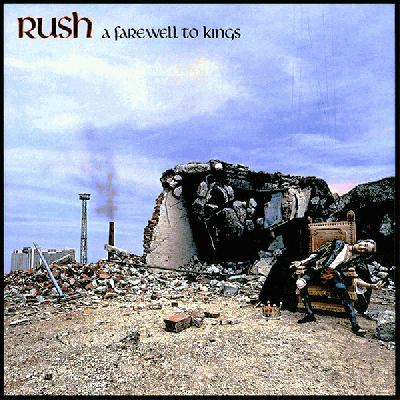
A Farewell to Kings. With Rush correctly falling into the progressive genre, this follow-up album proves their long uphill climb was worth the trek.
First and foremost,
Kings is, without a doubt, the most progressive album Rush has made to date. The shifting time signatures with its crafty composure, the varied instrumentation of intricate guitar, bass, and keyboards, the different tones, and the scattered use of vocals; Rush definitely rose up here, but only a smidge higher than they were before. Somehow Rush distinguishes themselves from the rest of the progressive act (not because they put down the mellotron for once) because they seemed to know what their limits were. Even with every sci-fi ripoff, every Zap knockoff, they do it in their own style and with class. They were able to successfully incorporate a more 'hard rock' approach to the progressive genre. All without being
too pretentious.
Kicking off with its title track,
A Farewell to Kings opens up with a quiet acoustic guitar, which is more dark and brooding in the hands of these three; accompanied by a slow Moog and a few bells courtesy of Peart himself, the track is really just a cat on a coiled spring; it jumps out right at you with an insane riff that clashes in. The entirety of the track is a classic Rush sound, with odd-timed bridges, and that same Objectivst view that Peart seems to drool over. (Would he of dated Ayn Rand?)
Madrigal is a very quiet track with an effortless bass playing, and
Closer to the Heart employs some wonderful acoustic guitars, which builds up into an upbeat closure. Almost all of the tracks are a reference to something; with
Cinderella Man taking many hints from
Mr. Deeds Goes to Town, which is about a man who inherits a great deal of money and then is thought mad when he starts spending it to help the poor; which is played with a funky little soundscape and a shining bass riff by Geddy. All of the aforementioned tracks, though, are nothing compared towards the longer epics.
The album's
piste-grand are
Xanadu, which follows the opening track, and the 11-minute closer
Cygnus X-1. Both track are gorgeous in their complexity; the brilliant composition and the vast array of sounds and music all come out well here, which builds and slows and grows again - both incorporate gorgeous openings, with
Xanadu eventually cutting in with a sharp riff like a storm rolling across a field, completed by sharp keyboards and cowbell. The insanity of
Cygnus paints a very discrete picture, with some of the highest notes Geddy has ever reached and changing in signature constantly (3/4, 7/8, 3/4, 4/4, the list goes on). And somehow, they hold all this together with a hard rockin' flair.
There's barely any flaws here to
Kings - it's close to perfect. Perhaps some of the songs lack a bit in terms of production or class, but it's hard to say if the trio even messed up a little. Whether presented in furious sounds or in quiet little whispers, Rush definitely reached their best here and perfected their style. It proved of good years to come, and the album's status is well-deserved.
...So buy it.