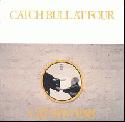
Teaser and the Firecat?
Tea for the Tillerman?
MONA BONE JAKON??? Who does Cat Stevens think he is with such silly album titles for the heyday of his career? Well, we may never know, because though
Catch Bull at Four loosely followed the same formula of his very successful afore-mentioned predecessors, one could hear Stevens’ increasing uneasiness in following that recipe for folk-pop success. The yearning eagerness and innocence in Cat Stevens’ voice as he sung about discovering spirituality and death in previous efforts had sunken, commercial success began to make him want to take different directions. Oh pooey.
Nonetheless, this album isn’t necessarily bad news for the hardcore fans of Stevens’ commercial climaxes Tea for the Tillerman and Teaser and the Firecat. The album still contains a bunch of songs that stay true to his folksier roots. But the purity of those folk songs are gone, like a cheerleader on prom night, the lyrics are more self-absorbed and less meaningful. Stevens’ child like writings (
Moonshadow,
Father and Son) have turned into more theatrical, ambitious writings. The folksy music is still there in these songs, though more rambling and unfocused than previous folk works, Cat Stevens connection lyrically and emotionally begins to get lost with the listener.
The album’s simpler songs that are reminiscent of Stevens’ earlier work seem to have gone through an evolution. The songs that would’ve been only guitar and piano as the main arsenal now get things added on. The songs become less folk, and more of an acoustic rock. The prominent drums take away the intimacy of Stevens’ songs, along with the string arrangements. Stevens broadens his weapons of choice with mandolins, synthesizers, and it’s the first album where Stevens uses electric guitars. Nonetheless the melodies stay strong, shining through the advance of instrumentation.
Sitting and
Can’t Keep It In stay true to Cats older work, simplistic with a strong unforgettable melody.
While Cat Stevens has always incorporate sad, melancholic moods into some of his songs, on
Catch Bull at Four he reveals a darker, mysterious side to him.
Ruins is the simplest song on the album, with just an acoustic guitar, but shows Stevens in an aggressive state. His voice is lowered to a growl. His guitar seems to have lowered with him, producing a dull background.
The Boy With The Moon And Star On His Head shows the beginning of Stevens’ pseudo-religious interests. The song is minimal, only the folksy guitar and the occasional hit of the tom-tom, creating a mystical, but longwinded atmosphere. Cat Stevens’ tedious spiritual yearnings would increase, and
Catch Bull at Four is where he is successful at teetering these desires and a pop career.
Catch Bull at Four is a more difficult listen than Stevens’ previous works, but is a more rewarding listen once drawn into it. Keeping it’s variety from simple folk songs to darker, rock-oriented songs, and drawing back to medieval music with the Latin sung
O Caritas. The variety reaches its limit at times, leaving some songs too boring compared to others, or not melodic enough. The album hints to the ambitious folk-progesque feel of
Foreigner with
18th Avenue, an electric piano rock song that bursts into a tempo-shifting orchestra interlude. The unconventional structures of songs and variety makes
Catch Bull at Four an album worth looking into, whether one is a big Cat Stevens fan or bored by his earlier work.