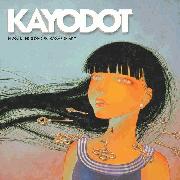
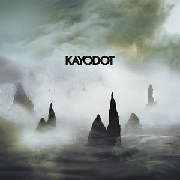
Review Summary: Kayo Dot create an album that revisits the anger and dissonance of motW, while still remaining fresh and original, making it their strongest release to date.
Toby Driver has been a mixed bag for me. Everyone seems to like everything he has done so far, but for me, it has been hit-and-miss. His work with maudlin of the Well, with the exception of their most recent album, was by far his best work. No one will argue that (except PtS, in which case I disagree with most of its praise). Both Bath and Leaving Your Body Map still rank as two of the best reviewed albums on the internet, but sadly, have not gained a huge following outside of that, meaning that they really only have gained a cult following, and you won't be seeing them on Billboard anytime soon. After maudlin, Driver opted for more atmosphere, which worked for Kayo Dot, but on motW's Part the Second, my main problem, which seems to be no one else's, was Driver's loss of sense for experimentation, and his drive for a more melodic musical direction, unintentionally ripping off other contemporary post-rock bands, like Sigur Ros and If These Trees Could Talk in some moments while other moments seem like cintrived experimentation. Everyone says PtS was previously unreleased maudlin songs, but the sound was too familiar with Kayo Dot and Sigur Ros, and too homogenous and safe to be even close to sounding like classic maudlin, showing how gullible the average maudlin fan can be after using the “listening to their stuff for years” excuse.
That being said, Gamma Knife was hyped not for being a maudlin flashback, or even at all. The release was not promoted very heavily, at least when compared to Part the Second. I was curious as to what Kayo Dot would churn out after Coyote, probably their most direct release to date in terms of atmosphere and experimentation. After my negative review of Part the Second got so much hatred for being close-minded, I decided to open up more, mainly because this is Kayo Dot, whom no one was expecting a 6 year comeback. And frankly, this is a closer comeback album for motW than Part the Second is, both in musicianship, improvisation, and most of all, honest to God anger. I would call this the “comeback album maudlin never made”, but that would generally be insulting to both the fans and members of Kayo Dot, so let's just leave it at what it is: a damn good LP.
In terms of musicianship, Kayo Dot handles it better than any other of their releases. Usually, some time is previously allotted for violin and sax, but mostly Driver just tries to show off his skills in guitar and songwriting. On this LP, everyone is completely involved. Here, violin, guitar, bass, sax, and even mellotron bells will share the same stage all at once, leaving room for complete unpredictability. Combined with Driver's new found ability to let other members of the band have a big part in composition, the cacophony of all the instruments actually accentuates the randomness of the various opera, making for very authentic experimentation, and in turn, a very musically interesting album. Driver also adds an added bonus to the album that makes it great: shrieking and growling done competently. In the song “Gemini Becoming the Tripod”, the most grating aspect was Driver's inability to shriek or shout with genuine emotion and maturity at the same time. Here, the vocals are downplayed like on My Bloody Valentine's Loveless, and Driver uses his shrieking sparsely, showing maturity, and his slower lyrical recital approach, he shows more genuine emotion here, which is mainly anger.
Lyrically, the album does not provide much, however. The lyrics are inscrutable in what they mean, causing some confusion when you actually take the time out to read the lyrics. The messages of the songs, thankfully, can be inferred from the lyrics. The problem only lies if you are trying to interpret the symbolism and imagery that you would only try to find if you were analyzing at a very detailed level, which was a slight problem with both Driver's and Byron's lyrics in maudlin. However, the lyrics are unintelligible for the most part anyway, so they won't affect your listening experience all that much. However, you can interpret that as a good thing or a bad thing depending on what exactly you liked about maudlin's lyrics in the past. If you liked reinterpreting the lyrics each time you go through them every time, you'll like them. If you liked the concepts and messages they presented, you'll probably hate the inscrutability that exists at the smallest level, but enjoy interpreting the big picture.
The album's main flaw is not the musicianship or the lyrics, but the production. The production is awful. The band got the mix right, but the mastering is off. It isn't lo-fi, but it borders on it, which is worse. It won't necessarily affect you when the music is becoming more mellow, but when the instrumentalists are firing on all cylinders, like towards the end of Lethe, the first track, it emphasizes the mastering problems. However, if you're like me, you can forgive the band on this, because, like most other indie or otherwise self-financed bands, poor production cannot be helped. The production only gets to be annoying in the band's loudest moments, which are unfortunately the album's best. However, I could be generous and say that it adds an indie vibe to it, like that of Pavement and Dinosaur Jr., but more accurately, it reminds me of Slint's Spiderland.
Anyway, before the review gets too long, Kayo Dot make an album that recaptures the first time I heard motW. It's unpredictable and more aggressive than Kayo Dot's previous work, and is reminiscent of motW while having a fresh and innovative sound. This is a blossom that thankfully revives the level of bonafide inspiration that Toby Driver had with motW. It recaptures that same energy while still being
original, which will hopefully constitute the definitive Kayo Dot sound. It might not be as good as some of Kayo Dot's past releases, but it still holdd up as one of their strongest, if not the strongest, of their work.