Review Summary: Reaching the High-Life.
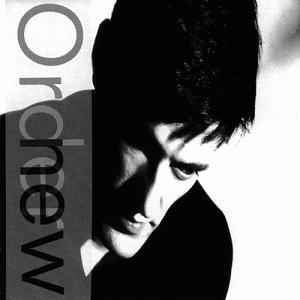
New Order never made a perfect album. They often came damn close, especially in the mid-eighties, but there were always miniscule details preventing their records from earning that all-important petty 0.5 boost to ensure a flat-out 5 star classic status. But if one were forced to label the groups’ best record – an album New Order produced that sailed as close to 5 as was humanly possible without making the final step – 3rd LP,
Low-Life would make for perhaps the most convincing contender.
Low-Life earns such respect and admiration for rather simple reasons. It was (and still is) a superb album, and remains as perhaps the ideal snapshot of New Order at the height of their powers – a group at the right time with the right ideas. It doesn’t do anything drastically different to its stunning predecessor, but scan the disc a little while longer and a few satisfying traits begin to surface and convince otherwise.
The effortlessly organic blend of alternative rock and dance pop returns, and neophytes may be forgiven for noticing few huge differences between melodica-driven opening track ‘Love Vigilantes’ and older brother’s first outing, ‘Age of Consent’, but as the disc spins on, and after several listens, one begins to hear a New Order sounding a tangible amount more confident in themselves and their sound than ever before.
We hear the band at their most sweetly gorgeous and pop-dominating on ‘The Perfect Kiss’, with its giddy percussion and breath-taking wash of warm synth and sun-drenched guitar chords. We also hear the lads delving into their darkest corners, on tracks like the haunting instrumental ‘Elegia’, and the menacing ‘Sub-Culture’, but without the marring mopiness of their indifferent debut.
On the latter, Bernard Sumner’s vocals creep as much as the words he sings, all evocative and brooding imagery (“I like walking in the park / when it gets late at night / I move around in the dark / And leave when it gets light”). It’s one of any of the LP’s 8 tracks that consistently thrills and shows a band in control of itself and the unique sound it possesses.
Yet
Low-Life is still not a 5. It doesn’t have that certain ‘X’ factor (not to be confused with that awful show) that tips it over the precipice. But it doesn’t matter; scores are opaque as are New Order – they’re a band who refused to be easily boxed-in and categorised; who shunned press interviews when they could’ve capitalised on the tragedies of their former incarnation or their current success to sell even more records; who did things differently and their own way – a way that influenced generations of artists and rarely sounded as confident, stunning and accomplished as it did here. New Order’s best record? Who cares? This is all superb material that stands the test of time and is simply one of the finest alternative albums of the 80s.