Review Summary: The usual "tug-of-war" between Western and Oriental influences inherent in DCD albums is reconciled here by abandoning direct influence and creating it's own identity.
Dead can dance have always been concerned with duality. This theme is defined by it's two voices: Brenden and Lisa. Throughout their long career, the question of duality has been exploited in a variety of ways that sometimes made their albums feel like a split personality. While I have no problem with any particular songs, a DCD album never felt more than a mere collection of songs, rather than a wholistic album. Is it a problem of consistency? No, but consistency may be falsely identified as the problem. It's a problem of transitioning. In Within The Realm Of A Dying Sun, they take the problem to it's extreme, with the first half of the album wholly devoted to Brenden, and the second half to Lisa.
Later releases, such as Spirit Chaser, have them so intertwined that they avoid the question of duality almost altogether. But in the middle is Serpent's Egg.
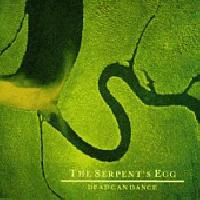
Serpent's Egg is strange. Brenden and Lisa take on roles beyond the scope of their previous or subsequent releases by becoming storytellers. Tracks oscillate between the duo, and without sacrificing consistency each song, belonging to either singer, organically builds to reach a resolution. Beyond solving the problem of duality, Serpent's Egg works with it to tell a story.
Lisa and Brenden are two different identities who tell the same "story" in their signature style. One can empathize with Lisa's voice. Her glossollia is designed to reach and penetrate the heart, at moments producing an uncomfortable intimacy. The tonal qualities of her voice dramatically shift in the progression of the record. "The Writing on my Fathers Hand", for example, marks a threshold between her controlled, exalted voice( found "Host of Seraphim" and "Orbis de Ignis") towards a mild disorienting chant. The chanting seizes her for the rest of the record, and moves towards an unstable frenzy which resolves itself in "Mother Tongue", where she charges her voice in the spirit of a battle song. Lisa's last apperence here concludes with the sound of water flowing, which signals to me the subconcious depths that Lisa is able to address her audience.
Brenden manifests himself on a more direct level. He is like a shaman, transcending our own world and coming back with hindsights of our own impending fall. He sounds like the very cynicism he is singing about, which is a difficult thing to do without falling into a melodramatic disaster. Yes, Brenden does stumble into this territory for a little while, but climbs out of it with a vengeance in his closer, "Ullyses", where he "assails to the aisles of ken" (a Beatles reference), upon a captivating melody, probably to flee from his own premonitions expressed in previous tracks.
I find myself fixated on the melodies of every track. Trying to grope at the question of what each song has in common I reach a kind of a paradox. The music is generally minimal, yet conveys a grandiose atmosphere. They use classical instruments (harpischord, clavichord) in such a way that the result is suspiciously contemporary. This, to me, breathes into the album an air of mystery which binds the dual aspect together so inseparably that it holds together flawlessly.
This is unashamedly Dead Can Dance's most flawless release. The problem of being a duo with two diametrically different influences comes to form a single, synaesthetic identity unlike any other release before or after. The usual collision of western and oriental influences is reconciled by weaving through them a modern composition that stays within it's own dynamic territory, yet moves towards a destination. Both Brenden and Lisa reach it and own it. As for their identities, Lisa is inward reflection. Brenden is outward perception. So much for the question of duality