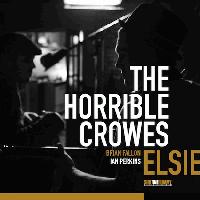
Review Summary: Be still my heart, I age 5 years at the mention of your name.
Brian Fallon is 31 years old. On the surface this is an arbitrary fact that transforms into extreme relevance once the sheer essence of this man is analyzed. Fallon is still young in body and like so many of his heroes his spirit is constantly longing for that ever fleeting concept of youth, but the overpowering sincerity in which his gravelly everyman tales are delivered transcribe something else entirely. Fallon is still spry, his passion is the type that can only be effectively channeled by a younger man, but his wisdom and experience are undeniable; resembling the credible, philosophical truths that can only be delivered by someone who has embraced a full life and lived to tell about it.
The reason Fallon is one of the greatest songwriters of his generation, aside from the reasonable hypothesis his mother spent the better part of 1979 getting drilled by Bruce Springsteen and crafting the perfect offspring to carry on his towering legacy in almost every conceivable detail, is his wisdom is far beyond his years yet delivered with impassioned romanticism. It’s the type of personal mantra that only the great ones get away with, and it’s the reason Fallon is so often legitimately mentioned in the same breath as the Greatest Hero of Jersey. Fallon’s anthemic tales of metaphorical escapism and longing for youth through the usage of everyman pillars are well documented in the Gaslight Anthem’s discography. If there is one universal truth about GLA, it’s their obvious goal was to rewrite “Born To Run” as a punk album, and the results were categorically satisfactory. When analyzing his side project The Horrible Crowes one could make the argument that Fallon is aiming to replicate the mid-to-latter portion of Springsteen’s career; instead of “Born To Run,” The Horrible Crowes owe more to “Darkness On The Edge of Town” and “The Rising.” Its quieter, darker, stripped down and bare at times, and ends up being an even greater tribute because this time around the sonic atmosphere is more in alignment with the hero worship.
When listening to Fallon, think of the atmosphere of the night, albeit in two distinctly, divergent ways. The first is through the transcription of anthems, the feeling of racing towards the city lights with full-on joyous intoxication, screaming your lungs out in exasperation and proclaiming to everybody that while it’s obvious you care about everything in your life and are obsessively worried about it, at this very moment you just don’t give a sh*t. The other is more contemplative. Picture the cover of Tom Wait’s “Closing Time;” the scene is drowning in whiskey, probably trying to figure out absolutely everything about life and after the bars close walking around with hands in pockets, not stopping until you conjure an answer to justify the struggle, to placate the sh*t that is roaring in your mind.
“Elsie” is about both of these ideals, these legitimate feelings and experiences, these trenchant obsessions. Songs like “Behold The Hurricane” and “Lady Killer” stamp the penultimate moments, both literally perfect compositions, impossibly melodic, transcribing those uplifting feelings through razor sharp hooks even if the subject matter is morose. Fallon’s greatest tool is his mastery of personifying the concept of human spirit, and the codas of “Crush,” “Bloodloss,” and “Go Tell Everybody” cements the theory the last minute of nearly every great Americana track is exponentially more powerful than the sum of the song. Listen and embrace the endings, from the gospel tinged “God’s gonna trouble the waters” theme of “Crush,” the manically passionate screams of “when your blood cuts its losses” in “Bloodloss, and the vexing, overpoweringly melodic overtones of “Go Tell Everybody,” which if the entire song matched its ending would probably be one of the greatest 500 tracks ever written. Even the somber moments rarely fail to impress; when Fallon gets his God on again in “I Believe Jesus Brought Us Together” and the snaking, stalker worshipping “Sugar” finish their rides, they provide sufficient proof Fallon doesn’t need a massive hook to carry a song.
What Fallon has proven in a few short years is as long as he has a pen and an audience to dig his soul out the result is going to be impressive by default. Fallon transcends championing the everyman much like the Boss in tales of school yard girls vexing all of the young boys, cars parking at any river’s edge, and the never ending worship of streetlights and all of the stories they would have if they could talk. In the end it’s all about spirit and soul, two impressively enormous yet fragile concepts that can easily be mishandled. It might be as simple as Fallon is just an incredibly talented dude who has a knack for laying down the tales of his life, but that would be understating the point, because what really matters is Fallon has the ability to draw us in, and the result of this tactic is once again astonishing.