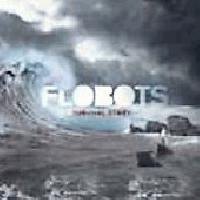
Review Summary: Armed with more verbal barbs, Johnny 5 takes aim at authority but takes too many shots
Flobots’ meteoric rise to fame was as anticipated by the group as by the rest of the country. The story goes that they submitted a song to a contest held by a local radio station and won. The song subsequently became the fastest charting single since Semisonic’s “Closing Time.” The single that got them discovered, “Handlebars”, describes the achievements of a young man that eventually reaches beyond his achievements and delves into his fantasies as a world dominating megalomaniac. This song is more or less the opposite of the Flobots themselves. The initial reception of their music elevated them to a world (or at least country) dominating phenomenon only to have the hype train jump the tracks after the public realized that their album wasn’t anywhere near the quality of “Handlebars.” On Flobots’ second major label album, Survival Story, they try to move past their “Handlebars” days- going so far as to abandon their trumpet player- and become a more socially conscious, politically charged group in the same vein as Public Enemy or alt-rock contemporaries Rise Against- who’s vocalist, Tim McIlrath, is featured on the first single off of Survival Story.
And after listening to Survival Story it becomes blatantly clear why the single, White Flag Warrior, was chosen. The song is one of the most obviously standoffish towards war and critical of governments that choose to engage in combat. The message of the song is blatantly obvious and the presence of real life white flag warrior- that is, one that stands for peace- McIlrath reinforces the message twofold. The song impresses its will upon the listener a little bit too hard though. Lyricist Johnny 5 pushes the issue to the point where it loses its power and becomes a smarmy reminder that violence is a bad thing. Other songs, like “Defend Atlantis,” occasionally suffer from the opposite problem: that Johnny airbrushes over topics like global warming with flippant remarks like “***in with the ice caps/we gotta push the tide back.” This alternation between overt emphasis and hands-off observation is a problem that plagues the album to the point where one doesn’t know whether the Flobots truly care about what they preach or if they’re merely false prophets out for attention.
Despite their lyrical shortcomings, Flobots certainly do have a unique sound that ultimately makes Survival Story a passable album. Forgoing the typical MC-and-DJ hip-hop format, Flobots follow in the footsteps of alt-rapper Citizen Cope and boast a stable of six musicians behind frontmen Johnny 5 and his accomplice Brer Rabbit. Some will accuse the backing band as being a gimmick to attract more fans but whether or not that’s true is irrelevant. The bottom line is that the band’s music fuses perfectly with each MC and morphs on the spot to better support them with precision that can’t be matched with a program. Songs like “The Effect” showcase the bands chameleon-like blending while “By the Time You Get this Message” features Johnny 5 spitting his heart out with the band building ferociously to the climax. Truthfully, without the band there wouldn’t be much reason to listen to Flobots. Whether the member’s influence is obvious- drummer Kenny Ortega- or more subtle- violinist Mackenzie Gault- their very presence makes each song more elastic and exciting.
But perhaps the most frustrating part of this album is that the wrong parts of the group are the ones getting utilized. The bass guitar, normally an anchor in any rap outfit, is almost entirely absent. This means that many verses fly out of control- particularly those on “Airplane Mode”- because there’s no steadfast guidance as to when a rhyme might end or begin. Ortega’s drums rarely actually provide rhythm, more as exclamation points, so the MC’s are left to roam free. If the bass was there to rein them in, the album would be more refined and less free-form. On the vocal side of the equation, Brer Rabbit gets far fewer verses than Johnny 5 despite possessing better flow and less preachy lyrics. He’s been known to use metaphors whereas Johnny relies on bombarding the audience with facts and statistics about injustice in the world. On some songs, Rabbit is reduced to singing the hook or chanting in the background despite his superior skills. This arrangement is somewhat understandable: Johnny is something of the band’s frontman while Rabbit has always played second fiddle; but it’s very rare that “co-MC’s” like those in the Flobots have such a varied amount of verses- which I’d estimate at around a 65-35 split. Without the guidance of the bass and the unexpected departures or Brer Rabbit, the album crumbles beneath the weight of the lyrics.
The Flobots love to implore their fans to “strengthen the message” of their music and become an upright, socially conscious adult. However, it seems that they haven’t found a way to strengthen their message since the release of “Handlebars.” All the same old Flobots staples that you probably came to hate during their initial run of success are still present- minus the trumpet, of course- and there hasn’t been a particular evolution. Certain parts of the music and vocals, particularly Brer Rabbit’s singing, prevent Survival Story from officially sinking the Flobots’ career but other parts are disastrous. Instead of strengthening the message they merely reinforce it using the same middling methods that they used in the past. And while this album may not keep its head above the water all the time, it doesn’t sink either.