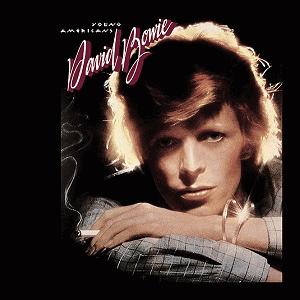
Review Summary: “I wanted to get into that whole Warholism of Polaroiding things… Young Americans was my photograph of American music at the time.”
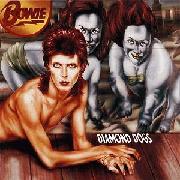
There were hints scattered throughout
Diamond Dogs that change was afoot for England’s greatest musical chameleon. Even then, no fan could’ve have prepared themselves for the headfirst dive into blue-eyed soul that David Bowie attempted on
Young Americans. Acquiring an ensemble of talented funk-soul tradesmen (such as Isley Brothers’ veteran, Willie Weeks on bass, Carlos Alomar on lead, and an unknown Luther Vandross singing backing vocals); Bowie had the materials he needed to play on his fantasies of creating a fully-blown soul record, much in the vein of one his long-term idols, James Brown.
Addicted to cocaine and stuck in a cycle of reversed sleeping hours, Bowie was brimming with energy come the initial recording sessions. So energetic in fact, that the title track was recorded the same day producer Tony Visconti touched ground in Philadelphia. ‘Young Americans’ is downright classic, featuring a perfect example of Bowie’s sublime vocals - all breathy flitter and soul, telling a tale of what he saw in the lives of the young couples and general populous of his relatively new stateside home. It was surely the funkiest sound a pale glam-rocker from England had ever produced, with David Sanborn’s sultry sax wailing fabulously in the background, alongside the funky rhythm section and subtle piano twinkling.
The rest of the track-list further explores Bowie’s plastic-soul experimentation, with underrated cuts such as the silky-smooth ‘Win’, the laid back funk of ‘Fascination’ (once considered as an album title), and the pure Philly-soul of ‘Right’. Each represents a high point that, whilst never troubling the gleaming crown of the title track, comes close enough to seem worthwhile. Unfortunately, after ‘Right’ draws to a close the album loses a little steam, with ‘Somebody Up There Likes Me’ and ‘Can You Hear Me’ failing to capture the excitement of earlier tracks, with overly long durations that become rather laborious towards the tail-end.
One couldn’t call this a sufficient review without mentioning a very special collaborator on two tracks - one a Bowie original and pop classic (‘Fame’), and the other a cover of ‘Across the Universe’. If the name of the cover song didn’t already give it away; Bowie’s collaborator on the aforementioned pair of tracks was none other than John Lennon. The two Brits happened to be working on their records in New York at the same time, socialising ensued, as did the jam session that spawned ‘Fame’ and ‘Across the Universe’. The latter is a so-so cover - more of a curio than anything else, but the former is essential. Lennon’s contributions are barely tangible, but Bowie’s gushing suggests he was still important to ‘Fame’s inception: “He was the energy, and that‘s why he got a credit for writing it. He was the inspiration.”. ‘Fame’s ridiculously funky riff and cynical jab at the celebrity world made it an undeniable classic - up there with the title track in terms of quality.
Young Americans, despite Bowie‘s future unease about its existence, was the album responsible for breaking him into the American market, reaching the top ten, and spawning a #1 single in ‘Fame’.
Young Americans was more than just an interesting genre exercise - it represented one of the first significant excursions by a white man into a genre that was previously seen as a ‘black-only’ style of music, and in the process, Bowie opened the floodgates for blue-eyed funk imitators everywhere to experiment with African American rhythms. The really special thing about the LP is that Bowie did it all before disco really exploded and become a serious chart presence.
Some would call it a genre-exercise that fans didn’t necessarily wish to be subjected to, and whilst that’s true to some extent, with ‘Fame’, ‘Win’, ‘Fascination’, ‘Right’ and the title-track all on the disc, such a view tends to wear thin in favour of one that labels the album a different, but still delicious flavour of Bowie. For those who just couldn’t get over the leftfield change of style, they didn’t have to wait very long - by the time disco went big the restless musical chameleon had moved on to pastures new, but what else did you expect from one of music’s great innovators?