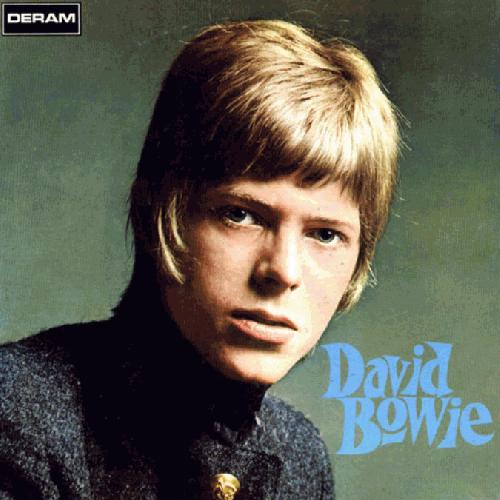
Review Summary: Buddhism, gender-bending, paedophilia, and infanticide flirt with Anthony Newly-esque vaudeville.
David Bowie is one of those inexplicable albums, sounding unlike anything else England’s iconic musical chameleon would produce in the following four decades. It’s an anomaly in Bowie’s recording history, produced under the Deram label who poorly backed this Brixton boy’s debut LP, and in the process, transformed it into one of music’s great overlooked curios.
There’s been a lot written and said about this very early phase of Bowie’s career - most commonly quips at the record’s youthful innocence, oddity, and its more than vague similarity to Anthony Newly’s music hall tones of the same era. Bowie has never denied the influence that ‘Tony Newly’ played at the time of his naïve entry into the music business - a sentiment which the 14 tracks on
David Bowie echo perhaps too strongly. The future would leave Bowie rather embarrassed about this vaudeville-tinged juvenilia, and whilst it does sound immediately less concerned and rocking than his seventies masterpieces, it does have more going for it than initial prejudice might suggest.
The songs are light and innocent with Bowie’s vocals sounding a little less passionate and technically skilled than on later recordings, whilst still remaining thoroughly charming with his ‘cheeky-chappy’ cockney delivery. We hear eloquent string sections alongside whimsical horns, organs, and plenty of silly, juvenile sound effects, such as a stereotypical German-accented squeal barking orders in the background of the Orwellian ‘We Are Hungry Men’.
Aside from the mostly jovial short-story excursions, Bowie touches on incredibly serious topics such as infanticide, present on the eerie closing number ‘Please Mr. Gravedigger’. The quirky cut is delivered a cappella in front of a soundscape comprised entirely of atmospheric sound effects, evocative of a walk through a stormy graveyard, with ‘Mr. Gravedigger’s snotty sniffles and inaudible mumbles adding to the already overwhelming weirdness. ‘Little Bombardier’ touches on paedophilia, whilst ‘She’s Got Medals’ sows the seeds for Bowie’s future tales of confused sexuality. Here, it’s delivered in a semi-comical fashion, made all-the-more humorous by the knowledge that ‘medals’ was sometimes used as a slang term for ‘balls’, back in the day.
Sure it’s juvenile, whimsical, odd, and perhaps a little too influenced by Anthony Newly at times, but
David Bowie shouldn’t be as big a source of embarrassment for it’s creator as it sadly seems. The youthful exuberance gives the album a gentle, lovable quality, evocative of a carefree romp through a fairytale world, complete with its many caricatures and eccentricities. The package is made all the more compelling by the tentative attempts at darker lyrical themes, dotted throughout. It doesn’t sound like the Bowie most appreciators are familiar with, but the man is hardly known for sticking with one sound. In other words, understanding his eclectic nature makes the album much easier to understand, digest and enjoy.
David Bowie was simply a natural and necessary step in his musical evolution.
Ultimately, it’s far too odd and curio-worthy to be recommendable to all but devoted Bowiephiles, nor is it an ideal starting point for neophytes - it’s uniqueness serving as a poor representation of Bowie’s defining sound. Having said that, for those that do wish to venture into this naïve, youthful incarnation of David Bowie, there’s enough substance here to pick apart and devour for long enough to seem just about worthwhile, even if it does come in the unfamiliar flavour of whimsical folk-pop.
[Side Note - Anyone seriously interested in this early chapter of Bowie’s work would be better off investing in
The Deram Anthology 1966-68. It contains
David Bowie in its entirety, and adds the majority of singles and outtakes Bowie recorded whilst operating under the Deram label. If you’re going this far it makes more sense to see the complete picture, rather than just catch a brief glimpse.]