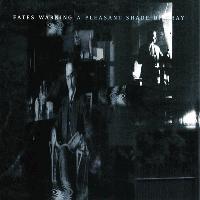
Review Summary: While it raises numerous questions and and explains little in return, Fates' eighth album is an intricate account of depression with broad swathes of progressive experimentation.
After the shock of being cancelled from their world tour for Inside Out and seeing their marketability set into a freefall at the force of their label, and having their founding member Joe DiBiase retire from the group, one had to respect Fates Warning for heading back into the studio to write and record material for their eighth album. Things here seem to reflect a stark honesty in the band’s songwriting, from a hazy mood and depressive heart, with broad swathes of progressive experimentation that are largely absent from the more aggressive years earlier on in their career. The lyrics are overtly depressive and filled with despair, winding through the characters musings on humanity being subject to time, and on life being subject to – or, bleeding out to - time itself. An audio clip of a man begging to be shot to put an end to his life is enough to break a sweat just from hearing it.
The theme herein is that of anguish and regret, and that the expression that arises through cathartic pain is one the most beautiful and powerful features of humanity. This idea of beauty rising from depression wouldn’t be bad to explore in a musical sense by itself, but it is given poor implementation. Here we are presented what is undoubtedly a consummate conceptual story… only, there isn’t a story. There’s no introduction of characters, of this world, or the state of their surroundings. The album doesn’t answer a single question that arises from listening to it, with the story summed up as the character looking out his window for an hour while contemplating facets of life through a hopeless outlook before he awakes from his dream (signified by an old-fashioned alarm clock sounding at the end of the album). As if the revelation of it only being a dream sequence didn’t kill the mood and build-up, one can only wonder about the story he dreamt about
: What is the reason for his depression? Is there a relationship gone wrong? Did someone die? Is he actually attempting suicide or is he just running through a stream of dark thoughts after a traumatizing ordeal? What is his world like? A standard in writing that should be equally applied to concept albums is to make an audience not have to ask themselves “Who is this person and why should I care?” And still, the entirety of the lyrics is vague enough as to be interpreted religiously, as though he was talking to his God in his dream.
Hilariously, and in which is perhaps the most thought-provoking moment of the entire album, has the physical release featuring a wraparound of storms and rain and the ripples it creates, before opening up to a crudely rendered image of a brain holding an umbrella – with clear surroundings and no rain around it. This is a concept that warrants discussion, if a person is responsible for pushing themselves deeper into depression when the outlook around them isn’t as grim as it may seem. Things aren’t explained in this area either, however. The band couldn’t have been bothered to even place names on the individual tracks, leaving it to the fans to nickname them in order to foster discussion on the album.
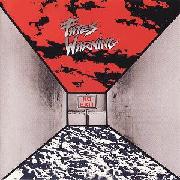
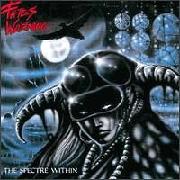
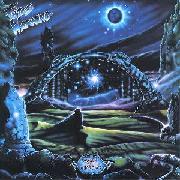
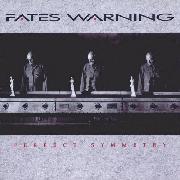
Fates Warning released A Pleasant Shade of Gray to mixed reception, however garnering respect for its progressive fervor and uniqueness even within its own genre. That grew into a collective underground aura of acclaim. While their fans are wildly divided by the Connecticut group's constantly changing sound - from the galloping epics of The Spectre Within to the DIY street metal of No Exit, the machine pulse of Perfect Symmetry and the commercially refined Parallels and Inside Out – there is an agreement that Fates Warning was onto something truly grand. It wasn't until later that people began to regard A Pleasant Shade of Gray in a more positive light, and its popularity subsequently grew as the album is now considered inimitable in the progressive genre.
With tempos across the majority of this prog metal album slowed to molasses, the pressure is placed on percussionist Mark Zonder to create a sense of drive. He skips across his drum set intricately, eschewing any and all pretenses of classic rock influences. Then there’s a slip of electronic vibes and dark wave influences on via Dream Theater's ex-keyboardist Kevin Moore, but he shines in his more traditional piano and synth roles, notably in two moments of beauty that stand out for the progressive genre (Part IV, Part VIII). Parts V and VII are the exact same song, just variants of each other, with the former having a longer build up and finale and the latter having the aforementioned voice clip. Other tracks leave much to be desired, with Part VI having great melodies that are slowed down and droned on for far too long, and the final two tracks on the album sounding disjointed, unpolished, and completely unfinished, coming off as uninterested from the band members themselves. Matheos’ short guitar solo at the half-hearted climax is embarrassingly rough around the edges, and somehow self-aware of its predicament, as if his band mates were already placing their instruments in their cases as he recorded it.
Alder’s vocals are respectably articulated throughout the performance and Kevin Moore could be responsible for the larger atmospheric sound versus metal. That being said, the whole affair is so far off the musical genre that it could hardly conform to any genre if it weren't for Matheos' non-adherence to basic time signatures, and Zonder’s ability to chop a song into a living, breathing machine. Unfortunately, the songwriting is somber and mechanical to begin with. This is not the album you are supposed to jam to, or rock out to, or even express your anger with. Don't drink to this either, it will only put a person more in-line with the character – and not due to the music. Part IV is a perfect example of what I'm getting at. There is just an overwhelming mindset of loathing the state of life, with not even a mention of what made this character happy.
From the crackling cloud that starts off ‘Part I’ to the nine minute finale ‘Part XII’, this entire album is not something you can love at first sight. The accessibility is insistent on rejecting the listener, with no driving rock moments of previous albums, leaving only a droll record to the fans that stuck around up till this point. Perhaps that was a point made by the band in this album, as critics and fans alike heralded Perfect Symmetry as their most impressive moment instrument-wise, showcasing their talent as a musical force to be reckoned with. For progressive fans this is worth a listen, but to others it will seem rough around the edges, and lyrically irrational and bland. Exploring a whirlpool of cathartic thoughts and being haunted by severe accounts of regret is nothing new for the progressive metal genre, and A Pleasant Shade of Gray does a great job at building a prototype of a classic, setting a dreamy stage with turmoil mixed in the 12 untitled tracks. But it falters by leaving it up to you, the listener, to devote an incredible amount of time to fill in the entirety of the blank.