Review Summary: Canadian group's second album is darker, more complex, but just as rewarding.
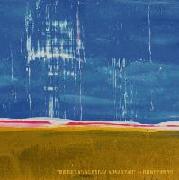
In a way, the key differences between Departing, the second album by Canada's Rural Alberta Advantage, and Hometowns, their debut are neatly summarized by comparing the covers of the two releases; Hometowns featured a bright, painted scene of a sunny, idyllic rural landscape, and the bright, home-spun songs belied this picture perfectly, by contrast, Departing is, well, quite a bit different. The album's cover initially appears to depict nothing so much as an empty expanse of white space, with the title in the lower corner, but, if one looks closer, the slight image of a road, and oncoming truck headlights can be hazily made out, as if one were driving through a particularly nasty bit of Canuck winter. Though the songs which make up Departing aren't quite as bleak or as obscurantist as the cover would suggest, they do represent something of a departure from Hometowns, even if the key musical ingredients remain consistent between the two albums.
The utterly cliche way of contrasting Departing from Hometowns, and one which would link neatly back to the covers, would be to say that this second album is the “winter” to the first album's “summer”, and, at first listen, this conclusion bears out. That first album began with “The Ballad of the R.A.A.”, a warm, slow-building statement of purpose, while Departing kicks off with the strummy, lovelorn “Two Lovers”, and while the two songs share musical elements (rough percussion, light keyboard dapples, expansive space between the instruments) they work at cross-purposes in terms of tone and conveyed emotions. This trend continues throughout Departing, where elements from the band's earlier tracks are twisted and manipulated slightly in order to turn them colder, and more sinister: the synth-nicks on “The Breakup” have a harried, paranoid quality, while the distorted guitars on “Muscle Relaxants” add a darkness to what might otherwise by a country-ish rave-up, the single-key piano on “North Star” feels like a lonely signal ping being sent out through the night. In these environments, Nils Edenloff's vocals, use more strain-for-effect here, take on a more tortured quality, which also nicely compliments his new, more pessimistic, lyrics. If Hometowns was essentially a trip through his nostalgia for a youth spent in the oil-rich province, albeit a journey with occasional flashes of sadness and regret, Departing feels like that same nostalgia gone bitter, where the future holds little promise and the only respite lies in the past. Whereas he might have chronicled the car ride of “North Star” with a fond smile before, here it's used as a pretext to beg a lost love to come back following the titular heavenly body. “The hardest thing about this love is that it's never coming back”, Edenloff sings on “Stamp”, and the words here keep coming back to ideas and images like that: “coldest days”, “never”, “winter”, “ice”, “if . . .”.
Departing isn't all doom-and-gloom, though, even if a spectre hangs over all of it. “Barnes' Yard” is a rushing, high-spirited number benefited by wonderful percussion work which recalls the first album's “Edmonton” and the album closer “Good Night” is a warm-if-weary duet between Edenloff and keyboardist Amy Cole. These moments of relative lightness as well as the band's consistent musical adeptness prevent what might in lesser hands be a joyless slog from losing focus and grace. As well, it bears mentioning that despite its generally upbeat character Hometowns had its moments of darkness, particularly “Don't Haunt This Place”, so, this move isn't the hard stylistic turn for the Advantage that it might initially appear to be. Granted, nothing on their debut made a grab for the darkness of some of the material here, but, this isn't a Joy Division album or the Cure's Disintegration.
Departing is, ultimately, in many ways, the prototypical “difficult second album”; though it mostly sticks to the same formula that made the first a success in terms of its instrumentation and songwriting, both of which remain first-rate, it is a more lyrically and tonally complex work that may alienate fans of the band's debut. The album's darkness could be read as a reflection of many things, maybe an emotional rupture in Edenloff's life, maybe just the band being battered and exhausted from constant touring in support of Hometowns, but, really, the “why” isn't so much important here as the “how”, as in “how does it turn out”. Though the album doesn't hold equal to the freshness of the Advantage's debut (and, really, how could it), nor do all of its stylistic additions prove entirely effective (the keyboard blurts on “Under the Knife” feel pasted-on, Edenloff's vocals occasionally cross into histrionics), it is still a strong piece of work. The Rural Alberta Advantage seem to have a career of many years ahead of them, and Departing will, with any luck, be looked back on as the album where the band first showed that they were not a one trick group, but rather one which could tackle a variety of material with conviction and artistry.