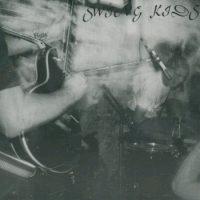
Justin Pearson may well be one of the most prolific musicians of the last twenty years - at least within the ‘punk’ genre, in its broadest sense. From playing in bands such as The Locust, Some Girls, and Head Wound City; to collaborating with a diverse range of artists including The Bloody Beetroots and Bastard Noise; to founding, and running his own label, Three One G Records, it is safe to say that Pearson is a busy, busy man. Before The Locust and Some Girls however, arguably the projects he is best known for, Pearson fronted influential San Diego hardcore band, Swing Kids. Swing Kids’ influence affected both their local hardcore scene and the shape of punk to come worldwide, with bands such as Refused and Orchid proclaiming the band as inspirational. In their three year existence the band churned out a series of Splits and EPs, all of which were compiled into one accessible Discography CD five years after their demise.
It goes without saying that their
discography is fully representative of Swing Kids’ sound: short blasts of unhinged, downright nasty punk-rock, occasionally tempered by more
jazz-orientated sections. It is easy to see how bands such as Refused took Swing Kids as an influence. Clocking in at 20 minutes exactly, the discography is over in a flash and at times is unnervingly direct. Dissonant, dirty guitars may wind their snake-like way through the mix, but Swing Kids’ sense of purpose is rarely compromised. Perhaps this is as a result of a solid rhythm section: the menacing grooves of the bass underpin the racket; the brash, yet steadfast drumming adds to the energy levels whilst maintaining a steady, pulsating rhythm. And at the heart of it all is Pearson himself, his gloriously ragged, passionate cries of “we’ve all ***ed up” over frantic palm-muted guitars in
‘Line #1’ acting as an extroverted focal point. One criticism you could level at him however, is his relative lack of dynamic range – this is something that really prevents Swing Kids from going even further.
At their most elementary, Swing Kids are a fairly accomplished and interesting punk band, but what made them special was their willingness to experiment. Relatively straightforward tracks such as their cover of Joy Division’s
‘Warsaw’ offer only mild thrills when compared to their more experimental moments. Such moments include the unexpected timbre changes in
‘Blue Note or the juxtaposition of scatty drums and meanderingly twinkly piano lines with abrupt blasts of aggressive hardcore punk in album highlight,
‘Disease’. Next to such experimentation, tracks such as
‘Intro To Photography’ and
‘El Camino Car Crash’ seem rather tame and uninspired in comparison. Ultimately, while proficient in its own right, Swing Kids’ purely punk side is not as exciting as one might have hoped, nor is it as gifted.
It could be argued that Swing Kids are the most straightforward of Pearson’s ventures, but to assume they are not without intrigue or eccentricity would be wrong. After all, the band were one of the first to test the marriage between ‘punk’ and seemingly unsuited genres – an exciting prospect in itself, regardless of final quality. Although their results aren’t as awe-inspiring as those who came after them, one has to admire their creativity and passion, or at least, the influence they would exert on some of the most important bands in ‘punk’ to come.