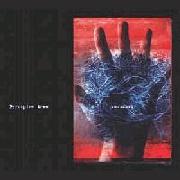
Review Summary: If the tracks are taken individually, Deadwing could be seen to be a bit of a disappointment by PT's standards. But taken as a whole piece of work, it shows its true quality as, arguably, the band's most cohesive work to date.
Ask most pretentious music fans (and I include myself in this group) what they say is the most important facet of a great album, and they'll probably tell you that it's something to do with the flow of the songs. Sure, an album can be made up of mostly incredible tracks, but if they don't flow together well, be that in terms of atmosphere or mood, then it may as well be a greatest hits collection that you're listening to. If you asked me personally to give you an example of such an album, I would most certainly direct you to Deadwing.
Deadwing's predecessor, 2002's In Absentia, was an album made up of gorgeous, sprawling masterpieces of tracks. It had Trains, which has become the 'fan favourite' of choice for the band, it had Heartattack In A Layby, their most depressing song (which, considering the downtrodden outlook of almost the entirety of their discography, is saying something) and it had an excellent lyrical theme about a serial killer running through it. On paper, it's the better album than 2005's Deadwing. It has fewer weak tracks, and its best moments are probably higher peaks than any seen here. And yet I can't help but feel that Deadwing is by far the better album, primarily because of the aforementioned flow that ensures that it is such an engaging listen.
As is the Porcupine Tree custom by now, the album opens with a simple keyboard riff to build texture and, as frontman Steven Wilson says, to 'ease the listener in.' And that's needed here; after about forty seconds of this calm, the trademark crashing of the PT guitars make their entrance in glorious style, and herald the beginning of what would prove to be yet another fantastic album in a row for the band. The opener, and title track, is a strange choice for an introduction to the album, clocking in at nine minutes long and with some uncommonly meandering instrumental passages. But it all 'works,' as it were, and before you know it you're moving through the album's considerable running time at breakneck speeds, unaware of how the time has passed in what seems like such a blink of an eye.
And Deadwing certainly has its long tracks; the centrepiece of the album, Arriving Somewhere But Not Here, is a sprawling track that runs the gamut from a quiet, almost ambient introduction, into a triumphant classic rock style bridge, before moving to heavy riffing, then back to ambient again by the time of its resolution. At twelve minutes long and with multiple solo sections, one would be justified in thinking that this could drag on somewhat, but it manages to escape this fate simply because of the strength of Deadwing as a cohesive unit.
I've been talking about this 'flow' that makes Deadwing great for a while now, so what do I actually mean by it? There are some albums that just feel 'wrong' if not listened to all in one go, as a true experience rather than something to pick individual tracks out of. Deadwing manages to epitomize this viewpoint. Everything from the compelling, if still unknown, concept running throughout the lyrics, to the gorgeous artwork that accompanies and complements the music perfectly, to even the band's best production to date (it's one of the warmest sounding records you'll ever hear, despite some clipping issues) enhances the feel that this really is one of the band's most cohesive works yet, if not their most complete album they've ever made.
And it's lucky that this is the case, as the weak tracks on Deadwing are probably amongst the weakest in the band's catalogue; Shallow and Halo in particular stand out as sounding uncommonly like filler for a songwriter of Wilson's stature, but they, too, are saved by the overriding feeling that this album really does work completely when all of the puzzle pieces are assembled together, and its taken as a whole. Hell, the B Side 'Half Light' that was going to serve as the final track of the album is a much better standalone track than actual closer 'Glass Arm Shattering,' but in the context of the album, Wilson's final choice simply couldn't be bettered.
And even though Deadwing does rely on this 'all or nothing' approach to succeed to such an extent, that's not to say that it's without its moments of its own. The ascending piano lines in the gorgeous Lazarus are a highlight to both hardcore and casual fans alike; the chorus to Open Car is about as evocative of the subject matter as lyrics get; Opeth's Mikael Akerfeldt even gets an excellent look-in during his well-judged solo in Arriving Somewhere But Not Here. Whilst there are definitely these highs in the album, and many more, one could pick out much better moments in most of the band's other recent albums.
But in the case of Deadwing, that really doesn't matter. As I mentioned at the start of this review, In Absentia has much better songs, and fewer (well, no) duds. Fear Of A Blank Planet is more consistent, The Incident more compelling and Lightbulb Sun more joyous. But Deadwing does, somehow, manage to hold its own against these seemingly better pieces of work, for the simple reason that, when taken as a whole rather than in chunks, it is absolutely one of the best musical experiences that one could hope to have. Put your headphones in, set aside 59 minutes and 35 seconds of your time for a focused listen, and be blown away by what a difference a full listen can make.