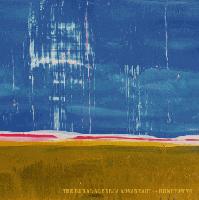
Review Summary: Canadian band's debut is warm, nostalgic, and wonderful.
It's often hard to associate a band with a specific country or geographic area, especially with the vast majority of musical artists striving to have universal appeal and, thus, bleaching-out local colour from their lyrics and music. It's refreshing, then, to see a band be as forward about where they come from as the Rural Alberta Advantage; it's right there in their name!
That aside, though, Hometowns succeeds primarily for two reasons: The first is its semi-intangible capturing of place within music. The lyrics are peppered with references to the "Rockies" and the "Great Lakes", open fields and night skies dominate the imagery, "Frank, AB" is a tribute to that town's mining industry, but it's something less concrete than that. The music, even though the band incorporates many different instruments, always maintains a crucial sense of open space; it sounds like the small towns they're singing about. The thing that keeps the lyrical preoccupations from simply being town-pride cheese is that one always gets the sense that the band is looking back on happier times after having moved on to another place, especially with "Don't Haunt This Place"'s desolate description of a "west-side apartment". In this way, the album's title makes sense as the whole record seems to reflect the sort of wistful longing for one's home that comes after moving on from it, usually with moving away for education. With its purposeful focus on particular places, characters and concepts, Hometowns could be a sort of Canadian answer to Springsteen's Jersey-centric early albums, particularly Greeting from Ashbury Park.
The second reason the record works so well is the Advantage's incredible musical dexterity. The opening song alone is able to work in twinkling glockenspiel, swirling synths, mournful cello and rough-cut percussion without ever sounding lost or arbitrary. "Rush Apart" and "Edmonton" show that the band are well-versed in country, the horn-heavy and death-haunted "Luciana" feels a like a lost Neutral Milk Hotel song, the choppy post-punk riff on "Drain The Blood" is a bit anomalous but still works well. One thing that does remain the same throughout all of the songs is the masterful percussion work: never showy, always propulsive and tasteful.
If I could muster a complaint it would be that Nils Edenloff's nasal voice takes a bit of getting used to but once you're settled to it, it feels like just the right sort of voice (kind of sloppy, not technically precise) to voice these sentiments. Reports also seem to indicate that the band is a lot more energetic in a live setting. This is always a danger with bands in the transition from stage-to-record, particularly first-timers, and while it may not be necessarily good, it is understandable, for a variety of reasons. In particular, with the variety of instruments at play here, a live concert by these guys would seem to be considerably more raucous.
And, really, when a band covers this much stylistic ground and comes up with a ballad as beautiful as album closer "In The Summertime", a slight down-shift in energy is imminently forgivable.