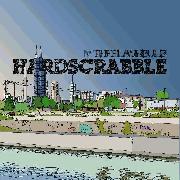
Review Summary: He didn't make anything as grand as Soundtrack to a Vacant Life, and listeners should take that however they see fit.
Benn Jordan is a pretty busy guy. He released the jam-packed
Soundtrack to a Vacant Life and
Arboreal, in addition to a couple albums under other monikers, just over the last 3 years. Yet the Flashbulb enters the new decade with
Love as a Dark Hallway , his seemingly rushed follow-up to last year’s
Arboreal . Jordan has proven up to last year that he can shovel out frequent, quality albums that don’t disappoint. But does he keep it up with his 2011 album, or has he finally burned out?
As some might expect,
Love as a Dark Hallway doesn’t bring a groundbreaking new sound or a particularly vivid new direction. Any speculation that this album could have been made better with time is indeed valid: in fact it’s pretty short next to his previous 2 records, and to some it may even come across as a B-side or an overlong EP. True as this may be, Jordan doesn’t release a rehashed dud and interestingly opens up to a more jazzy sound. “Tres Ebow” is the best representation of this, being the complete avatar for all the jazz influence running about. Besides the jazz,
LAADH sounds like a continuation of last year’s
Arboreal, with the first two tracks sounding all too familiar. Jordan doesn’t experiment on this album as much as his vibrant
Soundtrack to a Vacant Life, keeping up with his gentle piano songs (“A Baptist Church In Georgia”), breezy acoustic guitar tunes (“The Basement Guitarist”), and impressive hard-rocking segments (climax to “We Are Alone in a City”). Most of the album simply brings back the Flashbulb’s spacey synths and whirling progressions.
With the album being slightly shorter, and with a lesser spectrum of electronic sounds,
Love as a Dark Hallway is a bit more focused than his more broad albums. This can be a polarizing factor however: some may enjoy the record’s orbit around a narrower style and simpler approach, but others will be utterly disappointed or left with more to be desired. This by no means makes the album stale or repetitive. One example is the relationship between “Let me Walk You to Your Honda” and “Virtuous Cassette”, with the former being a slightly murky, mid-tempo, danceable track and the latter being a bit faster, light-hearted and jittery, both songs coming from a similar sound scheme. Other mentionable tracks include the electro-jazzy “The Basement Community”, a good illustration for the album’s hybrid, and album closer “We Are Alone in a City”, a guitar-based song with a fantastic climax that serves as a great way to shut the album down.
So yes, The Flashbulb does release another quality album, and one of somewhat subjective quality at that. He didn’t make anything as grand as
Soundtrack to a Vacant Life, and listeners should take that however they see fit: as mentioned above, this can be disappointing to some and quaintly interesting to others. In the end,
Love as a Dark Hallway is what it is, it’s more Flashbulb. Sure, there's a jazzy film over the package but this doesn’t drastically change the world of Flashbulb as we know it. The album is definitely worth a listen for fans of Benn Jordan and electronic music of all kinds, and while it may feel a bit premature it’s a great album all the way through with a more focused sound and compressed variety.