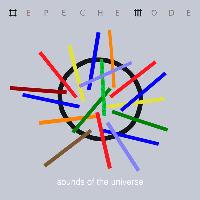
Review Summary: 30 years in the music industry doesn’t seem to have worn down Depeche Mode's steam or creativity one iota. Familiar yet fresh, 'Sounds of the Universe' is a consistent and satisfying listen.
Where are most bands after 30 years in the music business? Washed up? Outdated? On their last legs? One of those descriptions likely fits a sizeable portion of bands that have been together for 3 decades. But Depeche Mode’s twelfth studio album (Sounds of the Universe, 2009) fits into only one description: satisfying.
It’s satisfying in the sense that if (most) Depeche Mode fans pick up this album, disappointment shouldn’t be an issue as there’s more than a few tracks that are somewhat familiar, but in a good way. Familiarity can sometimes be negative but 'Sounds of the Universe' has a few nice touches up its sleeve to save itself from being samey and uninteresting. Songs like 'In Sympathy' and 'In Chains' might be fairly standard Depeche fare in terms of lyrical content (the latter having an S&M theme, vaguely reminiscent of 'Master & Servant') but still sound fresh.
This is probably down to Martin Gore who seemed to have spent the 4 years in between 'Playing the Angel' and this album shopping around on internet auction sites, amassing a collection of old early 80s synthesizers. This lends itself to the sound of the album quite well - it feels refreshing because synthesizers have moved on a lot in 30 years, so hearing these old, quirky and charming instruments in operation again is an anomaly in modern music and remains a delight. The older sounds woven with newer technology (Ben Hillier’s production probably deserves a good deal of credit) creates music that is nostalgic yet new, familiar yet fresh, redolent of earlier times yet not so outdated that it sounds regressed.
'Sounds of the Universe' is a slightly 'happier' album than what Depeche fans may be used to (and when I say happy, I mean happy for a Depeche Mode record, i.e. slightly less dark), with the opener 'In Chains' featuring an energetic, whirling chorus of electronic buzz, and the Gahan penned track, 'Hole to Feed' containing a squelchy rhythm and bouncy little electronic pops and fizzes bounding around in the background. This slightly jollier theme ends up being one of the albums biggest hooking factors, as it, rather impressively (considering the band has been making music for 30yrs) makes 'SOTU' stand out as a distinctive album in Depeche Mode’s extensive and varied catalogue.
Thankfully, Depeche didn’t forget to neglect their darker side either, as evidenced by the absolute killer 'Wrong'. It’s short and energetic, but razor sharp and catchy. The melody buzzes around like a bee on acid and Gore’s lyrics are as hooky as they’ve been in years. There are plenty of other worthwhile moments on 'SOTU', like 'Peace', 'Fragile Tension' (with a haunting guitar riff on the chorus), or the calculated, Gore sung track 'Jezebel' featuring chilling and glowing atmospheric synths.
Few bands deliver songs of this calibre after as much time in the music business as Depeche Mode. Familiar and nostalgic in all the ways it needs to be but creative and fresh in other areas, proving fans with a satisfying listen. Because its slightly less dark, it’ll take a few listens before your average Mode fan is hooked (although 'Wrong' hooks you in on its first play). With quality like this, Depeche are far from finished and one can only admit that album thirteen can’t come soon enough.