Review Summary: ...And our hearts still beat the same.
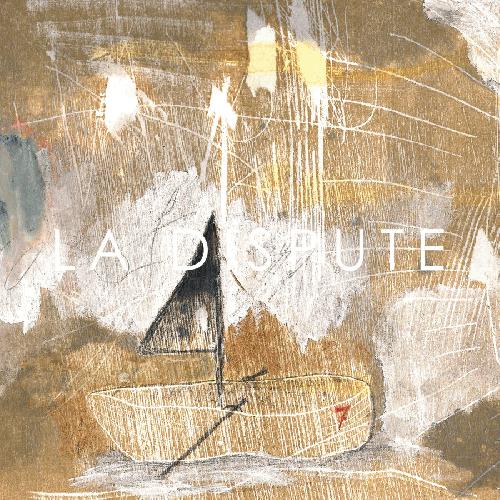
Do you remember the first time you had your heart broken? I know I do. It was a cold, dreary day in early fall– colder than it should have been in October –and I had no idea what was coming; just as I had no idea that the next few months would bring some of the most trying times I have experienced to date. La Dispute’s debut full length
Somewhere at the Bottom of the River Between Vega and Altair shares a story of heartbreak, which similarly pulls and pushes at the borders between post-hardcore and emotional hardcore, creating an ambiguous, bipolar and expressive masterpiece.
I remember my first reaction was an adrenaline rush–not fueled by anger or hatred, but confusion. There were so many questions flying through my head, I nearly had to sit down. Was there someone else? What did I do? How can I fix this? Can this work out? I was clueless, and for good reason. This mix of emotions rampaging through my head was unlike anything I’d ever felt before–all set on by the simplest of phrases, tell-tale of the impending breakup. “We need to talk.”
I got the same feeling upon my first listen of “Such Small Hands.” Shivers ran down my arms as the foreboding guitar line slowly gained volume, the drums and bass jumped in, and as Jordan Dryer’s shaky, anxious and emotional vocals poured carefully written lyrics all over it all, I genuinely had no idea what to expect. Before I could settle into the calm, albeit engaging introductory track, the mood shifted into the energetic and bouncy “Said the King to the River,” which, in a manner similar to my romantic situation, took over my head completely.
Once the adrenaline-heavy head-rush had subsided, I no longer felt confused. I felt terrified. I remember I kept trying to figure out what to do next–how can I get her back? Convince her that whatever she was struggling with, I could help her through, and we would emerge stronger because of it. I tried my hardest and did everything I could to try and bring her to her senses, which, of course from where I was sitting meant coming back to me. Whether it was trying to be her friend, begging her to reconsider, or even pretending not to care, no word I could say or phrase I could utter seemed to have any effect on her. There was nothing I could do to keep her, and the more I realized that, the harder I tried.
The first quarter–even third–of the album features a more consistently harsh side of La Dispute that was perhaps more often seen on
Vancouver. But after the storm that is “Damaged Goods,” a much more emotionally driven side makes itself seen; the side composed of seamless shifts between the slow and melodic and the quick and aggressive. While this does get thrown around by tracks like “The Castle Builders” and “Bury Your Flame,” which are consistently aggressive songs, this only accentuates the multifaceted nature of the album as a whole. No matter the music, it all serves a backdrop for Dryer’s vocal and lyrical prowess. Don’t get me wrong, it’s all well played, above-average post-hardcore musicianship, but more than most, La Dispute is a vocal-centric band, and they don’t keep it a secret.
At this point it was almost January. Christmas was days away and New Years was around the corner, yet I felt like nothing had changed. I’d tried dating other girls–if only to try and convince her that no one else could fill the hole that she’d made. On top of that, my parents were getting concerned. Sure, I’d been eating less than usual, and definitely sleeping less than usual, but I didn’t notice; I mean, hell, with everything else going on, I didn’t feel like I had time to notice. I still remember it was three days before Christmas, and I came to a realization. The girl I had fallen in love with and was fighting so hard to win back didn’t exist anymore–she was a concept, something too immaterial and ghostly to have for good. I realized this mood, or whatever it was, was just an illness, or a wound. And with time, I would heal, or it would kill me, at least the part of me it was infecting. To put it simply, I was going to take a part of it, or it would do the same to me. At this point, I realized that she–if she was really what I was after–wasn’t worth it anymore. I had to come to terms with what had happened and get over it. After months of her control of my head, letting her every action be my guide, and being terrified to think for myself, I was no longer afraid. I gave up the ghost.
The conclusion of the album shows Dreyer coming to terms with what has happened, and is best condensed into the 12-minute track The Last Lost Continent, where not only do the instruments step up their game, but the lyrics rise to the occasion as well. Every line Dreyer yells, and every syllable he speaks is dripping with emotion so palpable, so raw that it even begins to pull on your own heartstrings–especially if you’ve been in a situation even close to the ones he describes. Because, while ultimately the grandest beauties of the album lie with the vocals and the lyrics, there is still so much to be said for the subtleties: the way the introductory and concluding tracks tie together the album, or the way that it seems like almost every single lyric is an excerpt of something from your own past (or at least my own past). Even how the music provides a stellar, mood-defining backdrop for the vocals, creating a dialectic cycle. Without the mood set by the music, the vocals wouldn’t be nearly as poignant or engaging. Likewise, without the lyrics and vocals to keep each song moving, the music would get old and repetitive. In this manner,
Somewhere at the Bottom... slowly creeps inside your ears and takes control of your head, where, undoubtedly it will reside: be it for days, weeks or months.
Several years and several happy relationships afterwards, she still crosses my mind from time to time. Mostly, it’s positive, but I still get caught up in wondering what would have happened if we would have stayed together. Would I be the same person I am today? Probably not, for better or worse, the ordeal had left its marks–scars if you will–which would alter me permanently. Granted, I would never know, but then again, what’s the point anyway?