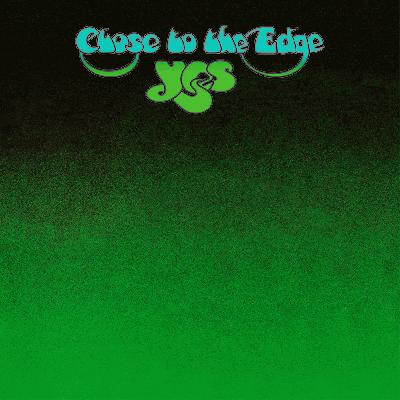
Yes- Close to the Edge
Progressive rock music is not what most people make it out to be. Nowadays, the media slaps the label of ‘prog’ on any album that tells a story. But progressive music goes much deeper than a narrative. The pioneer prog band Yes is a perfect example. They combine instrumental virtuosity with stories, eastern-derived cultural ambience, and odd time signatures with psychedelia. When people mention ‘Yes’, chances are that 9 out of 10 people will immediately think of their most famous song, ‘Roundabout’. While being a staple of Yes’ catalogue, there are much better aspects of Yes’ career. ‘Close to the Edge’ might be the lost gem of Yes. Fans of the band will obviously regard this as stunning, but the casual listener is far from seeing this as a prog gem. With only 3 songs, each exceeding 8 minutes in length, ‘Close to the Edge’ is not the most convenient listening material, but what happens within the context of these three songs is nothing short of pure brilliance. A sonic roller coaster through instrumental and vocal mastery, at very high speeds, ’Close to the Edge’ will strike many prog fans as being the most mesmerizing prog album of all time. On some extent, I’d have to agree- Jon Anderson, Chris Squire, Rick Wakeman, and Steve Howe have never produced anything as brilliant as this, even if it did not earn the notoriety of its foreshadower, ‘Fragile’. And to be quite frank, I personally believe this far surpasses it.
An eighteen minute suite might not be the most apt choice for an introduction to an album on a first impression, but you’ll probably think otherwise after listening to “Close to the Edge”. Everything about it is intense. From Steve Howe’s lightning paced guitar dueling with Wakeman’s insane keyboards to the velvety bass lines that throw around Jon’s honky voice. The verses are very keyboard driven, and the rhythm section keeps a complex groove maintained. Towards the 8 minute mark, there is a very long ambient section. Rick’s keys provide about seven minutes of sound effects, ranging from mellow birds chirping to dramatic string arrangement sounds. Being that Rick Wakeman is one of rock music’s greatest keyboardists, a long keyboard solo shouldn’t surprise most listeners. Jon’s throaty voice anthematically chants “Close to the edge, down by the river”. Chris Squire succeeds in throwing around some eccentric bass lines, and Steve’s guitar solos are too fast for words. Too be honest, this might be the most well liked track on the album, but I like the other two more. Not to say I don’t like this song, but the final track is my favorite. This song is simply brilliant, however, and I have yet to hear a progressive rock song that exceeds fifteen minutes, and beats this (bar Hemispheres and Echoes). 18 minutes of noise has never been so intimidating.
On a much prettier and lighter side than the previous track, “And You And I” is built around Steve Howe’s acoustic guitar arrangements. The rest of the band joins around the one minute, thirty second mark, and completely shifts directions. Between Wakeman’s strange synth noises and Jon’s shrieking voice not dissimilar to Geddy Lee, ‘And You And I’ sounds absolutely nothing like the song that came before it. And that’s not really a bad thing at all. Every band member is on top form throughout the entire piece. No one plays two notes when one will do, and the overall groove is never lost. Most notably, for my ear, is Chris Squire’s bombastic basslines, particularly around the seven and a half minute mark. Steve’s acoustic performance is captivating, using harmonics and the likes to distinguish this acoustic track from anything he’s ever done. The rhythms are perfectly executed, and there is not a single complaint I have regarding this song, and its unique, laid back disposition.
In regards to Yes being highly original, I’ve never heard them prove that opinion more blatantly true than on “Siberian Khatru”. Owing as much to funk and samba as it does to rock n roll, this could very well be the most entertaining song on the album, as well as the shortest and most straightforward. What upsets me is that many people hold this to be the downside to the album, which I find to be absurd. The polyrhythms executed by Squire and Bruford are as wonderful as Steve Howe’s funky guitar solos. And the dueling riffing between Squire and Howe cannot be described as anything but brilliant. Once again, never a dull moment in this song, and everyone seems to be doing their thing with technical mastery, yet holding the fort with aplomb. The highlight for me would have to be the bass playing. Chris Squire is one of the few pick players that can inspire me more than a finger or slap player. His playing, in addition to being astoundingly talented, is a perfect blend of rhythmic and melodic bliss, never playing too much or too little. If I had to pick a song that I had to listen to repetitively off of ‘Close to the Edge’, this would be it. Not to be a fanboy or anything, but seriously, this song needs much more recognition than it gets.
Every instrument is played wonderfully on the entirety of this album. Steve Howe’s guitar playing stylistically combines influences from every genre, ranging from eastern and psychedelic to jazz, and funk. Jon’s distinct honky voice is indefinable. Rick Wakeman is a genius with synthesizers, to say the least, and the rhythmic foreplay between Squire and Bruford cannot be described as other than mind- melting. Every aspect of the music, whether it be groove, or intrumental mastery, rhythm or melody, is entrancing, and truly defines the ‘Yes sound’. Whether you are a die-hard fan of prog, a listener wanting virtuoso quality musicianship in all aspects, or a casual Yes listener wanting to finally hear this 3 song epic, I have only three words to say…… ‘Buy it, fool!’ In no joking matter, after hearing this, you will become a fan of Yes. And trust me, if you are not already, buy it, and listen. You may find a perfect 5 to be biased, but in my eyes, there’s not another proper score.
PS- I understand that there is already a few reviews, most recently being Galapogos’ review of the re-mastered version. My review is that of the original recordings, only three songs, and no bonus tracks.
Please don't start flaming just because there was a review yesterday. Besides, it was another version. Rate it because of its quality, not how frequently the album is reviewed.
Hope you like the review. :)