Review Summary: Interpol suffer difficult-fourth-album-syndrome, to add to their second and third-album-syndrome.
It’s always suspicious when a band chooses to self-title any album other than their first. It could be a lack of imagination or effort. It could also be a statement of intent; after all, you risk tainting your band’s name and brand by linking it up so intrinsically with a single album of work, actively suggesting that the album is the sole defining work of your career.
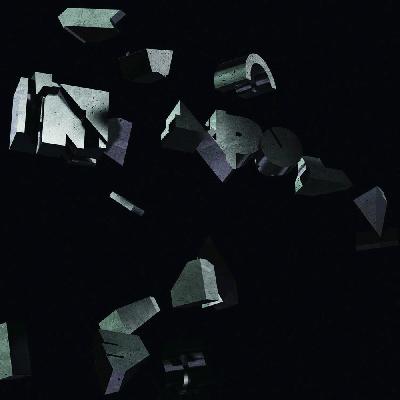
My theory however, is that Interpol did it to showcase their horrible new logo seen adorning the cover of this LP: monochrome and angular like an anorexic orgy, and about as uncomfortable to look at too. It doesn’t suit a band typified by slickness, subtlety, and that ineffable NYC cool. Their old logo was fine, most likely a variant on the Futura font, and as we all know, since Wes Anderson made The Royal Tenenbaums, Futura is the only font any self-respecting hipster can be seen to be typing up an ironic politically-themed poem with.
Of course, all the aforementioned adjectives are principally meant to describe the band’s image more than their sound, as in fact it was the clash of subtlety and angularity that injected dense soundscapes with infectious grooves on
Turn On The Bright Lights. Most of those songs were as fit for the indie dance floor as they were for shoe-gazing, and it was brilliant. Following up with
Antics, Interpol focused on the groove that made the first album so danceable, and made only a decent attempt at harnessing it.
Our Love To Admire then seemed to trigger a process that saw Interpol smooth off every rough edge on their sound to leave something nearly bereft of artistic merit, like sanding down Michelangelo’s David until it looks like a Top Shop mannequin.
Realising that they had crafted an album as flat as the desert, Interpol probably thought it necessary to have a spiky new logo - and explode it into shrapnel on the front cover to add contours that the album’s music lacks. If only the cover was in 3D; momentarily thinking that your album is exploding in front of your eyes before realising that you’re an idiot for thinking that is probably the most exhilarating moment this album would have to offer.
Few tracks stand out in the 45 minutes of whitewashed sound contained within, with Paul Banks’ perpetually morose baritone consistently making sure each track blends into the next without you noticing any discernable difference between them. ‘Barricade’ is perhaps the only track that could rank itself among Interpol’s best, a successful meld of their signature bass-driven groove and actually-memorable hooks. Banks’ voice even dares to rise above talking pitch to make the chorus genuinely exciting, lashing on generous helping of thick backing vocals and powered by a pedalling bass. I must say it hurts a little to criticise Banks’ voice, as it was once encapsulating, but here it sounds tired. It doesn’t help any further that Daniel Kessler’s guitars are still doing their best impression of The Edge, and recently-departed Carlos Dengler’s formerly penetrating bass lines now sound blunted.
It’s really no surprise that Dengler decided to leave when listening to an album that can do nothing else but retread old ground. He must have foreseen a hopeless future and this album doesn’t do much to dispel this prediction. However, right at the death with the album closer ‘The Undoing’, Interpol present one last gasp to prove they still have a promising future. I’m not sure why they left it so late to present this beautifully suffocating, bleak and menacing offering, as it runs the risk of never being heard, but it’s almost worth sticking out the entire album for. Weaving English and Spanish lyrics together, it’s probably the most inventive song on the album, and leaves a dark impression. It’s odd that the song is so depressingly hopeless, as it paradoxically fills me with hope that despite their diminishing returns, Interpol are not finished yet.
Written for www.nightbus.tumblr.com