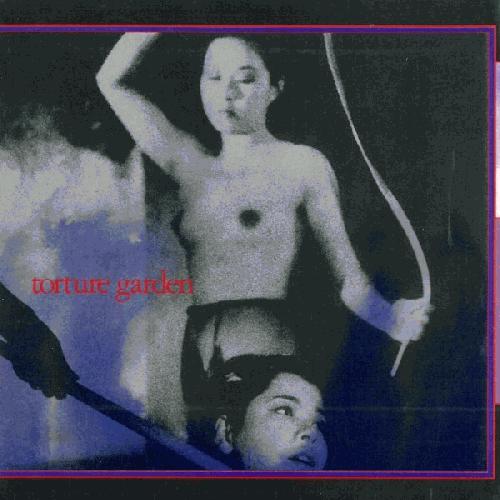
Review Summary: While it might be far too inaccessible for many, for those who pay attention to Torture Garden will be rewarded with a thrilling, arty experience - a classic.
Torture Garden is one of those albums of incomprehensible beauty, complete with a creative brilliance that very few men have been capable of reaching for several eons. Perhaps this ethos (the constant will, no, the requirement for John Zorn and Company to innovate to completely irrational degrees) is the sole origin for the original scope which this album covers: it's not an expansive look at beauty itself, but rather a diverse array of the darker sides of human nature. Its ability to build something so wondrous off something so inane is beyond transcendent; it begs one to ask how the application of so many emotions and thought processes, which have been untouched by the world of music in such a way as this (beauty achieved by unreasonable, dysfunctional, and hostile terms), can be translated into an auditory vision. It also begs the question, "how can it be so good?"
It's not a question we can answer yet, but Naked City's approach to this sound, and the emotions which come from it, bring their listeners closer to a complete understanding of its answer. As previously stated, the outfit's beauty is not achieved by any conventional standards, but, if this is so, then how exactly
is this beauty achieved? On a musical level, Zorn's latest project, and perhaps his zaniest, is one that atomizes all sorts of conventions for all sorts of genres. When they traffic in rock scenes, they don't focus on riffs, they practice "dronology," and they use ethereal notes. They're world-conscious, slipping (for a short time) into various forms of tribal music and reggae. But the focus of their sound is the intellectual combination of grindcore and jazz, each component just as irrational as the other. They infuse the rapid hostility of the former genre with the saxophone tactics, syncopation, and techniques of the latter; it's all done in such a way that, to the casual listener, it seems completely disconnected. The dissonant musicianship, Yamatsuka Eye's visceral and inane vocal tactics, and the genre-fusion seems unsettling. No, it's off-putting. The way that Naked City defy what were thought to be boundaries is magnificent and challenging, but this is one of
Torture Garden's most glorious achievements: it's so enigmatic.
At first, Naked City's masterpiece seems almost disconnected, but his transitions are there, albeit minuscule and obscure. Tracks like "Punk China Doll" use sneaky pieces of jazz to connect one idea to the next, which, subsequently, shows all the layers of these tracks. And trust me when I say there are many. In the hands of this Zorn-project, fugues of noise aren't heaps of nothing, or even heaps of everything; they're intricate compositions, just as important as, let's say, his growling tremolo sax exercises. Under planes of oscillating buzz, the band sneaks in a quiet guitar riff, portentous of what's to come. On "Osaka Bondage," that intricacy seems to have transferred over to the vocal department. Eye's technique strikes unfamiliar territory, specializing in unadulterated shrieks, grunts, howls, moans, and the like, but on this track, he weaves in and out of intriguing instrumentation - more specifically, an arrangement of saxophone, cymbal, and guitar notes. His dynamics, his innovation, and his ability to work with the music, rather than overpowering it, makes his performance one of the most memorable, but to rank one member of Naked City as more important than the other is immoral beyond all comprehension; that's because
Torture Garden, though fronted by one of experimental music's most prominent figures, is a collaborative effort.
Joey Baron's performance is noteworthy, consisting of frenetic, jazzy drum work, precise cymbal tapping, and quaint fills; Bill Frisell alternates between a slew of hardcore riffs and that of jazz, proving to be a master of both styles. Similarly, Fred Frith's contributions on bass guitar keep in touch with the band's experimental, arty nature, and Wayne Horvitz's work on the synthesizer gives the band a more diverse sound. Indeed, all the members of the band show their talent at various points throughout the album, but it's not done with solos and other solitary movements, rather, the compositions as a whole require these performances at all times.
Take for example, "Bonehead" where Eye's strident grunts, hollers, and moans combat a single, high-pitched saxophone squall. The best parts here aren't from musical proficiency; they're from the band's talent at demolishing any conventions they come across. This carries over to "N.Y. Flat Top Box," a highly comical track that also allows for some technicality, as well as large heaps of inane eclecticism, to shine through. "Speedfreaks" is a more adept and serious cut, blasting through different genres every other few bars as "N.Y. Flat Top Box" does, but it's not kitschy or humorous. It's like the rest of
Torture Garden: bestial, challenging, and highly entertaining. It's not
just music (fret not, it's very fun to listen to), but it's an experience as well. It's one that deals with extremes, maneuvering around genres left and right, meshing talent and intelligence together into an enthralling masterpiece. If nothing else, you'll wonder how this band could go from the most vigorous onslaughts to tranquil beauty.