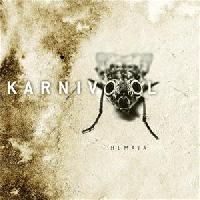
Review Summary: Nirvana had passion, Tool had it, the Deftones have it and now, it's clear, so do Karnivool.
Passion seems to be a lost cause in the casual spectrum today's music. Not in a single place, but seemingly everywhere. Next to talent itself, it's an almost essential aspect required when one creates music that people will remember in ten years time, music worth waiting in line hours for and music that will draw on the jealousy of aspiring musicians and songwriters that constantly reiterates the question, "how do they come up with that?"In most cases, it's the same answer: They have passion. They put it all in, despite being without the assurance of what they may or may not get out. Nirvana had passion, Tool had it, the Deftones have it and now, it's clear, so do Karnivool.
Straight from the heart of the now-blossoming Australian progressive scene, Karnivool come with great promise and as a force to be reckoned with. Their unique brand of technically complex, epic prog-rock sets them apart from the average five-piece. From the very beginning (well, perhaps not the awfully forgettable self-titled EP), it was quite clear that Karnivool were going to be big. Not just big, but more in much the same way as Pearl Jam were when they released Ten in '91. As with the band's individual parts, frontman Ian Kenny screams individuality and oozes charisma, while drummer Steve Judd conjures up images of Danny Carey in his prime. Guitarists Drew Goddard and Mark Hosking consistently interweave their intimately progressive melodies amidst heavy textures and soaring vocals, but know when to stick to a sexy, brutal riff when appropriate, in cases such as "Roquefort" and "Shutterspeed".
The true genius of "Themata lies in the technical aspects of their music. While the band boast complex time signatures, obscure polyrhythms and make use of quite progressive song form, "Themata" seems to retain a certain accessibility without being at all radio-friendly. The intricate textures are what gives the record its unmatched replay value, and with each listen, the audience will find his or herself constantly discovering something new amongst the intricacies of each and every of these strangely named tracks.
The record opens with "COTE", in all of its rhythmically complex glory, perhaps one of the least immediate tracks of the record for its slowly building verse to chorus structure. However, after that second chorus, the track really soars like no other. Ian Kenny's vocal chops truly shine here more than ever, with a primary melody that more than fits the beautiful synth textures and heavy dual-guitar attack. The true incredibility lies in the title track. Indeed, nothing could have prepared the listener for one of the most flawlessly crafted rock songs in the history of Australian music. Boasting one of the greatest riffs in modern contemporary music and some utterly blissful dual-guitar interplay,"Themata" is a track that will remain on the listener's mind for weeks after purchase. Ian Kenny once again complements the instrumental work with complete perfection, and smartly incorporates a megaphone into the verses to add an extra touch to the musical spectrum. "Shutterspeed" and "Fear of the Sky" both follow, and both have some rightly divine choruses, what appears a recurring trademark of Kenny's vocal style. Both tracks sport some rather complex time-signatures, further sticking to their progressive style, but are by no means below the any other portion of the album and will both most likely spend a great deal of time in the listener's most-played list.
The fifth track, "Roquefort", boasts one of the most throat-grabbing, bone-breaking down-tuned introductions in modern rock music. That said however, the form meanders to a fair degree, and some sections seem forcefully soaring and "beautiful" which contrast a little too much with the more brutal sections. The remainder of the record gracefully continues its initial winning streak, but does by no means dip into mediocrity, a flaw from which many other progressive records suffer. There are more heavy tracks like "Mauseum" and "Synops", a short and sweet instrumental ("Scarabs") and the record's only ballad, "Sewn and Silent", which remains a thoroughly listenable track. First single and album highlight, "Lifelike" features a fantastic intro riff, and is without a doubt an electrifying experience when heard live. Kenny's vocals are punchy and to-the-point, as with "Mauseum", contributing heavily to the track's "single" potential.
There really is no middle ground in Karnivool's Themata. Nearly every track shines just as brightly as the next, and despite filler tracks "Omitted for Clarity" and "Change Pt. 1" (the former is 20 seconds of silence), it really distinguishes itself amongst contemporary music in general. Change Pt. 1 really leaves the audience with a feeling of anticipation. After it's cut off after its three minute crescendo, it becomes clear to the listener that Karnivool will, indeed, return soon.
When the record is over with, the listener can only feel satisfied that they've stumbled upon this obscure, yet classic piece of art. With every inch of its originality, complexity and enjoyability, Karnivool's "Themata" feels like an inspired, fully realized first effort. It truly raises the bar for the genre in every respect, and gives a great indication of what to expect from the country in future.