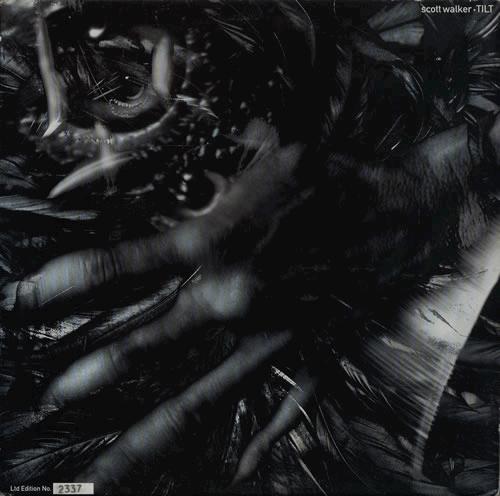
Review Summary: Boring? Horrible? Confusing? Whatever Marc Almond.
In 1976, The Walker Brothers reformed. The charm and style of the 60s outfit had waned; the faded flirtation with Nashville had begun. Nine solo years had ripped the goth out of Scott Walker, he became stuck in the middle of the road. Until 1978.
Nite Flights crept onto the pressing machines of GTO Records. Then, just like that, they were gone. Both the Walker Brothers and the label itself. Scott faded into obscurity for another six years, to release only three albums over the same number of decades. But the first four tracks of Nite Flights were huge; a more radical assimilation and collision of styles than critics could believe.
Fat Mama Kick was a slapback echo wall of sound with no melody,
The Shutout was a slurred, pounding demolition of the mainstream late 70s, but it was
The Electrician that really opened up Pandora's Box in a way that had to be heard to be believed. It soothes with lush synth pads and exercises hollow, peripheral destruction with its twanging guitars and chants of;
“Through the dark hip falls screaming/Kill me and kill me and kill me”.
This is where
Tilt comes into the equation. Eleven years after 1984's commercial failure
Climate of Hunter, Tilt rose from the darkest depths of human consciousness and delivered a strained beauty like no artist had dared to attempt before. From the very beginning to the very end, (and believe me, album closer
Rosary feels like the very end) the album was vivid, tense and mystifying. Critical comparisons were sharply made to other brief experimental excursions of artists of decades gone by; Lou Reed's
Metal Machine Music lead the line in terms of supposed similarities.
Rumours had emerged about Walker in his absence. For instance, Jarvis Cocker said he'd heard that the reclusive pop icon enjoyed sitting in pubs watching people play darts. However, in a 1995 French magazine interview (one of his first in since Climate of Hunter), Scott himself, when prompted with the question 'What have you been doing for ten years?', responded with;
“J'ai existé, c'est tout” -
“I have lived, that's it”
Tilt opens with ringing bells in the distance and a slow siren sliding toward a persistent arco double bass drone.
Farmer in the City is a stunning tightrope act played between romantic and demented, the classical and the postmodern. Despite how bleak it may seem from the off, strangely, it actually remains one of the record's more accessible tracks. “Do I hear 21?” struggles its way through Walker's new found vocal chords; a more strained, warbling baritone than his 60s alter ego. Machiavellian trickery is on show for all to see throughout the album. Sure, we might struggle to adhere to the mood of the barren highs and tragic lows, but with Farmer in the City, the moving strings bring a demonic side to the beautiful for the troubled mind to rejoice in – and then recoil in horror at the start of
The Cockfighter.
Nine Inch Nails would be proud of such cacophonous industrial pulsing, but they lack the verve that comes with lyrics reminiscent of horror poetry, recitals of fictional dialogue between German soldiers in a concentration camp, the endless rolling stock of grotesque imagery which effortlessly stretches over to the nonsense/abstract thump of album highlight
Bouncer See Bouncer and the raw power of
Manhattan. The album takes another dark, unlistenable turn on
Face on Breast, completed by the vicious shrieking of whistles during the instrumental breaks (don't listen on headphones; it
hurts). Further shoveling into the depths of Tilt, we are greeted with a greater concentration of Walker's esoteric turns of phrase; “Lemon Bloody Cola”, “I'll turn the Buffalo” and “Oh the Luzerner Zeitung” litter the second half of the album, ending with a worryingly existential strain called
Rosary. The least layered song on the album, it is simply Walker lamenting over his guitar. However, it is also the scariest,
by far. Contemplations of suicide cap off the album at a short two and a half minutes, leaving the listener with the final thought;
“I kiss holes for the bullets/ and I gotta quit”.
All in all, I guarantee that this is darker than anything you've heard before. Tilt holds an unusual, challenging aura of muddied beauty and miserable genius; it works as a reflective mood piece, but more frequently it is one of those albums you just can't turn off. Every turn it takes is hilarious in its unpredictability, astounding in its execution and it makes the whole album a life-changing experience, whilst still being scary to the core.
Then there's
The Drift.
Sweet Jesus.