Review Summary: Just forget about this, will you?
A Decade of Punk: The Clash in Six Chapters
An Account Dedicated to the Genius of Joe Strummer
Chapter VI: The Clash Face Their End
The 80’s did not turn out to be a brilliant decade for The Clash, who were, in their prime in the one before it, one of the greatest punk acts alive. After two inconsistent releases,
Sandinista! in 1980 and
Combat Rock in 1982, it were ongoing personal issues within the classic formation of Strummer, Jones, Simonon and Headon that created the beginning of the end. Headon, unhealthy and unable to normally perform because of his heroin addiction, was kicked out just before
Combat Rock was released. This caused tremendous friction within the band, especially between Jones and Strummer. Headon was shortly replaced by former member Terry Chimes, who would soon leave once more, making room for Peter Howard.
In 1983, the final nail was slammed into the coffin. Jones, principal writer together with Strummer since the very beginning, was fired. He continued forming various projects, including
General Public and
Big Audio Dynamite. His replacements became the two guitarists Vince White and Nick Sheppard. Although Simonon stayed, he would only contribute to a few tracks on the last ‘Clash’ release
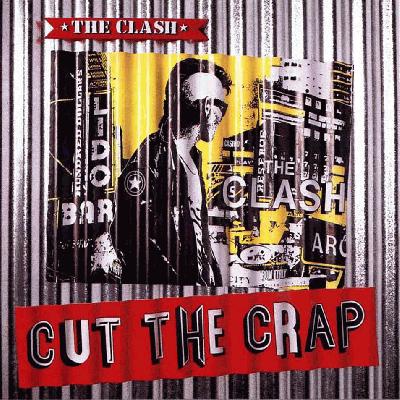
Cut the Crap in 1985.
The recording of that last album was a bit of a messy process, people flying in and out. Evidently, what was once The Clash had now been reduced to a shaky, barely functioning ensemble, Strummer being the only faint glimpse of the previously very recognizable sound. Considering that, he had got a lot of balls to pen a track entitled
We Are The Clash for the record.
After the more experimental era that started with
London Calling,
Cut the Crap was supposed to be a typical ‘return-to-roots’ event. No one would have truly minded, because both
The Clash and
Give ‘Em Enough Rope were excellent records, but if that was to succeed, some chemistry in a formation, or even more important, cohesion, was a must. On top of that, it wasn’t exactly a smart call to bring in the rather average two guitarists to replace a mighty fine player, or to let the drumming on the album be done by a machine when there is an actual drummer at hand. Strummer clearly had no idea what he was doing.
At best,
Sandinista! could be called inconsistent, but even the kindest of people will find it impossible to apply that term to
Cut the Crap. Simply, put from the moment it starts with
Dictator until it ends with
Life is Wild, I had a very hard time finding a catchy riff, a great vocal performance, lyrical wit, or anything that made everything about The Clash’ earlier work good. There is one so-called ‘highlight’, in the form of
This Is England, where we encounter some guitar lines that actually have some kind of appeal, and Strummer re-finds some of the passion in his voice. Some, mind you.
There is just so much wrong with
Cut the Crap there’s pages to fill with it. That I will not do, because the album is not worth it. Seldom have I encountered a mess this big. If this were recorded by the classic formation, it would have been impossible to understand what had been going on, it would have been a shameful end to such a talented band. Technically, it still is exactly that, but
Cut the Crap cannot
truly be considered a Clash record. No question. Even Strummer himself has stated in later years he would like to forget about it as much as he can.
Since the band effectively disbanded in ’86, having existed for 10 years, there have been negotiations about reuniting, although these never resulted in getting the full band back together. Perhaps that was for the best, as it is doubtful they would ever recreate their 70's magic.
On December 22, 2002, Joe Strummer died from a congenital heart defect. He was 50 years old. May he rest in peace, and may his great work live on beyond his grave.
THE END