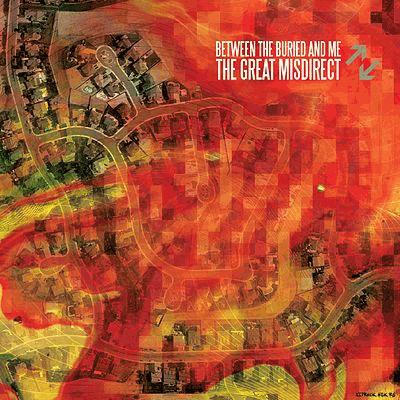
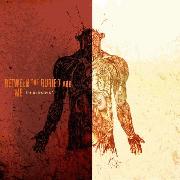
There is one question on every BTBAM fan’s mind: Is The Great Misdirect better than Colors? Some ask this because they believe Colors to be the best work the band has yet to create, while others ask this because they were disappointed by Colors and hope for more of a return to the old hardcore influenced, Silent Circus sound. I personally fall into group one, but I understand the stance of group two, being that I think The Silent Circus is one of the greatest freaking albums ever made, and I did find myself hoping that The Great Misdirect would be somewhat of a step back into BTBAM’s heavier, more dissonantly brutal sound while keeping and enhancing the progression they made with Colors.
I must say, The Great Misdirect is pretty magnificently satisfying. I see some of you members of group two rolling your eyes at the sight of a six-song album with an eighteen-minute long epic to cap it off, but trust me, group two, this album is harsh. There are a few passages that are truly, crushingly brutal, and there are more breakdowns on this album than on Colors. BTBAM brought more of their hardcore roots out for TGM than they did for Colors, which is a real treat because I always appreciated their fresh incorporation of hardcore elements in their sound. I can see these words striking a look of pure terror in the eyes of group one. Not to worry. The Great Misdirect concurrently takes the strong progressive drive of Colors and runs with it.
I’m finding it difficult to elaborate more on this aspect of TGM without going over the things that differentiate it from all of BTBAM’s past work. Of all of BTBAM’s albums thus far, TGM is surely the least “busy.” The Silent Circus and Alaska were built upon suffocating, densely technical riffing and rapid fire time and tempo changes. Colors was built on noodling; a constant flow of notes that had everything to do with one another but were, for the most part, not particularly memorable and did not stand out with a lot of singular power, or at least upon first listen. TGM is built on riffs and parts. This is the first BTBAM album where every song has a distinct beginning, middle and end. The genre shifts and pattern changes are considerably less frequent and numerous because the songs are written in chunks. TGM sticks with a heavy/quiet/weird/proggy section for a longer length of time and really develops it instead of rapidly moving onto the next riff or solo. This gives the album a much greater sense of song writing and structure, and ultimately, makes TGM an incredibly solid album.
This album is near flawless, but there were things that I found myself not liking, Swim to the Moon being the biggest of the potential red flags. With the first few listens, Swim to the Moon is rather heavy handed and, let’s face it, ridiculous in it’s unwieldy size and weight. One really has to question the tastefulness of an eighteen-minute epic because so few artists have done it even decently, and I’m finding that Swim to the Moon is the most largely controversial song on the album. People seem to love it or hate it. Well I started off lukewarm, and I have come into the realization that this song is actually wonderfully well written, save for three key elements. There is an unnecessary jam about twelve minutes in that really doesn't add anything to the song. The guitar solos are impressive, but we knew they were impressive guitarists to begin with. Following that is a keyboard solo that is painfully immature. It can be passed off as a joke, but I didn't want a joke to be there in the first place. The last red flag is the breakdown, which is built up for four measures too long and doesn't pay off the wait because it sounds so similar to the White Walls breakdown. These elements deal a somewhat devastating blow to the album because, for me, they knock it down from a 5 to a 4.5. However, still give Swim to the Moon multiple listens (in the context of the rest of the album) and I almost guarantee that you will start to appreciate its structure and character more and more.
A roblem I see people having is that the album is too short, which is hilarious because it’s only four minutes and thirty seconds shorter than Colors. I realized that this is not a subconscious reaction to the visual of there only being six songs; rather, it is a reaction to the fact that TGM is written in larger, longer, more defined chunks, and therefore, there is technically less material. The thing that redeems this reality is the fact that the material itself is so strong. This is BTBAM’s catchiest album. You will be humming the choruses as you walk, tapping the beats on your desk and playing the riffs over and over in your head for weeks. Every part is defined, thought through, and sticks out with real singular power in a memorable way, and there is still enough material and the album is so expansive that it will take you a few weeks to quantify and wrap your head around, guaranteed. You will find yourself wishing there was more, but then you will realize that you had forgotten that one of the songs (a sixth of the album) even existed, and not because it was forgettable but because you are currently so infatuated with whatever part of the album you just heard or are thinking about.
This is The Great Misdirect. Not Colors 2.0 and not a hark back to the olden days of The Silent Circus. It is an absolutely exceptional piece of music all on its own and the sooner one realizes that it ultimately should not be gauged against BTBAM’s previous work the better. The comparisons that I can see myself making are all positives. The heavy parts are heavier, the pretty parts are prettier, the wacky parts are wackier and catchy parts are catchier. Instrumentally, BTBAM are at their finest. Paul and Dusty’s guitar parts are less blatantly technical and more solidified and thought through. Dan’s bass playing is a wondrous as ever and he continues to prove that he is a preposterously talented, graceful musician . Blake’s drumming is simply his most phenomenal work yet. Tommy is at the top of his game, giving a bit more tone and feeling to his screaming and really coming into his own with his cleans. The production is BTBAM’s finest. Jamie King has done a marvelous job of bringing out all of the character and dynamic of BTBAM’s sound yet again, giving all of the instruments plenty of room to breathe, and the tones on the album across the board are jaw-dropping.
The conclusion: Buy this album. It is simply fantastic. Whether you’re in group one, group two, a die hard fan who would give a 5 if BTBAM pooped on a CD or a newcomer to the band, this album is incredible. To answer the question at the beginning of the review, I do not think this album is better than Colors (though it is not drastically worse). Colors, in my estimation, was a perfect album, while this album has a few flaws. Regardless, it is a ridiculously graceful work of art that is not hard to respect by any means. Buy it.