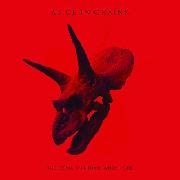
Review Summary: The biggest compliment that can be paid to Black Gives Way to Blue is to listen expecting a whole new story to be written. And what a story it is.
Alice in Chains is not the same without Layne Staley.
But then again, who could really except them to be? 2009 marks the fifteenth year since the band's most recent album, their self-titled, was released. Bands change in fifteen years. People change in fifteen years. And in the tragic case of Layne Staley, people die in fifteen years. Surely we can't expect new addition and lead vocalist William DuVall to suddenly peel away a mask and reveal himself as the second coming of Staley. Layne's story and legacy was spread magnificently through five albums, and lives on today. It is not the band's intent, nor is there a reason to try to add a chapter, edit or mimic it in any way possible. In fact, the biggest compliment that can be paid to
Black Gives Way to Blue is to listen expecting a whole new story to be written. And what a story it is.
From the epic opening riff of "All Secrets Known," to the pounding intro to "A Looking In View," to the violent tempo changes in "Acid Bubble," it becomes apparent that Alice in Chains have recorded their heaviest album to date. A good portion of the credit lies with guitarist Jerry Cantrell--- his dark, foreboding style seems to have progressed even further in the last fifteen years, as even the most metallic moments of
Dirt fail to measure up. But unlike almost every full-length Alice album, Cantrell sings of "hope" and "a new beginning" in the record's opening minutes. The bleakness and despair that drove classics such as "Down in a Hole" and "Rooster" seem temporarily pushed aside for a more optimistic glance at the world. Combined with the new-found heaviness, the first half of the album proves to be both hopeful and punishing, and all-around fantastic. Each second of the six-minute-plus bruising of "A Looking In View" and "Acid Bubble" feels epic, mature, and fully formed. The prior balances out its ominous verses with an addictive chorus and the best guitar work from Cantrell on the entire record, while the latter is possibly the heaviest track the band has ever written. Even the radio-friendly single "Check My Brain," while falling a little short as far as innovation is concerned, is powerful, operating on a pounding (if not irritating) riff that repeats throughout the track.
To say Cantrell makes the record, however, would be tremendously misleading. DuVall, whose range was many a time under fire before the album's release, turns in a terrific vocal performance that manages to evoke memories of Staley. His first moment to shine comes on "Last of My Kind," where he single-handedly fuels the song's venomous chorus. DuVall also impresses on the low-key stunner "When the Sun Rose Again," which along with its acoustic counterpart "Your Decision" sticks out like a sore thumb on the powerful first half of the record. His considerable range is best showcased on the chilling final note of "Private Hell" or his desperate yelps in the bridge of "A Looking In View."
Alice in Chains save the two final tracks to deliver the hugest emotional blow--- the
Dirt-esque "Private Hell" recalls Staley's last days of living in brutal honesty as Cantrell and DuVall trade off passionate vocals en route to an impressive climax, and one of the best Alice tracks ever written. The title track is every bit as heartfelt as promised. Cantrell contributes his best vocal performance of his musical career on top of Elton John's gentle piano in a moving tribute to his fallen friend.
What really makes
Black Gives Way to Blue special? Layne is gone. It's not as passionate as
Dirt, as beautiful as
Jar of Flies, or as raw as
Alice in Chains. It's simply the first record the band has made that successfully blends all three of these elements into one album, with DuVall adding his own atmosphere and each band member turning in a performance as if they had never been apart.
Black Gives Way to Blue stands toe-to-toe with almost anything Alice in Chains has written before. Layne, and we, the listeners, could not have asked for anything better.
"Lay down, black gives way to blue. Lay down, I'll remember you."