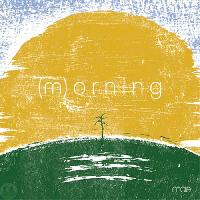
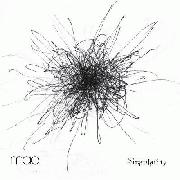
Review Summary: Despite an awkward title and a stuttering track listing, (M)orning shows Mae at their most ambitious, and for the most part that pays off.
(M)orning is the first of three 2009 Mae EPs - the others being, predictably,
(A)fternoon and
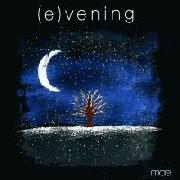
(E)vening - that will donate funds to charitable organisations through a pay-(almost)-what-you-like service with a new song being released for download each month. But despite the uncomfortable titles and somewhat complicated release method, the follow-up to 2007's Singularity is a notably confident effort which undoubtedly benefits from their leaving Capitol Records after just one full-length album. An independent release, it picks and chooses at Mae's back catalogue and takes a couple of unexpected turns into more experimental territory throughout its 37-minute runtime.
I say 'along the way'; (M)orning is puzzlingly constructed with its two longest songs - both over 7 minutes long - placed awkwardly at the very front after the jazzy, morse-code-infused introduction that is Good (M)Orning. It hardly makes for easy listening, and on a first spin it's likely to alienate a number of listeners, but that's kind of what (M)orning is all about. There are blatant flashes of the hook-heavy pop-rock of old (Boomerang) but they're accompanied by more daring and diverse material than Mae have ever really explored before. Actual opener The Fisherman Song (We All Need Love) holds the fabulously self-aware line,
'And you may think it's nothing on first listen,' and it's certainly true that very little on (M)orning comes immediately; though hardly impenetrable, the guitar-driven ballad moves through rhythms and volume levels and tells an 8-minute long story which concludes with the shouted proclamation,
WE ALL NEED LOVE! and - by virtue of the story that's preceded it - sounds in no way clichéd. But it takes a little bit of attention to fully sink in.
The other surprising track immediately follows, but fares slightly worse. The House That Fire Built is fairly heavy as Mae songs go and features numerous transitions through instrumental sections and vocal hooks, building to an impressive crescendo of crashing cymbals and forceful guitars. There are also glitched vocals, creeping, low piano lines and a music-less outro to cope with, all of which are in themselves good ideas; the trouble is they don't really fit together as a cohesive whole until 5 minutes in, and it's something of a relief when they do. Calling the song 'odd' would be a purely relative evaluation in comparison to the straightforward pop-rock of The Everglow, but it's musically the most artistic thing Mae have ever done. That's not to say that Mae's brand of pop-rock is in any way dull, especially laced with nuances like it is here: Boomerang, though fairly conventional, boasts a horn-assisted bridge, while the opener, closer, and Two Birds are great instrumental tracks with attractive melodies and layered pianos and acoustic guitars. Something woodwind also creeps in towards the end of Two Birds.
And it would hardly be a Mae record without some brilliantly simple pop hooks to take away, though it's a while until they get around to anything overly reminiscent of The Everglow. A Melody, The Memory is a broad pop song with Elkin's soft, flawless vocals above gentle, momentum-packed drums, strings, guitars and piano, and Night/Day follows with less persistence and a little more subtlety. Subtlety - that's the word. (M)orning is still a Mae record, but it sees them gradually branching out - albeit tentatively - into more brave areas of the pop-rock genre. It's hardly a progressive EP but it shows them back on form (if you believe they ever lost it) and contains some of their best tracks to date. As a whole, it's uncomfortable as a result of the track listing but with a modicum of effort it's a thoroughly enjoyable and worthwhile album.
3.3/5