Review Summary: An enjoyable release from a band that would go on to accomplish so much more.
Pretension and progressive rock so often go hand in hand. Musical masturbation, overbearing lyrical concepts and dense, often-longwinded composition techniques abound within a genre that almost universally divides the opinion of the masses. Whether you consider yourself to be a fan of progressive rock or not, it seems impossible to deny the fact that the genre occasionally reaches such pretentious heights that it enters the realm of self-parody. Detractors would claim that The Mars Volta, in recent years, have fallen into this trap, and not without good reason.
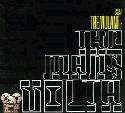
Before all this, however – before the extended conga solos, before the spiralling guitar-saxophone duels, before albums inspired by Ouija boards and song titles like “Abrasions Mount the Timpani” – came the Tremulant EP. The band's first release after the split of previous outfit At the Drive-In, Tremulant stands as a raw, stripped-back prediction of things to come. Stylistically as close to the post-rock groove of their previous band as to the prog-rock insanity that the following years would hold, Tremulant is an intriguing snapshot of a group of musicians evolving and attempting to find out just what they are fully capable of.
Fans of the band's later work will most likely find this EP to be uncomfortably straightforward on first listen. For the most part the band members' playing seems relatively restrained, with guitarist Omar Rodriguez-Lopez not taking a single solo throughout the record's 20-minute duration. Elsewhere, vocalist Cedric Bixler-Zavala presents the listener with his typically cryptic lyrics; however, it quickly becomes obvious that he lacks the vocal range he has since come to possess. Cedric's vocal delivery has gradually become more and more ambitious since the release of Tremulant – a feat effortlessly matched by the band's musical development. In any case, it appears that the band were still attempting to find their feet during the making of this EP, after breaking the creative shackles present within At the Drive-In.
This comparatively straightforward approach certainly isn't a bad thing, though, as Tremulant still presents us with a couple of gems. The EP's shortest track, Concertina, masterfully combines soft verses, driven by Cedric's almost-mumbled Spanish vocals, and an upbeat chorus to create a song that the band would perform live for many years to come. Elsewhere, on Tremulant's strongest track, the nearly 9-minute Eunuch Provocateur, the listener is given a poignant glimpse of the things that the band would go on to achieve: comprising dissonant guitar work, some very upbeat drumming from Jon Theodore, and a delightfully smooth bassline courtesy of Eva Gardener – who would sadly quit the band shortly after this – the composition stands as one of the finest, and most underrated, songs in the band's discography.
It is worth noting, however, that while Tremulant may lack some of the “progressive” elements present within the band's follow-up material, it isn't necessarily easily listening. The opening two minutes of the record, as well as the closing three, feature no melody whatsoever; the EP's musical centre is surrounded by little more than a selection of distorted drumbeats and ambient noise. Eunuch Provocateur's closing moments are made all the more intriguing by some incomprehensible reversed vocals, in the style of German Krautrock band Can. Elements such as these combine to create an EP that requires several listens before it can be fully appreciated.
Tremulant has undoubtedly been overshadowed by The Mars Volta's full-length studio albums, but that certainly doesn't mean that one should avoid it. While the music contained within is less accomplished than that found on the band's future releases, it provides an interesting glimpse at the development of a group of talented individuals, who had finally earned the freedom to record whatever they saw fit. Tremulant may seem like little more than a baby-step towards the musical eclecticism that the band would later embrace, but it contains some satisfying musical moments nevertheless and, therefore, is well worth a listen.