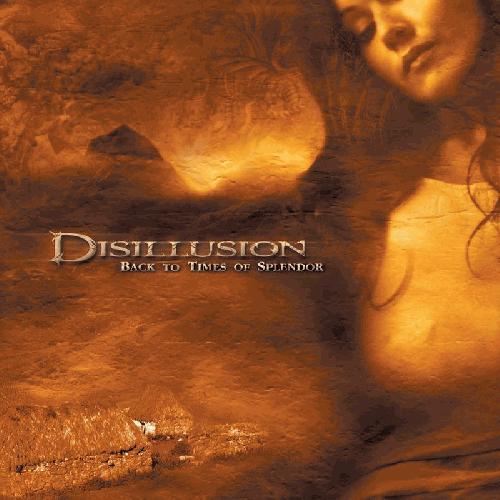
Review Summary: Disillusion really proves that economical song-writing is compatible with epic prog-metal dynamics. This album proves why they, instead of bands like Symphony X and Evergrey, should be considered among the elite prog-metal bands.
Whenever you think you've heard everything that a certain genre can offer, there is always one band that comes along and blows away your expectation of what a band in that genre can do. Disillusion really are a band that stands apart from what we usually consider progressive metal, despite the fact that there is no other way to categorize them, and this is their best album. Even though it is clothed in prog-metal adornment (long songs, complexity, distorted riffs), the heart of "Back to the Times of Splendour" is elsewhere. It resists being a stale album, full of technical competance but lacking the vital emotional impact that is equally if not more necessary. Instead an insidious (though not vacuous) catchiness takes the place of the complexity-for-complexity's-sake dynamic. The result is gold!
Ten seconds of listening to this album will confirm that Disillusion have it together. 'And the Mirror Cracked' opens with one of the most badass prog-metal, riffs ever. It's not just one riff that is good, though. It is every element of the song. Many bands overdo it with excessive keyboards, pianos, and many other melodic indulgences, but most often, they get ignored in the background because it's obvious they aren't contributing a whole lot to the central impact of the song. It is tempting to think that in these cases these bands are in doubt as to the quality of their song-writing, and cover up this fear with layers and layers of superfluous, highly-technical wankery. But not so with Disillusion. The piano that comes at 1:08 and recurs throughout the rest of the song actually contributes to the song's dynamics, which are very well sequenced throughout. There is a very nice melodic breakdown at 3:30, but the best thing about it isn't that it's a display of virtuous musicianship in itself (which it is), but that it flows perfectly with the rest of the song. The piano/acoustic guitar melody that they weave segues perfectly in to the crashing main riff of the song at 4:58. It's 8:27 long, but not a tedious, portenous 8:27.
And that is just the first track! I hate track by track reviews, so I won't do the same with the others, but I should mention that the next track 'Fall' continues the trend of opening with a super-badass opening riff, and has a fantastic tremolo riff and (non-cheesy) prog-metal chorus. Also be sure to listen to the riff that enters at 3:47. 'Alone I Stand in Fires' may be the lone weak song in the album, but is still very very solid. 'Back to the Times of Splendour' is the magnum opus of the album, which is I think rightly named after it. 14+ minutes of the best, most economical prog-metal goodness I've heard in a long time. This is the kind of track bands like Symphony X dream of making, but instead over-compensate for lack of song-writing ability with technical displays. What they don't understand is that the technique isn't what a listener wants; it's the overall experience, which good musicianship can contribute to if used effectively. But in itself, professional musicianship is often mis-used, and nowhere more than in prog-metal.
Moving on to describe the last two songs, 'A Day By the Lake' stays consistently interesting because it has an innovative, affective melodic structure that almost seems too much so for prog-metal! I am used to gimmicky innovativeness and corny affectation, i.e., later-day Dream Theater, Pain of Salvation, Evergrey etc. So when I hear a song where I'm genuinely moved, I'm almost a little suspicious! The streak of fantastic song-writing lasts till the end of the album, which ends on a colossal note with the epic 17 minute 'The Sleep of Restless Hours'.
This album really proves that economy and prog-metal are compatible. Forget Symphony X, Circus Maximus, Pain of Salvation, Evergrey, and the usual crowd of bands. Disillusion prove that they are one of the only bands in their genre that can pull off long, multi-part songs with class, i.e. melodic ingenuity, fluid transitioning, genuinely affecting passages, and yes, superior musicianship.