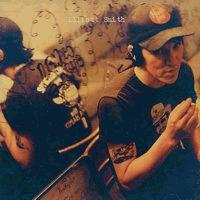
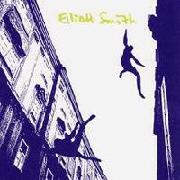
Review Summary: Despite being consistently overlooked as a sad junkie with an acoustic guitar, Elliott Smith was one of the great songwriters of his generation. Anyone skeptical of his remarkable talents needs to familiarize themselves with the brilliant 'Either/Or'
It has often seemed to me that there are two main categories in art: pieces that are extraordinary because of the technical skill involved in producing them, and pieces that are extraordinary because they mean something. While I enjoy the former, it's those ideas I can really connect with - the ones that set out to truly make a statement - which connect with me. And no artist can connect quite like Elliott Smith.
Smith is largely unheard of in my kangaroo-inhabited corner of the earth, and it seems even in his homeland of the USA he is remembered mostly as the awkward guy who once played at the Oscars; to the slightly better-informed, the depressed junkie responsible for a few albums of all-encompassing sadness.
It's a pity that Smith's music never reached the prominence that it deserved - I am sure I am not the only person who has found an emotional connection in his collection of seven albums (two posthumous), each of which is worth writing many pages about. I will, however, limit this to his most important work, the breakthrough release Either/Or. In a genre that is often dismissed for its lack of innovation, Either/Or showed that Smith's meticulous arrangements, complex guitar parts and melodic sensibility put him a class above.
Either/Or is a collection of low-key acoustic moments, with each and every song memorable for its melody. It is most certainly a grower - the first time you listen through the album, don't be surprised if it seems too simple, too plain, or simply bland. It is the subtleties that make it what it is, and like all the best art, it requires work to understand the creativity that is at the heart of the album. Lyrically, the songs are populated by a cast of loners, all seeking something, with drugs a common metaphor for the need to escape. Beautiful lines are scattered throughout, and will surely connect with the majority of listeners in some regard - consider Alameda's refrain, 'Nobody broke your heart/You broke your own 'cos you can't finish what you start', before finalising the assessment with 'if you're alone it must be you that wants to be apart'. Or the next track, Ballad of Big Nothing, with the line 'You can do what you want to/whenever you want to'. Elliott's delivery of this line perfectly communicates his message - that choice can be a curse as well as a blessing, particularly when it all seems pointless.
It is difficult to pick high points in Either/Or, because the disc is packed with quality. However, two standouts can be identified, the first being the eery, majestic Angeles. A shimmering fingerpicked guitar part introduces the piece, accompanied only by a single, held note from an organ. This alone is enough to send shivers down the spine, and illustrates perfectly what differentiates Smith from the singer-songwriter pack in his wake - his honesty radiates through his music. Before he even begins to sing on Angeles, you just know. The music speaks for itself. Once the vocals begin, however, the beauty is only amplified, with an understated, restrained melody perfectly complementing the accompaniment. Lyrically, the song appears to be about the perils of the music industry for an unsigned musician, however, it could just as easily be interpreted as a gambling ballad or simply a love song. It is seldom worth buying an album for one song, but you can be sure that Angeles alone is worth at least $20.
The second classic moment in Either/Or is the closer, Say Yes. It begins with Smith clearing his throat, and then proceeding to perform a simple yet effective guitar line, and again, a meticulously plotted vocal part. The song is an optimistic ode to the girl 'who's still around the morning after', despite them having 'broke up a month ago'. The overwhelming positivity of the character at the centre of this song brilliantly counteracts the somewhat mellow tone of the rest of the album, and shows that Smith is capable of communicating the full spectrum of emotion as a songwriter.
The true genius of Either/Or is its genuine honesty. Smith quite literally pours his heart into the songs, and the result is music that can be connected with by anyone who takes the time to listen. Through his music he was able to communicate the difficulties and doubts he was confronted by in his life, which by necessity ring clear with those who are lucky enough to experience his work. If you want to experience art that truly means something, Elliott Smith should be one of the first artists you look for, and Either/Or the first of his works to explore.