Everyone who knows Pink Floyd is familiar with their 4 "classic" albums - Dark Side of the Moon, Wish You Were Here, Animals, and The Wall, no matter what order you as an individual rank these. But for some reason, mostly because of the high tensions within the band and the absence of Rick Wright on keys, "The Final Cut" always seems to be ignored. This is Roger Waters still at the top of his game lyrically in addition to very interesting chord progressions throughout. Nick Mason, as on most albums, remains relatively distant from the spotlight. David Gilmour only sings on one song, "Not Now John", but his brilliant guitar can be heard throughout, especially on the few shining solos.
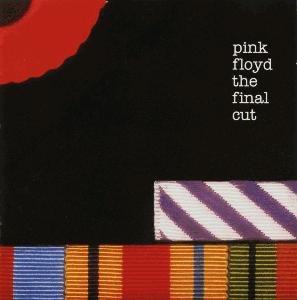
This album has the same overall mood of "The Wall" and expands on his thoughts and feelings of World War II which claimed the life of his father, Eric Fletcher Waters, to whom the album is dedicated. Waters was only a year old when his father died, but his absence in his life led to the writing of his most emotional pieces. The album cover features a close-up view of the medals on the uniform of a decorated soldier. Waters also touches base on British involvement in the Falkland Islands in the 1980s. The remastered album features the addition of the track "When The Tigers Broke Free", a song introduced in two fragments in the movie "The Wall", that appropriately fits with this war themed album more so than the movie. The album, like most of Floyd's albums seems to flow very smoothly with one song segueing into the next. Here is my track-by-track review:
1) The Post War Dream - This song is a very emotional way to start one of the darkest albums ever recorded. It seems that Waters is singing this song from the perspective of his childhood years and asking his mother, "tell me true/tell me why was Jesus crucified/was it for this that daddy died? /was it you/was it me/did I watch too much TV?" This song is the best possible way to open an album with an underlying theme of war. It starts out with a brass section and synthesizer drone in the background and then begins to build up with a string section until Waters says "should we shout should we scream/what happened to the post war dream?". This song also has the first of several mentions of ‘Maggie’, of course referring directly to Margaret Thatcher, the British Prime Minister during the late 1970s and 1980s. The great background guitar work also heightens the emotions of this track. Spectacular opening. 5/5
2) Your Possible Pasts - Very nice song introduction by the guitar's chord work ala Gilmour as Waters' voice enters with a tone that sounds eerily similar to Ian Anderson from early Jethro Tull albums. This song also features the first of Gilmour's solos. It seems that all of his solos on this album are reminiscent of his work on "The Wall". The song's chorus fittingly changes pace a little and adds to the dark atmosphere with the delay on Waters' voice. 3.5/5
3) One of the Few - The creepiness of this song is matched only by "Is There Anybody Out There?" and starts out with a synth drone and an acoustic guitar. Definitely the darkest point on the album. It sounds as though Waters says that as "One of the Few", these men that have survived have the right to manipulate others in which he says "make em me/make em you/me em do what you want them to/make em laugh/make em cry/make em lie down and die". 4/5
4) When The Tigers Broke Free – This wasn’t on the original album, but on the album that it absolutely fits into. Taken from the movie "The Wall", this song is about the Battle of Anzio in 1944 - the battle that his father died in. He paints a haunting picture of the battlefield in addition to the scroll that was sent to his mother by King George "it was I recall, in the form of a scroll/with gold leaf and all/and I found it one day/in a drawer of old photographs hidden away/and my eyes still grow damp/to remember his majesty signed with his own rubber stamp". The harmonium in the background is chilling and adds to the atmosphere. This last verse is Waters at his best as he proclaims, "and that's how the high command took my daddy from me" and the song suddenly fades to the wind noises and segues to the next track. 5/5
5) The Hero's Return - Very cool guitar intro by Gilmour. Waters calls to the higher authority as he asks, "Jesus, Jesus, what's it all about?". The chorus along with Michael Kamen's vocal harmonium, is breathtaking. Waters also talks about his failing marriage that was previously mentioned in "One of my Turns" and "Don't Leave Me Now" from "The Wall", in which he says "sweetheart sweetheart are you fast asleep/that's the only time I can really speak to you". The second chorus begins with happy lyrics about returning from the war ("we danced and we sang in the street and the church bells rang"). But, the song changes directions as he makes the first mention of the words spoken by the dying World War II gunner and the song ends with the ever-mysterious sound from Gilmour's guitar playing an Em add9 chord. 4.5/5
6) The Gunner's Dream - This song starts with soldiers communicating through walkie talkies as the beautiful piano chords enter. One of the highlights of the album overall as the song achieves another emotional pique. The entrance of the tenor sax solo as it matches the sustained vocal note is reminiscent of "Sheep", but in a more sad light than an eerie one. The song also features his first mention of the benefits of the law "and everyone has recourse to the law". The last chorus enters with the full band but deteriorates with the sound of his insanity from hearing the gunner as the song ends on a rather happy note. If you only listen to a few of this album's songs, this is one of them. 5/5
7) Paranoid Eyes - This is the last song that directly relates to the soldiers. Its tone is extremely reminiscent of "The Wall" as the soldier tries to separate himself from society and build a mask, instead of a wall, as a disguise to hide behind "paranoid eyes". It also mentions being lost in a "haze of alcohol soft middle age" that was a key part in "The Wall". 3/5
8) Get Your Filthy Hands Off My Desert - Turn up your speakers in the beginning as you can distinctively hear a native yell the title and subsequently launch a missile. This is a short, mediocre song that serves its purpose, but doesn’t do much else. 2/5
9) The Fletcher Memorial Home - Probably the most famous song from the album and one of the best from the bunch, the name comes from Waters' father's middle name, which was Fletcher. The song talks about a home, depicted as a mental institution that holds the right-wing leaders of the '80s and also "a group of anonymous Latin-American meat packing glitterati". Once again Gilmour and his guitar shine on this song with an incredible emotional solo that adds another layer to the already beautiful chord progression. 5/5
10) Southampton Dock - Another great song that leads into the title track. Despite the lyrics, the song enters with a rather happy atmosphere. Another short song that tells about the soldiers leaving and the families that they left behind. Now to praise the lyrics, the final lines of the song bring the album to another emotional high as it prepares the listener for the title track, "still the dark stain spreads between their shoulder blades/a mute reminder of the poppy fields and graves/when the fight was over we spent what they had made/but in the bottom of our hearts we felt the final cut". 4.5/5
11) The Final Cut - Now to the title track - the most emotional, beautiful, and personal for Roger Waters. If this song doesn't get to you, I honestly don't know what will. Waters reaches the undeniable height of emotions in this unbelievably vulnerable track. Here are lyrics for the third verse in their entirety, "and if I show you my dark side, will you still hold me tonight?/and if I open my heart to you and show you my weak side, what would you do?/would you sell your story to Rolling Stone?/would you take away the children and leave me alone?/and smile in reassurance as you whisper down the phone/would you send me packing, or would you take me home". Now to another brilliant guitar solo by David Gilmour, the best on the entire album. Most people probably don't recognize this at first, but the final verse is about Roger Waters about to make an attempt at suicide. Here is the final verse, "thought I oughta bare my naked feelings/thought I oughta tear the curtain down/I held the blade in trembling hands/prepared to make it but just then the phone rang/I never had the nerve to make the final cut". Truly the most personal song ever written by Roger Waters and his most beautiful. 5/5
12) Not Now John - This song has a kind of awkward transition as the mood obviously changes. The song features Gilmour in his only lead vocal spot on the album. Sounds exactly like "Young Lust" from "The Wall" in his raspy voice as well as guitar. It would definitely be a radio favorite if it did not include excessive use of obscenities and Waters offends not only the Japanese, but the Vietnamese, Russians, Swedes, and Argentineans. Another brilliant guitar solo that perfectly suits the song. The transition between Gilmour's voice and Waters' is the best since "Comfortably Numb". The Waters' vocal part also has the atmosphere of the fan favorite from "The Wall". The background singers fit into the song very well also. 4.5/5
13) Two Suns in the Sunset - I couldn't think of a more appropriate song to end such a remarkable and remarkably underrated album. This is the happiest point on the album as Waters, despite the unhappiness throughout most of his career, is similar to "Outside The Wall", the final track from "The Wall". Both are happy songs that have open-ended conclusions that don't really end the stories that the albums tell, but give the listeners a sense of hope for the future. Waters also makes a final mention of some themes used earlier in the album, "you have no recourse to the law anymore" and "finally I understand the feelings of the few". I will also include the lyrics to the final verse in which Waters has come to terms with life and himself, realizing that he's come too far to let all go, "as the windshield melts/and my tears evaporate/leaving only charcoal to defend/finally I understand the feelings of the few/ashes and diamonds/foe and friend/we were all equal in the end". The guitar, piano, and organ are beautiful throughout this song. This epic journey ends on a happy note as the tenor sax solo leads to the song fading out. 5/5
Conclusion - It may not be the best of Floyd's albums, but it certainly deserves to be listened to at least a few times to be understood and appreciated. Despite the absence of Rick Wright, Roger Waters compensates with real brass and sting sections which are arranged and conducted by Michael Kamen. With that in mind, I give "The Final Cut" a 4 star rating.
Pink Floyd:
Roger Waters - bass, vocals
David Gilmour - guitar, vocals
Nick Mason - drums
other musicians:
Michael Kamen - piano, harmonium
Andy Bown - Hammond organ
Ray Cooper - percussion
Andy Newmark - drums on "Two Suns in the Sunset"
Raphael Ravenscroft - tenor sax
National Philharmonic Orchestra - conducted and arranged by Michael Kamen