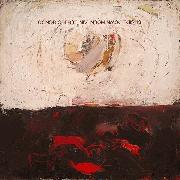
Review Summary: el cielo es azul, just don't go telling everyone
If there's one thing that people who only listen to Top 40 radio miss out on, it's the sense of completeness an album brings that singles will never be able to capture. The concepts and life that flow through collections of music rather than individual tracks add so much to the listening experience once you appreciate their context. On a grander scale, however, this expands to an artist's back catalogue or discography, and every so often such a collection of a particular band's music makes enough transitions and captures enough moods to give an insight into the journey they have made over a period of maybe ten years. Conor Oberst is a prime example of an artist who has grown through a dozen different mindsets, each of them as hopelessly erratic as the last. But breaking from the Bright Eyes moniker, his self-titled solo album might well mark the end of a progression, because on this record he finally sounds like he's capable of being happy.
To Bright Eyes fans, of course, that is largely a foreign and dangerous concept. Oberst has always been at his best documenting the internal struggles that most people can't put into words, and although a small amount of his material manages to salvage a grain of optimism his work is typically dark, brooding, angsty or miserable. While it has never suffocated his music, it generally creates an aura around his albums (Fevers and Mirrors, especially), an atmosphere of emotional weight that is sometimes hard to shake. But while on Conor Oberst he puts up stories about kids with terminal illnesses, dying in the hospital and not being accepted to heaven, he's also able to craft songs that, perhaps for the first time, work as good songs to sing along to without really having to become immersed. Maybe that sounds like a cop-out, and maybe it sounds like he's lost his edge, but it's still Oberst, it's still his idiosyncratic voice and his pin-point precision lyrical discourse.
It's hidden in the hook line of Eagle On A Pole that Oberst hints he's been let in on something: 'el cielo es azul', he sings as the music fades slightly behind him. 'The sky is blue; just don't go telling everyone' is just one of Conor's musings as he contemplates trips through South America that helped to shape the album's open-minded, open-spirited sound. Where Fevers and Mirrors sounded like it was composed in the cramped bedrooms of dusty mansions, Conor Oberst sounds as if it were composed looking onto a horizon from the back of a pick-up truck. The jazzy piano line behind I Don't Want To Die (in a hospital) belies its subject matter on first listen, but on a second encounter brings an optimism to the concept of the song that has long been missing. So yes, Valle Mistico (Ruben's Song) is an almost entirely pointless fifty seconds of horn blowing, but its inclusion represents most of what is important about this record; it's slightly self-indulgent and completely carefree.
The album thrives off its far more upbeat rhythms, showcased especially on Sausalito, I Don't Want To Die and NYC-Gone, Gone, all tracks which are bound to have you tapping your toes. There are more poignant moments too, of course, like Lenders In The Temple, but Conor Oberst is constructed so well that it never loses itself or becomes a difficult listen; lines like 'you can't break out of a circle / that you never know you were in' are followed instantly by 'there's nothing that the road cannot heal'. Lenders In The Temple, a stand-out, opens with a reflective guitar line and contains some of the album's more haunting vocals and lyrical content, Conor's voice echoing slightly across lines like 'if I love you then that's my fault', but it's followed up by the up-tempo Danny Callahan, and it's this blend of sincerity and listenability that makes for such a compelling listen. Sombre and sparse strumming stands up to bright picking and ultimately the latter wins out, but it never seems fake, ironic or forced by way of its counterpart.
It's hard to name stand-outs because everything slides by so effortlessly yet enjoyably, but Moab is another song about Oberst's travelling life and is an incredibly accurate depiction of constantly being on the move, floating above a very country-tinged backdrop of typical guitar, percussion and bass. Opener Cape Canaveral and closer Milk Thistle are scattered with imagery and metaphor, and the latter lets the album fade out on a lyric which would seem depressing were it not for all which came before it; 'if I go to heaven, I'll be bored as hell, like a crying baby, at the bottom of a well' takes on a new lease of life and an ultimately optimistic tone when considered in context. And here, that's the point; listeners unfamiliar with Bright Eyes will doubtless enjoy this record, but it makes far more sense when considered alongside the trauma and angst of Oberst's previous work. His laughter in Souled Out!!! is just another quirk unless you've never heard him do it in five albums. His abstract, beautiful imagery on Cape Canaveral wouldn't hit home quite as hard if you weren't used to him singing about tragedy and difficulty.
This album might signal the end of an era as far as Oberst and Bright Eyes are concerned. In fairness, part of the record's allure is held in the fact it's the most light-hearted thing he's ever put to CD, and who's to say that another album of equally well-crafted bouncy songs about heaven being sold out and moving to Sausalito wouldn't seem a little too far in an unfamiliar direction? Yeah, for a discography's sake, it might be better to return to the darkness next time, but there's something incredibly uplifting about a guy who's taught you everything you know about how to deal with your problems making an album that sounds so spiritual and free of fevers and mirrors. Maybe Oberst should just retire and go out on a high, but something tells me that there are many more albums with his name on them, many more chapters to his story, hidden somewhere. Whether that be South America or his bedroom, only time will tell.