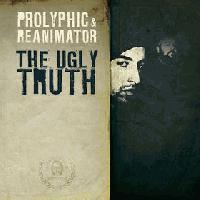
Review Summary: Negativity never sounded so hopeful.
2008 was an interesting year for hip-hop; instrumental hip-hop became the new craze, with Blue Sky Black Death and Metaform taking the lead, while Kanye West, hip-hop’s poster boy, became pop-rap, and, well, souljaboy released the same album he did last year. But regardless of lyricless rap, electro-pop, and recycled garbage, there’s still the fact that 2008 saw the release of a ridiculous amount of fantastic hip-hop albums, from
Late Night Cinema to
When Life Gives You Lemons…to
808s and Heartbreaks, and there’s been some discussion as to which album was the best hip-hop album of the year; I have to admit it was stiff competition, but
The Ugly Truth, the debut from Prolyphic and Reanimator, wins by miles.
And by miles, I f
ucking mean miles.
Unlike some of the other contenders for this title, Prolyphic and Reanimator’s
The Ugly Truth is not an experimental record in the sense that it expands the genre; you can pretty much pigeon-hole this record as being a rap album without much disagreement. You won’t find long, twisting songs sans lyrics with a million different samples, or vocoder vocals creeping their way onto a track, and while that may put a damper on the album because it doesn’t seemingly add anything fresh to the genre, you’d be surprised at how fresh this album actually sounds. The form of hip-hop this album holds may not be new, and it may have had many artists use it and abuse it for their own pleasure, but there’s still an essence to the album that, regardless of it being another exercise in a common rap/beat mixture, keeps the album from going stale, and endlessly produces surprise and awe.
Whereas other rap albums find a flow in beats and rhythms but fail lyrically, or excel in their verbal gymnastics but fall short on creating successfully captivating beats (Aesop Rock springs to mind for me), this album is successful in both aspects, not only because they’re both crafted with amazing skill but because they aren’t separate entities that sound cramped when forced together; metaphorically, think of Reanimator’s music as the yin to Prolyphic’s yang, providing not only a foundation on which the raps can be laid down, but also proving to be interesting enough to draw the listener away from Prolyphic’s voice at times, not because Prolyphic falters, but because the beat is just so entrancing, like
Box Within a Box’s powerful opening, or
99 Bottles’s acoustic guitar intro that settles only to re-enter as an explosive drum-cymbal menagerie for Prolyphic’s lyrical flow. Some of Reanimator’s most interesting work is on
Dick and Jane, a song that sounds like a sleazy hotel bar opening that slowly transforms into a musical representation of the pessimism that the lyrics it supports contain; for every quip (
‘They need pills to wake up, pills to go to sleep, but they still don’t get enough Calcium and Vitamin C’), the beat slips under it with a seedy disaffection. Reanimator can go from a tender, emotional backdrop (
Two Track Mind) to a sleazy, oily-haired swinger (
Dick and Jane) into a pissed-off, edgy beat (
Box Within A Box), all with excellent prowess; there’s nothing lacking musically.
Prolyphic is really the star here though (that’s why he gets top billing, right?), dropping so many poignant and downright catchy lines that even after the countless listens the album still produces little gems of rhymes that pop up unexpectedly; from the speedy
“stumbleandfumbleandmumbleyourrhymes” in
On The Side to the gem
“When the day dies, the nighttime’s my afterlife” on
Survived Another Winter, the album remains endlessly interesting thanks to master lyricism. The lyrics don’t just sit over the beat though, they glide over it with a perfect emphasis here and a fantastic line there, never content to just act as poems or essays, always being as much a part of the music as Reanimator’s production.
From each song there’s a message of pessimism; from
Born Alone, Die Alone’s claim that nothing in this world is certain except birth and death to Box Within a Box’s laments of being trapped in an endless cage of physical and mental restraints; perhaps the most defeating line is on
Slow To Get Up:
‘And these bags under my eyes
Amongst these white rabbits who’ve swept the clocks as they run for their lives,
I used to wonder why there’s six-million ways to die,
And not one good reason to keep breathing.’
While perhaps I can’t convey the negativity in so little space, after repeated listens I can safely say Prolyphic makes a good case for attempting suicide.
However, there is an undercurrent of hope within the negativity of
The Ugly Truth, such as on the defiant cries of
“Full-time worker, part-time entertainer, my car is my dressing room I’ll show you what I’m made of” in On the Side, or Prolyphic’s story on Survived Another Winter:
‘’Cause I’ve gone this far
And I’ve counted these days,
My soul in a postcard it found its way
Through the bullshi
t and politics in and out of this from the bottom up,
Finish what I started, survived another winter’
Or
Two Track Mind:
“I won’t let this setback affect me,
I know what I wanna say, I’ve got the whole world ahead of me”
The Ugly Truth hits with a hard message: …well, basically, the truth is ugly, but you can’t let it destroy you.
The album has highs and lows, definitely, but for the 58 minute plus change running time there’s a lot of time for filler that is replaced by potent, powerful music; from the bombastic 99 Bottles’ until Two Track Mind’s soft closing piano, the album retains its excellence. After 12 tracks of creamy hip-hop goodness,
Easier Said remains a misstep if only because it doesn’t have the same level of catchiness and flow as the other tracks. Sleeping Dogs Lie and Playing With Old Flames, however, are two tracks that, while slower than most of the album, fit in very easily within the record, and remain just as catchy as the beginning of the record;
Sleeping Dogs Lie, a song that deals with God, albeit in a sly, roundabout way, has the most memorable, catchy, and one of the most cynical, hooks on the record:
‘You let sleeping dogs lie while proceeding on by while receiving in line your piece of the pie.’ The line drips with insult to the common citizen, criticizing their blind obedience to their higher-ups while letting the real issues and problems in their lives continue to exist without standing up and addressing them.
Playing With Old Flames ends the album with a line that sums up the album in one rhyme:
‘Cause sometimes sunshine ain’t the best thing
And walking in the rain is kinda settling’
The entire album is like that walk in the rain, a trip through a pessimistic, ugly world, yet remains so defiant and undefeated that the walk can’t help but be a blissful one through a beautiful scene.
Prolyphic drops rhymes like he’s got butterfingers and Reanimator lays down beats like a farmer (get it?), and the album just flows ridiculously smoothly, each track having a separate feel, yet the album itself remaining an extremely cohesive listen, even if it does have one little slip thanks to Easier Said.
The Ugly Truth isn’t the salvation of hip-hop, nor is it the best hip-hop album to ever grace the music scene, but it’s fresh and damn good, demanding countless replays and achieving such a level of remembrance that it’ll leave rhymes sticking inside your head for weeks to come (particularly from
Dick and Jane to me) and beats finding their way into your thoughts even days after you’ve actually listened to the song (
99 Bottles). The album is a perfect execution of Prolyphic’s goal to expose the Ugly Truth, yet to never let it beat him, and leaves the listener with the same feeling that Prolyphic and Reanimator both must feel, the encouragement to keep going and let nothing slow them down.
(Some)
Tracks of Note:
99 Bottles
Dick and Jane
Survived Another Winter
Box Within a Box
Sleeping Dogs Lie