Review Summary: An enjoyable listen if you can ignore the terrible production, cheesy synth effects and poor musicianship.
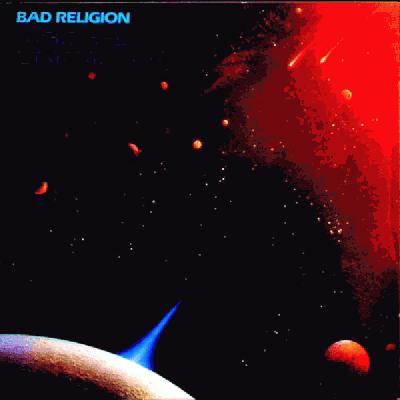
‘Into the Unknown’ is the only Bad Religion album not to have been re-released and according to the band, never will be. Only 10,000 copies were distributed and nearly all were quickly sent back. Bad Religion don’t go as far as denying that the album exists but if asked about it they will say no more than ‘listen to it yourself and you will see why we hate it so much.’
The aptly named ‘Into the Unknown’ was released in 1983, a year after their immensely popular hardcore punk debut album, ‘How Could Hell Be Any Worse’. Instead of creating another punk album though, Bad Religion went in the complete opposite direction and made exactly what punk was meant to be rebelling against, a progressive rock album. Obviously this wasn’t exactly a popular choice with their fanbase, but ‘Into the Unknown’, despite it’s numerous flaws, certainly isn’t as bad as many of them make it out to be.
The fast-paced stripped down guitar riffs that Bad Religion is known for are here substituted by overblown synthesisers and guitar effects. Most of the time, this very upbeat, bright and quirky 70’s prog style works quite well. There are plenty of catchy synthesiser hooks and melodies throughout the album with sing-along choruses in many of the songs. There are also some decent guitar and keyboard solos thrown in. While sometimes the long song-lengths seem a bit forced, they rarely become boring and the album finishes after just half an hour, long before it overstays it’s welcome. Acoustic guitars sometimes make appearances, giving certain songs a slightly folky sound. Some sections are actually surprisingly dark, contrasting the cheerful feel of the rest of the album well.
However, most of the album’s problems lie in it’s execution rather than the songwriting. During the recording of the first song, bassist Jay Bentley and drummer Pete Finestone left the band. They were replaced with Paul Dedona and Davy Goldman respectively, and neither of which are nearly as good musicians. The drumming in particular is very poor and slapdash. The hi-hats end up creating little more than an annoying wall of fuzz in the background. The bass is pretty average and is very prominent throughout. Even Gregg Graffin’s usually excellent singing is weak here and often off-key. His lyrics here are also very inconsistent, reaching the quality of his later work in certain songs like ‘Chasing the Wild Goose’, but sometimes sounding much more simplistic than usual.
The production especially is a huge problem. The album sounds sloppy and sludgy, with none of the instruments standing out amongst each other at all, giving the album a very dense sound. ‘Into the Unknown’ is also covered in laughably cheesy synth effects that would have sounded dated and out of place on a ‘60s psychedelic rock album, let alone an album from the 1980’s.
Despite it’s many flaws though, it is refreshing to hear Bad Religion, who are all too often accused of never doing anything new, create an album that is such a radical change it would make Ulver proud, even if it is probably one of the reasons they are now so afraid of deviating from their familiar sound. If you’re a Bad Religion fan and want to hear them do something completely different than usual this is a must, especially as the band state that they don’t care how you acquire it. If you can overlook it’s many flaws, there’s an enjoyable album hidden underneath.