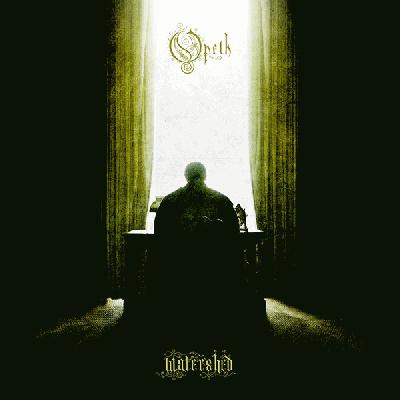
Opeth - Watershed
Repetition of the same thing over and over again gets tedious. Captain Obvious has come to the rescue indeed. Sometimes you just got to change things up once in a blue moon just to make everything so much better. This just isn’t the case for Opeth’s Watershed, seeing as Opeth have made 8 similar-yet-somehow-different albums in a row. With changes between efforts being ever-so minor, there aren’t too big a differences from effort to effort. This is evolution of Opeth really, more in the sense of the science than any other band I know of, making slow eventual changes that will make sense later. Since Still Life, the band has become ever more progressive, and much less of the heavy death metal influence, but it didn’t make too much of a difference until fans finally realized this on Ghost Reveries. I mean, to the unobservant eye or ear; it’s suddenly like they became the Dream Theater of death metal (awful comparison, I know), with the emotion and feeling of Opeth still in tact. It was a decent effort to say the least, but fans would ask “how does this compare”, or even more so, “what’s next?” And the only logical answer to that question is the obvious: even more Prog for ya’ll.
It’s so true it’s almost scary to me. The album begins on a light note, with the bewildering and walk-for-the-forest-like “Coil”, drifting acoustic guitars and a folky light tone to Mikael Åkerfeldt, as apposed to the haunting tone of other Opeth all acoustic tracks like “Harvest”. Indeed, the track is one of the brightest and most uplifting tracks that Opeth have ever written, and surprisingly enough this fits in perfectly with the next track, a more classic Opeth-opener track “Heir Apparent”. Really, the two work like a duo, combining to make an opening track equal to that of past albums. Like “The Moor”, “Coil” starts things off on a quiet note, while “Heir Apparent” represents more of the later of “The Moor”, dominated by a whirlwind of prog riffs with a sinister death metal twist. “Heir Apparent”, like “Coil”, is more dominatingly prog than its consequent representing of “The Moor”, containing a masterful, yet emotional guitar solo leading into a dense cocoon of flutes and acoustic guitar creating a mellow, smooth calm before another storm of heavy riffing and growls. Epic, emotional, and heavy as fuck, the combination of “Coil” and Heir Apparent” is everything a metal listener could want from their favorite metal band.
Other highlights come in the form of “Hessian Peel”, and “Burden”. “Hessian Peel”, length-wise, is the most resembling of past Opeth-epics, lasting a full eleven minutes. Whats different is, instead of just going the usual Opeth-style heavy-soft-heavy-soft, “Hessian Peel” is much more of a tracks that builds in layering as it goes onward. Starting with a faint buzzing, Mikael goes in with just an acoustic guitar, and just minutes later, comes back with haunting keyboard backing, incredibly agile drumming from Axenrot, and a folk lean on the guitar work. Slowly but surely, instrumentally, everything gets everso heavier, distorted power chords buzzing while Axenrot rips through the drum kit like a mad man. The track whines down ever so slightly, to mere drops of the piano so quiet you can hear a pin drop, and then the storm after the calm comes once again, Mikeal’s ever so enjoyable growl, as manly and passionate as ever, with everything just pounding away. A few wandering and waldling guitar lines away, flutes and drums drive “Hessian Peel” towards victory. Next, of course, is your old pal “Burden”. “Burden” starts with an ambient, smooth, keyboard line which leads into what one could call the literal prog heaven. Mikael’s calm, soothing voice leads you places you wish you had been before, while guitars and keyboards waltz and jog in place. Sure, the two-minute long Organ solo may seem over-the-top, but how can you like it when a band like The Doors do it and not like it when legitimately talented band does it? That’s what I thought. Another verse later, we get one of the smoothest and richest guitar solos we’ve ever heard from Opeth, indulging more into their jazz influence than ever before. From this standing point, it seems like you’re getting the best of Opeth in the form of their softest music yet.
Sadly, you still aren’t. “Porcelain Heart” and “Hex Omega” are bland and uninspired wastes. Other than the awe-inspiring bridge in “Porcelain Heart” and the lullabye section of the same song, neither track seems to impress the listener in anyway. Despite having more substantial highlights, “Porcelain Heart” is far worse overall, containing some legitimately boring guitar riffing in the chorus and even worse lyrics throughout. Mikael’s uninspired vocal and lyrical performance is almost astonishing, flukish even, nothing as embarrassing as this has ever happened to Opeth before (and I like “Atonement”). While “Porcelain Heart” is embarrassing for the most part, “Hex Omega” is simply a boring song, containing three interesting riffs repeated over and over and over and over and over and over… you get the point. Parts are interesting for a minute, and honestly, “Hex Omega” could have been the heavier counter-part to “Coil” length-wise, both lasting a mere 3 minutes, but Opeth decided that prog also meant dragging the song on for 4 minutes too long. The middle riff is interesting, sweet yet brooding at moments as well, but like the other riffs, just gets repeated to the point of anguish. Pretty much like this review, wouldn’t you say?
Welcome back to Earth, you’ve probably just been on a journey to Watershed, an album containing the best and worst material that Opeth have ever written. I couldn’t have asked for anything less. In 2008, Opeth are still on top of everything and everyone (lolz) in the business, and instead of influencing, they’re now being influenced, and, honestly, I couldn’t be happier. (copywrite Custis Freeman)
Recommended Tracks:
“Coil”
“Hessian Peel”
“Heir Apparent”