Review Summary: Don't make the same mistake just about everyone else did.
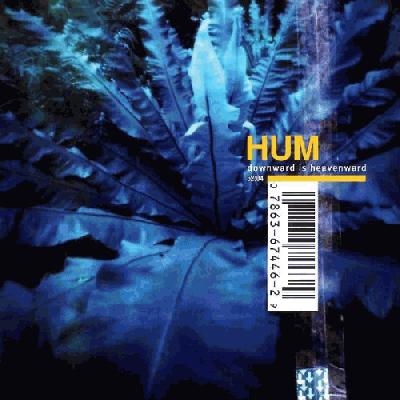
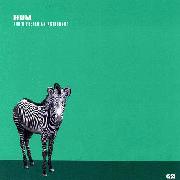
Earlier in this, the year of our Lord, 2007, I was listening to my Sirius satellite radio and more than once I heard the song “Stars” by a band called Hum. I had never heard of this band or song before, so I assumed they were some new alternative rock band with a love for early Smashing Pumpkins music. The song impressed me enough that I looked them up, and much to my surprise, I discovered that this “new” band was formed in 1989, their “new” single was released in 1995, and they had not released an album since 1998. “Stars,” from 1995’s You’d Prefer an Astronaut, was a minor hit on rock radio, and it is still their most recognizable song, slowly turning into “that song from the Cadillac commercials.” They were, unfortunately, unable to parlay their modest success into a more successful follow-up album, and their 1998 release, Downward Is Heavenward, went basically unnoticed upon its release.
Almost ten years later, Downward Is Heavenward is widely regarded as the band’s masterpiece among the people that actually know of and enjoy their music. If this was released in 1995, they might have been very successful, but by 1998 their style of music was no longer exceedingly popular and nu-metal and rap metal was starting to take over rock music, thanks to acts like Korn, Kid Rock, and Limp Bizkit. When I say “their style of music,” I do not necessarily mean grunge, because they weren’t really a grunge band at all. They were a true space rock band, but their songs certainly have more in common with the grunge sound than the nu-metal sound, which allowed a heavy riff-fest like “Stars” to become popular.
Their music certainly has a formula: they combine loud, heavily distorted guitars with the almost lazy sounding vocals from Matt Talbot (who seems to talk as many lines as he sings), and then they stretch the songs to a length that prevents them from being radio-friendly, with seven of the ten tracks clocking in at over five minutes in length. The opener, “Isle of the Cheetah” is a perfect example of Hum’s music; it is the longest song on the record at 6:40, and also one of the heaviest. Talbot speaks almost every line of the song while the band jams away behind him with significantly more energy. This combination sounds like it wouldn’t work very well, but they manage to make it sound perfectly natural, similar to the way the Smashing Pumpkins or Weezer have made their sounds work.
“Isle” is just one of the many highlights of this album. “If You Are to Bloom” and “Green to Me” are especially upbeat and infectious, and could easily have been hits if anyone was paying attention to Hum. “Dreamboat” and “The Scientists” are both great songs also, as they manage to meld Hum’s brand of heaviness and catchiness seamlessly. The one ballad here is “Apollo,” which is a drastic departure from their signature sound. The song starts gentle and stays gentle for a while, but builds slowly, as the drumming grows louder and the pace picks up; by the end of the song you get the feeling if it went on any longer it would’ve exploded, but they did not go that route, and the song is a wonderful change of pace.
To call this simply a lost classic would be an understatement; it was a major label release that only sold 30,000 copies the year it was released, and its popularity has not grown greatly in the following years. Fortunately, nu-metal is dying quickly, and since indie is taking over the rock music landscape, the audience for a band like Hum is probably larger now than it was then, so perhaps a comeback is in order. And if that never happens, well, at least Hum quit while they were ahead, because Downward to Heavenward is awesome.