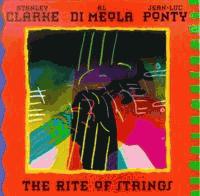
In 1995, three fusion giants decided to come together and put down an acoustic jazz masterpiece. Stanley Clarke (bass), Al Di Meola (guitar), and Jean-Luc Ponty (violin) are about as good as it gets in their respective fields. And the big names on the album cover do not disappoint.
The chemistry displayed on the CD took me by surprise. I was expecting a wonderful display of technicality, with each member showing off their chops. Of course, they do show off, they do get flashy, but never to a really boring level…well unless the song was boring (“Chilean Pipe Song” “Change of Life”). All three musicians focus on the mood and feeling of each song. There are frantic sambas like “La Cancion de Sofia” and there are contemplative, moody songs like “Indigo.” And none of the musicians break character midway through.
However, the band does change tempos midway through some songs, especially the longer ones. While the transitions from slow to fast are jarring they also make sense and keep the listener alert. The band will even come to a complete stop, then start up again. The stops I don’t really understand, especially when they repeat what they were doing before like in “”Chilean Pipe Song.” The transition from fast back to slow, such as toward the end of “La Cancion de Sofia” are much more natural.
Jean-Luc Ponty takes the lead more than the other two instruments, which is fine. Al Di Meola is a great rhythm guitarist and Stanley Clarke is a master on the upright bass. Ponty always keeps the violin interesting, and his two band mates are quite capable of keeping up with him and challenging him. Al Di Meola’s solos are a nice change of pace. He has a way of taking the rhythm he had been doing before and making a beautiful solo off of that. To my dismay, Stanley Clarke’s solos are the most out of place, the mini solo toward the end of “Song to John” being a huge exception. He displays his talent well, but he seems to be trying to break out of character. Luckily the strong rhythm provided by Jean-Luc and Al keeps him from doing so, and Stanley goes back to his strong bass lines.
There are some extra specific details like the super cool snapping in “Renaissance,” which I see as the greatest moment of chemistry between the three, all three soloing at once almost. There’s the unexpected pipes, I don’t know what kind, toward the end of “Indigo.” But the CD is best for the overall mood it creates, the dedication of each member to the sound rather than the technicality. They all knew the technicality would show up, they knew who they were. But they didn’t let who they were get in the way of making a great group effort.
Recommended Tracks: Indigo, Renaissance, Morocco