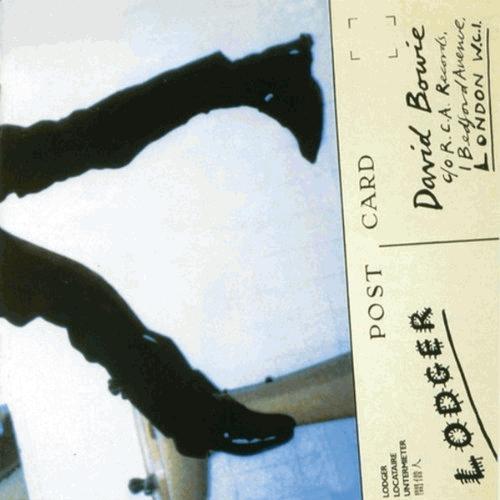
Review Summary: An album so underrated I had to add it in order to review it!
One of Bowie's most under-appreciated albums,
Lodger is part three of Bowie's famous Berlin Trilogy, the other two being
Low & "Heroes." Unlike the other two in the trilogy,
Lodger contains no instrumentals and is instead a collection of 10 mostly listener-friendly pop songs, most of which have more in common with 1980's
Scary Monsters (and Super Creeps).
Deviating from the side-one-songs-and-side-two-instrumentals-formula may be one of the reasons this album was not initially received well. The lack of instrumentals also hints at a departure from the avant-garde and it has been said that Brian Eno (whose collaboration with Bowie on the Berlin Trilogy is highly debated in the first place) had very little input on this album compared to the other two.
Whatever the reason,
Lodger has long been the black sheep of Bowie's catalog, particularly his pre-
Let's Dance catalog (things get pretty murky after that). When taken out of the shadow of its release order and viewed as an individual work,
Lodger features easily some of Bowie's strongest tracks. Organzied around the themes of travel and criticism of world affairs, Bowie's
Lodger ends up having an almost light-hearted feel to much of its music.
The album opens with the piano-heavy "Fantastic Voyage," Bowie's take on nuclear war, or at least his commentary on the world's fear of nuclear holocaust. Instantly we can hear the clear departure from the rigid frame work of
Low and
"Heroes". After that comes one of the most unusual tracks Bowie has ever penned: "African Night Flight" which plods a long with a piano & percussion loop, seemingly disconnected guitar work from Arians Belew, and an infectious bassline from Dennis Davis. Somehow all of the elements work and "African Night Flight" remains one of Bowie's most interesting tracks.
Other standout tracks include: Bowie's ode to his wanderlust, "Move On" which features some of Belew's most infectious guitar work; The laid-back "Yassassin" which has perhaps the most extensive instrumentation of the album with violin work and synthesizer lines backing the raggae beat; and "DJ" the most 'Berlin' sounding piece on the album, also with great violin work.
The last track that bears mention is the excellent "Look Back in Anger," a song which is inexplicably absent from his greatest hits compilations. "Look Back in Anger" has one of Bowie's most impressive vocal performances over an relentless drum frenzy by Carlos Alomar, and some of the finest harmonies heard on the album. To love Bowie is to love this song.
While
Lodger has maintained its poor reputation among critics, most Bowie fans will tell you that it is indeed one of his most underrated, and perhaps deserves to be heralded as one of his finest. At least, this fan will tell you that. This album would be the
Let's Dance of 1979, though it is less offensively poppy, and maintains a great deal of the art rock credibility he established with both
Low & Heroes. An excellent album which you should probably give another chance, away from the judgement of the "critics."